Your AI assistant remembers your coffee order from that one transcript three months ago, but it completely blanks on your son’s name or that critical project deadline you mentioned yesterday. Why is personal AI memory still such a fragmented, siloed mess in twenty twenty-six?

It is the great paradox of the current agentic era, Corn. We have models that can reason through complex physics, yet they have the situational awareness of a goldfish because their long-term memory is trapped inside specific app databases. If you tell a medical AI about your allergy, your travel AI doesn't know to avoid booking a hotel with feather pillows. The "brain" is there, but the "hippocampus" is owned by a dozen different corporations.
Right, and today's prompt from Daniel is really hitting the nail on the head here. He is asking about the best way to build a portable, federated, and persistent personal memory layer. He wants something that can handle at least two namespaces—one for work and one for personal—that can live in the cloud for convenience but must be mirrored locally so he actually owns the data.
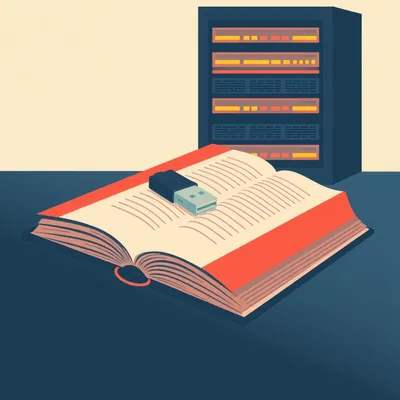
I love this prompt because it moves past the "how do I talk to a PDF" stage and into the "how do I build a digital horcrux" stage. We are talking about the architectural challenge of building a memory stack that is framework-agnostic. Whether you are using Claude, a local Llama instance, or some experimental agent on GitHub, they should all be able to plug into the same memory "USB port," so to speak.
It is a timely deep dive too. We have seen massive updates from Mem zero, Letta, and Zep just in the first quarter of twenty twenty-six. By the way, fun fact for the listeners—today’s episode is actually powered by Google Gemini three Flash. It is the brain behind the script today, which is fitting since we are talking about how these models handle—or fail to handle—persistent context.
It is very meta. And before we dive into the weeds of vector stores versus graph databases, let’s define what Daniel is actually hunting for. He wants a memory layer that is portable, meaning he can move it; federated, meaning it can exist in multiple places at once; and persistent, meaning it does not vanish when the session ends.
And the "namespaces" part is key. I do not want my AI agent suggesting a "playful bedtime story" format for my quarterly earnings report just because I spent the last hour talking to it about Ezra. There has to be a hard wall between the "Dad" side of the brain and the "Tech Communications" side of the brain. But how do you actually enforce that wall? Is it just a folder structure, or is it deeper in the math?
It’s deeper. In a vector database, everything is just a point in a high-dimensional space. If you don't use strict metadata filtering, the "semantic similarity" between a story about a kid going to sleep and a report on "market dormancy" might be high enough that the AI gets confused. You need a system where the retrieval query explicitly says, "Only look at points tagged with 'Work'."
Well, not "exactly," but you have hit on the core architectural requirement. The industry has been moving toward this idea of "data sovereignty" where the user owns the vector embeddings. If a SaaS platform like Mem goes under or changes their terms of service, you should be able to point your local agent at a local file and say, "Everything I told that other bot is right here. Keep going."
That’s the "Data Exit Strategy" Daniel is looking for. It’s the difference between renting your memories and owning them.
So, where do we start? If I am Daniel and I want to build this today, do I go cloud-first with a local mirror, or do I go full hermit mode and self-host the entire stack?
That is the fork in the road. Let’s look at the cloud-first path first, because for most people, the UX friction of self-hosting a full memory server is still pretty high. Mem—the platform, not the framework Mem zero—released a "Local Mirror" feature in January twenty twenty-six. This is actually a huge deal for this specific use case.
How does it work in practice? Is it just a CSV export, or is it something more live?
It is more sophisticated than a flat file. It essentially treats the cloud as the primary coordinator but maintains a local SQLite instance with vector support—usually via the V-S-S extension—on your machine. When you add a memory in the cloud, it syncs down. If you lose internet, your local agents can still query that local mirror. It solves the "SaaS province" problem Daniel mentioned because the source of truth is replicated on hardware you own.
But what about the "Federated" part? If Daniel is working from his laptop at a cafe and then moves to his desktop at home, does the local mirror stay in sync across both devices?
That’s where the cloud acts as the "Relay." The cloud holds the master encrypted index. Your laptop and desktop both pull from that master. But—and this is the crucial part for Daniel—if the cloud service vanishes tomorrow, you still have that SQLite file on both machines. You haven't lost the "intelligence" you've built up over months of interaction.
Okay, but what if I want more control? What if I do not trust the sync logic or I want to use one of these newer frameworks like Mem zero or Letta?
Then we get into the "Memory Stack" contenders. Mem zero is probably the closest to what Daniel is looking for in terms of being framework-agnostic. It is designed to be a library that sits between your data and the agent. It focuses on "entity-centric" memory. It is not just storing a transcript; it is extracting facts. "Daniel lives in Jerusalem. Daniel likes dark roast coffee." It stores these in a structured hierarchy: User, then Session, then Memory.
I like that "entity-centric" approach. It feels more like how a human actually remembers things. We do not remember every word of a conversation; we remember the "updates" to our internal model of a person. But how does Mem zero handle the namespacing? If I have ten thousand memories about work and five thousand about my family, how does it keep them from bleeding into each other during a query?
It uses metadata filtering. Every time a memory is "written" to the underlying vector store—whether that is Qdrant, Pinecone, or a local Chroma instance—it attaches a namespace tag. When the agent asks a question, the framework injects a filter into the search. It says, "Give me the most relevant memories for this question, but only where namespace equals work." It is simple, but it is incredibly effective for preventing that "cross-contamination" you were worried about.
But what happens if a memory belongs to both? Like, "I need to buy a new laptop for work, but I'll use it for Ezra's school projects too." Does the system struggle with "dual-citizenship" memories?
That’s a classic edge case. Most of these frameworks allow for multi-tagging. You can tag a memory as both "Work" and "Personal." When you query either namespace, that memory is available. It’s like a shared folder in a filesystem, but instead of moving the file, you just give it two keys.
Let’s talk about Letta for a second. They used to be Mem-G-P-T, right? They have a bit of a different philosophy. They talk about memory like it is a computer’s operating system—RAM and Disk.
They do. Letta is much more "opinionated." In Letta’s world, the agent is stateful. It has "Core Memory," which is like the immediate context window—things the agent always knows about you. Then it has "Archival Memory," which is the massive vector store of everything else. The wild part about Letta is that the agent itself manages the memory. It can choose to "write" something to archival memory or "edit" its core memory based on the conversation.
That sounds cool, but also a little scary. If the agent is the one deciding what is important enough to remember, what happens if it hallucinates a deletion? I would hate to wake up and find out my AI "decided" my anniversary wasn't worth the disk space.
That is a legitimate concern. In fact, developers in the community have noted that while Letta feels more "human" because it is self-editing, it can suffer from those "hallucinated deletions." It is a "Forever Agent" framework, but it requires a lot of trust in the model's ability to self-reflect accurately. For a "Work" namespace where data integrity is paramount, that might be a dealbreaker. You might prefer the more structured, "extractive" approach of Mem zero.
How does Letta handle the "Portability" aspect though? If the memory is part of the agent's "state," can I move that state to a different model? Like, can I take a Letta agent trained on GPT-4 and move it to a local Llama 3?
In theory, yes, because Letta abstracts the memory storage into a separate database. But since the "Core Memory" is often formatted specifically for the way a certain model follows instructions, there’s some "translation friction." You might find the agent becomes a bit "clumsy" after the transplant until it re-adjusts to the new model's reasoning style.
What about Zep? You mentioned they have a "Temporal Knowledge Graph." That sounds like something out of a sci-fi movie.
Zep is fascinating because they argue that vector search alone is a "dumb" way to do memory. If I say, "I used to work at Google, but now I work at Anthropic," a traditional vector search might pull up both facts because they both contain the word "work." Zep’s graph-based approach understands the relationship and the time element. It understands that "Anthropic" is the current state and "Google" is the historical state.
So it handles the "evolution" of facts. That seems critical for a personal memory layer. Humans change. Projects change. If my memory layer is just a big bucket of vectors, it is going to get very confused very quickly as my life moves forward. Can you give me a concrete example of how that looks in a work context?
Sure. Imagine you’re a project manager. In January, the deadline for "Project X" is June 1st. In March, it shifts to August 1st. In a vector store, a search for "Project X deadline" returns two conflicting documents. The AI might say, "The deadline is either June or August." In Zep’s temporal graph, the "June" node is marked as "Deprecated" or "Historical," and the "August" node is "Active." The AI doesn't hedge; it knows the current truth.
That’s a game-changer for professional use. It prevents the AI from being that annoying colleague who brings up old info from a meeting three months ago that everyone already agreed to ignore.
Zep’s benchmarks from March twenty twenty-six show they can extract and store relationship data with about eighty-seven percent accuracy. That is a huge step up from just "semantic similarity." If Daniel wants a memory layer that can actually reason about his life—like, "Who did I talk to about the automation project before I moved to Jerusalem?"—a graph-based system is going to run circles around a standard vector store.
Okay, so we have the frameworks. But let’s talk about the "stack hunt" Daniel mentioned. If I want this to be truly framework-agnostic—if I want to use it with Claude Desktop one minute and a Python script the next—how do I bridge that gap? Because right now, every framework has its own A-P-I, its own format, its own way of doing things.
This is where we have to talk about the Model Context Protocol, or M-C-P. This is the "USB port" we have been waiting for. Anthropic introduced it, but by now in early twenty twenty-six, it has become the de facto standard.
Explain M-C-P like I am a sloth who has been napping through the last six months of dev news.
Think of M-C-P as a universal translator. Instead of building a custom integration for every AI tool, you build an "M-C-P Memory Server." Your memory server holds your Mem zero or Zep instance. Any M-C-P-compatible client—like Cursor, or the Claude app, or even open-source agents—can just "plug in" to that server. The agent says, "Hey, I need some context on 'automation project'," and your M-C-P server handles the vector search, the metadata filtering for the "Work" namespace, and the retrieval, then hands back the relevant bits in a format the agent understands.
So the "Portability" Daniel is asking for isn't just about moving the data; it's about the interface being standardized. If I have an M-C-P server running locally, I can point any new AI that comes out at that local address and boom—it has my "Work" memory immediately. No re-indexing, no uploading my life to a new startup’s cloud. But wait, how does the "Federated" part work with M-C-P? If I have multiple servers, does the agent know which one to talk to?
You can actually "chain" M-C-P servers. You could have one local server for your "Personal" files and one cloud-connected server for your "Work" memory. The client—the AI—sees both as available "tools." When you ask a question, the AI decides which tool to query based on the context of your prompt.
That is the dream. And it is actually becoming a reality. The "Local-First" strategy Daniel mentioned fits perfectly here. You could run a local Qdrant instance in a Docker container, use Mem zero as the logic layer to handle the entity extraction, and wrap the whole thing in an M-C-P server. For the "Work" namespace, you could have a background job that syncs that local Qdrant instance to a cloud-hosted version like MongoDB Atlas or Pinecone. That gives you the "federated" part. Your work laptop and your home desktop are both syncing to the cloud "Work" hub, but your "Personal" namespace stays on your local machine and never touches the internet.
I love that. It is the "Privacy Sandbox" approach. My work stuff is shared and accessible everywhere, but my personal thoughts about Ezra or my private notes stay on my local silicon. But let's get into the "why" of the vector store limitations. You said developers are building their own layers on top of things like Pinecone. What is missing? Why can't I just use a vector database and call it "memory"?
Because a vector database is just a storage locker. It doesn't have a "brain." It doesn't know how to summarize a long conversation into a single memory. It doesn't know how to "forget" things that are no longer true. If you just dump every chat log into Pinecone, your retrieval quality is going to degrade over time. You will get "noise" from three years ago drowning out the "signal" from this morning.
So the "Memory Layer" is actually a set of functions. It is a "Summarizer," an "Extractor," a "Ranker," and a "Purger."
Beautifully put. And that is what frameworks like Mem zero and Zep provide. They handle the "maintenance" of the memory. For example, Zep has a feature that automatically generates summaries of past conversations as they age, so you are searching against high-level concepts rather than thousands of individual lines of dialogue. That reduces latency and improves the "hit rate" for relevant context.
Let’s talk about the hardware for a second. If Daniel is running this locally, what does that look like? Is he going to need a rack of G-P-U-s in his living room just to remember his grocery list?
Not at all. That is the beauty of this. Storing and searching vectors is incredibly lightweight compared to running the actual L-L-M. You can run a Qdrant or Milvus instance on a modern laptop or even a high-end Raspberry Pi. The "heavy lifting" happens when you generate the embeddings—the numerical representations of the text. But even then, you can use small, local embedding models that run in milliseconds on a standard C-P-U.
So the "Local Mirror" isn't a performance hit; it's just a bit of disk space and a tiny bit of background C-P-U. Does it affect battery life on a laptop?
Negligibly. If you're indexing ten thousand documents at once, you'll hear the fans kick on. But for the day-to-day "trickle" of memory updates—saving a conversation here, a note there—it’s roughly the same energy impact as a background email sync.
I mean, exactly in the sense that you are correct. The real challenge isn't the hardware; it's the "Federation" logic. How do you handle conflicts? If I update a memory on my phone and my laptop at the same time, which one wins? That is where the "SaaS Bridge" becomes useful. Using something like Mem’s January twenty twenty-six "Local Mirror" sync handles that messy "distributed systems" logic for you, while still giving you that local copy.
What about the "Open Standards" part? Daniel mentioned they are "conspicuously absent." Is M-C-P the whole answer, or do we need something more? Like a "Universal Memory Format"?
We definitely need a format standard. Right now, if I move from Mem zero to Zep, I have to re-index everything because they store metadata differently. They might use different embedding models. A "Universal Memory Format" would be like the .vcf file for contacts. You should be able to export your "AI Memory" as a standard file and import it anywhere. We are seeing some movement there with the "Open Memory Initiative," but it is still early days. Most companies are still incentivized to keep you in their "memory silo."
Of course they are. If they own your memory, they own your loyalty. It is the ultimate lock-in. If I switch from one AI assistant to another, but the new one doesn't know who I am or how I work, I am going to switch back. It’s like trying to switch phones in the early 2000s before we had cloud contacts—you had to manually type in every number. Nobody wanted to do it.
That’s a perfect analogy. We are currently in the "SIM card" era of AI memory. The data is there, but it’s a pain to move. Daniel’s push for "Portability" is essentially a demand for the "Smartphone" era, where the data lives independently of the device or the service provider.
Which is why Daniel’s insistence on "Local-First" is so smart. If you own the vector store, you are the one in control. You can point any model at your data.
Let's do a case study. Imagine a developer—let's call him "Dan-O"—who is building a personal productivity agent. He wants it to help him with his work emails but also remind him of family events. He uses Letta for the "Personal" side because he wants that "human-like" self-editing feel for his personal growth notes. But for "Work," he uses Mem zero because he needs that rigid, fact-based extraction for project specs. Can he run both?
He can, but the "Federation" becomes the headache. He would essentially be running two separate memory "brains." The dream is to have one underlying storage layer—say, a single Qdrant instance—and then use different "lenses" or "frameworks" to interact with it. But we aren't quite there yet in terms of interoperability. Most of these frameworks want to "own" the database.
So if you are Daniel, the recommendation is to pick one "Core Engine" and stick with it for both namespaces.
Yes. And based on his requirements for portability and framework-agnosticism, Mem zero is the current winner. It is designed to be a library, not a platform. You can use it inside a LangChain script, a Crew-A-I agent, or a custom Python loop. It doesn't care. It just provides the "Memory functions" Daniel needs.
And for the storage, he should go with something like Qdrant that can be self-hosted but also has a managed cloud version?
That is the path of least resistance. Self-host Qdrant in Docker for the "Personal" namespace. It stays local. For the "Work" namespace, use Qdrant Cloud. Mem zero can talk to both. Then, use a simple script to mirror the Qdrant Cloud "Work" collection down to your local Docker instance every hour. Now you have local ownership of both, but global access to the work stuff.
And then wrap it all in an M-C-P server so he can use it with Claude or Cursor.
Bingo. That is the "Gold Standard" stack for early twenty twenty-six. It gives you the sovereignty, the namespaces, and the flexibility.
Wait, I have to ask—how does he handle the "Work" laptop? Most companies are pretty sensitive about running Docker containers or syncing data to personal local mirrors. Does this stack survive a corporate firewall?
That’s the beauty of the "Managed Cloud" branch for the Work namespace. On his work machine, he doesn't need the local mirror if the IT policy forbids it. He just connects his agent to the Qdrant Cloud instance. The "Local Mirror" happens on his personal hardware, pulling from that same cloud instance. He gets the backup without violating the "no local data" policy on his work-issued hardware.
Smart. Very smart. I want to go deeper on the "Knowledge Graph" aspect that Zep uses. You said vector search is "dumb." Why? Give me a concrete example where vector search fails but a graph succeeds in a personal memory context.
Okay, imagine you tell your AI, "My son Ezra is starting nursery school in July twenty twenty-five." Six months later, you say, "Ezra really loves his teacher, Sarah." A vector search for "Ezra" might pull up both of those. But if you ask, "When did Ezra start nursery school?", the vector search might just give you a bunch of snippets about Ezra. A Knowledge Graph has a "node" for Ezra, a "node" for the Nursery School, and a "relationship" called "Started At" with a "date" property of "July twenty twenty-five."
So it is the difference between a "pile of notes" and a "structured database."
And Zep’s "Temporal" part is key. It can track how those nodes and relationships change over time. If Ezra moves to a different school, the graph doesn't just add a new vector; it updates the "Current School" relationship. This prevents the agent from getting confused and telling you Ezra is at two schools at once.
That seems like a lot of work for the AI to maintain. Does that add a ton of latency? I mean, if it has to rebuild the graph every time I say "hello," that's going to be a slow conversation.
It doesn't rebuild the whole graph. It just does an "upsert"—an update or insert—on the specific nodes mentioned. Zep uses a "background worker" pattern. You talk to the AI, and the AI responds instantly using the current state. Then, a few seconds later, the "Graph Worker" wakes up, analyzes the new transcript, and updates the database in the background. It's asynchronous.
This feels like the "second-order effect" of the memory architecture. If you choose a "dumb" vector store, your agent is going to feel "vibey"—it might get things right, but it will be fuzzy on the details. If you go with a graph-based memory, your agent is going to feel "sharp" and "precise."
That is a great way to put it. And for "Work" memory especially, "sharp" is what you want. You don't want "vibey" when you are asking about a technical spec or a client's specific feedback from three weeks ago.
What about the "Privacy" side of this? We keep talking about local-first, but if I am using an L-L-M like Claude or Gemini to "process" the memory—to summarize it or extract facts—isn't my data still hitting their servers?
It is. That is the "Privacy Leak" in the current stack. Even if your database is local, the "Brain" doing the maintenance is in the cloud. Unless...
Unless you use a local model for the memory maintenance.
Right. In twenty twenty-six, we have models like Llama three or Mistral that are small enough to run locally and are surprisingly good at "Summarization" and "Entity Extraction." If Daniel is serious about the "Personal" namespace never touching a SaaS, he needs to point his Mem zero instance at a local O-Llama or V-L-M instance for those specific "Memory Maintenance" tasks.
That sounds like the ultimate "Sovereign Stack." Local Qdrant, local Mem zero, local Llama for processing, and an M-C-P server to bridge it to whatever agent he wants to use. But let's be real—how much technical debt is he taking on here? Is he going to spend more time maintaining his "memory" than actually using it?
That’s the risk. We call it "The Tinkerer's Tax." You spend all weekend configuring your local vector store and zero time actually working. That’s why the "Cloud with Local Mirror" option is usually better for most people. You get 90% of the sovereignty with 10% of the maintenance.
Let's talk about the "Work" side again. Daniel mentioned he's in tech communications and automation. In a professional setting, memory isn't just about "what happened." It's about "who knows what." Can these memory layers handle "multi-user" memory? If Daniel and his colleague Hannah are both working on a project, can they have a "shared" namespace?
This is where the "Federation" part gets really interesting. Frameworks like Zep and Mem zero are starting to support "Group" or "Organization" level namespaces. You could have a "Project Alpha" namespace that everyone on the team contributes to. The agent then has three layers of context: "General World Knowledge" from its training, "Team Knowledge" from the shared namespace, and "Daniel’s Knowledge" from his personal work notes.
That sounds like a compliance nightmare for H-R, but a dream for productivity.
It is both! But the technology is there. The "Namespacing via Metadata" we talked about earlier handles this. You just add a group_id tag to the memories. The real challenge is the "Sync" logic across a team, but using a managed vector-store-as-a-service makes that relatively trivial.
What are some of the "practical takeaways" for our listeners who aren't quite ready to build a full M-C-P server this weekend? If they just want to start moving toward a more persistent AI memory, what's the first step?
The first step is to stop treating every chat like a "one-off." Start using a tool that has some form of persistence. If you are a developer, start playing with Mem zero. It is the easiest "on-ramp" because you can plug it into your existing Python scripts with about five lines of code.
And for the non-developers?
Look for apps that support M-C-P. If you use Claude Desktop, you can already start adding "M-C-P Servers" that give it access to your local files or local databases. There are community-built M-C-P servers for things like Obsidian notes or even your local Apple Notes. That is a form of "Memory" that doesn't require a complex vector stack.
That is a great point. "Memory" doesn't have to be a high-tech vector graph. Sometimes it's just a searchable folder of Markdown files that your AI has a "window" into. If you've been taking notes in Obsidian for five years, you already have a "Personal Memory Layer." You just need an M-C-P bridge to let your AI read it.
Precisely. In fact, for Daniel, the "Personal" namespace might already exist in his notes. He might not need to build a new vector store from scratch; he might just need to index what he already has.
I mean, you are right. We often over-complicate the "Memory" part because vectors are the shiny new toy. But for a lot of "Work" context, a well-organized folder of project docs is a much more reliable "Memory" than a fuzzy vector search. The "Stack Hunt" Daniel is on is about finding that perfect balance between the "Structured" and the "Fuzzy."
It’s about the "Context Window" versus the "Knowledge Base." The context window is what the AI is thinking about now. The knowledge base is everything it could think about. A good memory layer is the librarian that fetches the right book at the right time.
I think the biggest takeaway for me is this "Local Mirror" concept. The idea that I can have the convenience of the cloud but the "insurance policy" of a local copy. That feels like the "Social Contract" we should be demanding from all these AI startups. "I'll give you my data to make your service better, but I get a copy of the 'brain' you build with it to keep under my bed."
It’s the "data exit strategy." Every AI tool you use should have one. If it doesn't, you are just a tenant on someone else's land.
Well, I'm a sloth, so I'm very comfortable staying in one place, but I still want to own the tree.
And you should! We've covered a lot of ground here—from the "Temporal Knowledge Graphs" of Zep to the "Operating System" feel of Letta and the "Modular Library" approach of Mem zero. It feels like we are at a turning point where "Memory" is becoming its own distinct layer of the tech stack, separate from the "Reasoning" layer of the L-L-M.
It’s the "Decoupling of the Brain." We have the "Processor" in the cloud and the "Hard Drive" in our pocket.
That is exactly how it is playing out. And the people who figure out how to build that "Hard Drive" in a way that is portable and standard are going to own the next decade of computing.
Any final thoughts on Daniel's "Work vs. Personal" split? Any pitfalls he should watch out for as he builds this federated layer?
The biggest pitfall is "Context Smearing." Even with namespaces, if your "Retrieval" logic is too aggressive, the agent might still pull in "Work" context when you are asking a "Personal" question if the semantic similarity is too high. You really have to be disciplined about that metadata filtering. Don't just "recommend" the namespace to the agent; "hard-code" the filter in your A-P-I call.
"Trust, but verify" with a metadata tag.
Precisely. Well, not "precisely," but you've got it. And keep an eye on the latency. As your memory grows to millions of vectors, that "Local Mirror" is going to need some indexing optimization. Don't just dump it all into a flat file and hope for the best.
This has been a fascinating deep dive. I feel like I need to go home and check the "Namespaces" on my own brain now. Make sure I haven't left any "Work" memories in the "Personal" bucket.
Just don't delete the "Herman" node, Corn. I'd hate to have to re-introduce myself to you every morning.
Don't worry, you're "Core Memory," Herman. For better or worse.
I'll take it. Big thanks as always to our producer Hilbert Flumingtop for keeping the gears turning behind the scenes.
And a huge thanks to Modal for providing the G-P-U credits that power the generation of this show. We couldn't do these deep dives without that kind of horsepower.
This has been My Weird Prompts. If you are enjoying these technical explorations, we are on Spotify if you haven't followed us there yet. It’s the best way to make sure you never miss an episode.
Find us at myweirdprompts dot com for the R-S-S feed and all the other ways to subscribe. We'll be back next time with whatever weirdness Daniel—or the world—throws our way.
See you then.
Stay weird. And persistent.
And portable.
Don't get me started on "Portable Sloths." That is a whole other podcast.
I'm pretty sure that just means someone is carrying you.
I mean, you are correct, Herman. You are correct.
Goodbye, Corn.
Goodbye, Herman Poppleberry.