
#vector-databases
29 episodes

#4786: Markdown vs Vectors for Agent Memory
Why coding agents need two kinds of memory — and why mixing them creates a sync nightmare.

#4457: OpenViking: A Filesystem for AI Agent Memory
OpenViking unifies memory, RAG, and skills into a browsable filesystem for AI agents — no vector database abstraction needed.

#4445: AI Agents Keep Undoing Each Other's Work
Why AI coding agents silently revert each other's fixes — and three memory strategies that prevent it.

#4092: How AI Remembers What You Never Told It
How ChatGPT connected "wall anchors" to a power tool you bought days ago — without being asked.

#3673: Knowledge Graphs vs SQL: How Custom Relationships Change Retrieval
Why naming relationships (not just connecting data) transforms how you retrieve information.

#2755: How to Build AI Memory That Actually Works
Stop jumping to conflict resolution. The real challenge is getting data in and out cleanly.

#2682: Live Retrieval vs. RAG: What an Agent Actually Does
Does every AI conversation create a tiny vector store? We unpack the real tradeoffs between live document fetching and pre-indexed RAG.

#2676: Vector Database Schema Design for AI Memory Layers
Stop dumping vectors blindly. Design metadata schemas and namespaces for retrieval that actually works at scale.
#2673: The Embedding Coupling Problem: Editing Vector Stores
Can you edit or delete individual chunks in Pinecone? And can you actually back up a vector index? Yes—but with critical caveats.

#2645: How to Document Failures for Your AI Second Brain
Stop writing diary entries. Start writing retrospectives your AI agent can actually use.

#2469: Embedding Model Deprecation: RAG's Silent Killer
When OpenAI retires an embedding model, your RAG pipeline breaks silently. Here’s how to fix it.
#2458: Can Graph Databases Go Mainstream?
Graph databases are powerful but niche. Will they ever power mainstream CRMs and ERPs?

#2271: Vector Search in a Single File
What if you could do vector search with just SQLite? We explore sqlite-vec, the extension that adds embeddings to the world's simplest database, an...
#2206: What Actually Works in AI Memory
Most AI memory systems are just vector databases with similarity search. We break down what mem0, Zep, and Letta are actually doing—and why benchma...
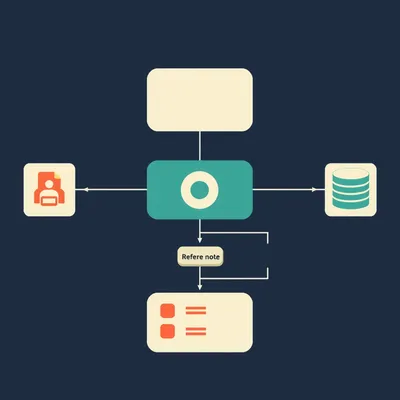
#2139: AI Wargame Memory: Beyond the Context Window
Why simply extending context windows fails in multi-agent simulations, and how layered memory architectures preserve strategic fidelity.

#1849: When Forum Etiquette Becomes Prompt Engineering
Forget simple chatbots—this is how roleplayers taught AI to remember entire worlds, from 90s MUDs to just-in-time lore delivery.

#1838: Tuning Search Without Losing Your Mind
Modern search bars are AI decision engines. Here's how small teams can tune fuzzy matching, semantic search, and reranking without breaking everyth...

#1834: Owning Your AI Memory: The Data Exit Strategy
Why your AI remembers your coffee order but forgets your son’s name—and how to build a portable, federated memory layer you actually own.
#1794: RAG Is Cheaper Than You Think (Until It’s Not)
From a $1 embedding bill to a $10k/month vector database bill, here’s the real math behind RAG in 2026.

#1779: AI Memory Is a Mess: Files, Vectors, or Cloud?
Why your AI forgets your instructions and what the battle over portable memory means for the future of agents.

#1764: Your Repo as a Knowledge Base
How to give AI agents instant memory of your entire project—without cloud costs or complex infrastructure.

#1592: The Vector Debt Trap: Choosing Embeddings That Last
Stop treating embedding models like plumbing. Learn how to navigate vector debt, multimodal retrieval, and database configuration for RAG.

#1482: The Hidden Cost of Choosing an Embedding Model
From Matryoshka models to multimodal search, discover how the fundamental units of AI memory are being optimized for efficiency and scale.
#1212: The Postgres Vector Revolution: Killing the Sprawl
Is your tech stack a sprawling suburb of microservices? Discover why a 40-year-old database is winning the AI infrastructure war.