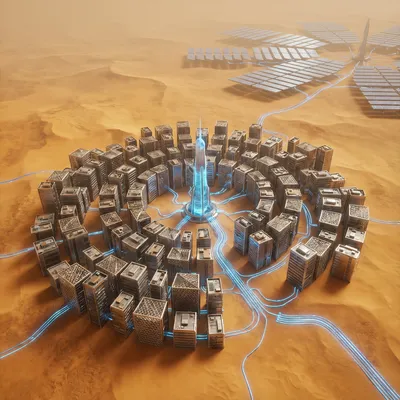
Daniel sent us this one — he's been thinking about the power grid. You know, the thing we all ignore until the air conditioning cuts out in August. He's asking, how does the grid actually balance generation and consumption in real time? Because we hear about the failures, the rolling blackouts, the storm outages. But what we don't hear about is the other three hundred sixty-four days of the year when this enormous machine quietly hums along, matching supply and demand every single second. He wants to know what's happening behind the transformers and the poles and the wires — how the people running this thing actually know how much electricity to make so that the lights stay on.

This is one of those topics where the more you learn, the more it feels like a miracle that it works at all. And by the way, before we dive in — today's script is being written by DeepSeek V four Pro. So if anything sounds unusually coherent, that's why.
Alright, walking encyclopedia — where do we even start?
Let's start with the thing that most people don't realize. The grid has no storage. Not in any meaningful sense, not at the scale of the whole system. Every electron that powers your toaster right now was generated a fraction of a second ago, somewhere, by something spinning. And if that spinning thing slows down, the whole grid feels it.
It's not like a water system with a reservoir. There's no giant battery sitting somewhere holding Tuesday's electricity.
Or rather, that's the right framing. There are batteries now, and we'll get to those, but historically and still predominantly, the grid is a just-in-time delivery system. Generation equals consumption, plus losses, at every single instant. And the way the grid knows whether it's in balance is frequency.
In North America, the grid runs at sixty hertz. In Israel, in Europe, most of Asia, it's fifty hertz. That frequency is not set by some central clock. It's a physical property of all the spinning generators connected to the grid. When generation exactly matches load, the frequency sits right at fifty or sixty hertz. If generation exceeds load, all those generators start spinning slightly faster, and frequency rises. If load exceeds generation, they slow down under the strain, and frequency drops.
How tight is the tolerance on that?
In the U., the standard is plus or minus zero point zero five hertz under normal conditions. So sixty hertz can drift to fifty-nine point nine five or sixty point zero five. If it goes beyond that, you start getting into emergency territory. At fifty-nine point seven hertz, you're looking at automatic load shedding — rolling blackouts — to prevent a total collapse. At fifty-nine point four, you're risking permanent damage to generators. The whole thing is held in a band narrower than most people's bathroom scales can measure.
That's absurdly precise for something the size of a continent.
It is, and it's why this job can't be done by humans reacting in real time. The system that handles this is called Automatic Generation Control, or A-G-C. Every few seconds, computers across a balancing authority — which is the entity responsible for a specific region — are measuring frequency and the power flows on tie lines connecting them to neighbors. If there's a deviation, A-G-C sends signals to power plants to adjust their output, up or down, within seconds.
What's the human actually doing? Because Daniel mentioned Homer Simpson staring at a control panel, and I think a lot of people imagine some guy with a coffee watching gauges, ready to slam a big lever.
The Homer Simpson image is charming but about forty years out of date. What the operators are really doing is managing the forecast, the commitments, and the contingencies. The second-by-second stuff is all automated. The human job is to make sure that the automation has enough resources to work with.
Let's break that down. Forecast for what?
How much electricity is everyone going to use tomorrow, at every hour of the day. And this is a genuinely impressive forecasting problem. You've got historical patterns — weekday versus weekend, season, time of day. You've got weather forecasts, because temperature is the single biggest driver of residential load. You've got special events — a World Cup match, a national holiday, a heat wave. Grid operators have load forecasting models that are, frankly, some of the most accurate predictive models in any industry, and they've been doing this since long before machine learning was fashionable.
I've seen some of those load curves. They're almost beautiful in how predictable they are. That morning ramp, the afternoon peak.
And the day-ahead forecast is where the market comes in, if you're in a deregulated market. Generators submit bids saying how much power they can provide and at what price, for each hour of the next day. The system operator runs an auction and commits the cheapest resources that meet the forecasted load, plus a reserve margin. In Israel, it's not a competitive market in the same way — the Israel Electric Corporation runs a more vertically integrated operation — but the forecasting logic is the same. You need to know, a day ahead, roughly what you're going to need.
But the forecast is never perfect.
And that's where the layers of reserves come in. This is, to me, the most elegant part of the whole design. The grid doesn't try to be perfect in one shot. It layers different types of reserves that respond at different speeds. There's frequency response, which is the fastest — that's things like the inertia of the spinning generators themselves. When a large generator trips offline, the remaining generators instantly absorb the load just by virtue of being physically connected and spinning. The frequency dips, but the inertia buys you seconds.
Inertia as a resource. I love that.
It's a real resource, and it's one of the things that solar and wind don't provide naturally, which is a whole separate conversation. But after inertia, you have primary frequency response, which kicks in within seconds — governors on turbines that automatically adjust steam or water flow. Then secondary frequency response, which is A-G-C, within tens of seconds to a few minutes. Then tertiary reserves, which are generators that can be ramped up within ten to thirty minutes. And finally, replacement reserves that come online within an hour or so.
You're stacking time horizons. The fastest stuff is automatic, the slower stuff gives humans time to react.
And the standard that the whole industry designs around is something called the N minus one criterion. The grid must be able to withstand the sudden loss of any single element — the largest generator, the largest transmission line, the largest transformer — without causing cascading failures or customer interruptions. So at all times, you're carrying enough spinning reserve to cover your single largest contingency.
Spinning reserve meaning generators that are already running, synchronized to the grid, but not at full output.
They're literally spinning, ready to pour more power in within seconds. And this is expensive. You're burning fuel for power you're not selling. But it's the price of reliability. When you see that the grid in the U.or Israel or most developed countries is reliable ninety-nine point nine something percent of the time, that's not an accident. It's an engineered outcome, paid for in spinning reserve and redundancy and layers of control systems.
Alright, so let's talk about the failures. Daniel mentioned rolling blackouts in August. What breaks when it breaks?
Usually, it's not one thing. It's a combination of high load — everyone running air conditioning — and some generation being unavailable. Maybe a large plant is down for maintenance, maybe a transmission line is constrained. The grid operator sees the load forecast climbing toward the available capacity, and they start issuing alerts. First a conservation appeal — please turn your thermostat up a couple degrees. Then, if that's not enough, voltage reductions. Then, if frequency still can't be maintained, load shedding.
Load shedding being the polite term for shutting off neighborhoods.
And it's done in a controlled, rotating way. It's not the grid collapsing. It's the grid deliberately dropping load to prevent collapse. The operator has a pre-planned list of feeders to shed, in sequence, so no single area bears the full burden. The alternative — an uncontrolled cascade — is vastly worse. If frequency drops too far, generators start tripping offline to protect themselves, which reduces supply further, which drops frequency further, and you get a death spiral that can black out an entire region for days.
The northeast blackout of two thousand three. That was a cascade.
That was the textbook case. A transmission line in Ohio sagged into a tree, tripped out. The alarm system that was supposed to notify the operator failed. Other lines picked up the load, then they overheated and tripped. Within minutes, the cascade ripped across eight states and into Canada. Fifty-five million people lost power. Some for days. The total cost was estimated at six to ten billion dollars. And that started from one tree and one software bug.
That's the thing, right? It's not that the grid is fragile. It's remarkably robust. But when it fails, it fails in ways that are non-linear. Small triggers, enormous consequences.
Which is why N minus one is the design philosophy, and why N minus one is so expensive to maintain. And why, when you get into N minus two or N minus three territory — multiple simultaneous failures — all bets are off. That's what happened in Texas in February twenty twenty-one. Multiple generators tripped offline due to cold weather they weren't winterized for, gas supply froze, wind turbines iced up. The grid was seconds away from a complete, months-long blackout. They deliberately shed massive amounts of load to save the grid, and people still died.
Let's bring this back to Israel. Daniel mentioned programs for feeding back into the grid. Residential solar with net metering. How does that change the balancing equation?
And this is where the job of the grid operator has gotten much harder in the last decade. Under the old model, power flowed one way. From large, centralized, controllable generators, down through transmission, through distribution, to customers. The operator could see the load, dispatch generators to match it, and everything was predictable. Solar on rooftops breaks that model in two ways.
First, it turns customers into generators. So the load that the operator sees at the substation level is no longer the actual consumption. It's consumption minus local generation. This is called the duck curve — net load. In the middle of the day, when solar is pumping, net load drops way down. Then in the evening, when the sun sets and everyone comes home and turns on lights and cooking appliances, net load ramps up incredibly fast. California's grid operators have to ramp up something like thirteen gigawatts in three hours every evening. That's the equivalent of starting up thirteen large power plants in three hours, every single day.
Israel's seeing the same pattern.
Israel has been very aggressive on residential solar. The Israel Electric Corporation has something like over three hundred thousand residential solar installations now, feeding back into the grid under net metering arrangements. The duck curve is a real phenomenon here. And it creates a technical challenge — you need flexible generation that can ramp quickly. Gas turbines are good at this. Coal is terrible at it. Solar itself, obviously, you can't dispatch at all.
The second way it breaks the model?
The grid operator can't see what's happening behind the meter. They see the net flow at the substation, but they don't know how much of that is reduced load versus local generation. They don't know when a cloud passes over a neighborhood and solar output drops by thirty percent in two minutes. That variability shows up as noise in the load signal, and it makes the forecasting problem much harder.
The operator is flying partially blind, with a resource they can't control, that varies with the weather, and that disappears every evening. And they still have to maintain N minus one.
And this is where the conversation shifts to what's called the smart grid. Which is a term that gets thrown around a lot, but it really means a few concrete things. Sensors everywhere — not just at the transmission level, but down into the distribution grid. Real-time data flowing back to the operator. Automated switching and voltage control at the neighborhood level. And, increasingly, the ability to communicate with devices inside homes.
Instead of just shedding whole feeders in an emergency, you can selectively reduce load.
If you've got a smart thermostat or a smart water heater, the utility can send a signal that adjusts your setpoint by a couple degrees for fifteen minutes. You barely notice, but aggregated across a hundred thousand homes, that's a meaningful load reduction. Israel has been rolling out smart meters and demand response programs. It's not fully there yet, but the direction is clear.
I want to dig into the economics of this for a minute. Because we've been talking about engineering, but the balancing act is also a market act. How do you price something that has to be perfect every second?
This is one of the more interesting corners of the electricity world. The wholesale price of electricity varies wildly. In a typical market, you've got the day-ahead price, which might be, say, forty or fifty dollars per megawatt hour. But the real-time price — the price for power right now — can spike to hundreds or even thousands of dollars per megawatt hour during a scarcity event. And there are separate markets for frequency regulation, for spinning reserve, for voltage support. Generators get paid not just for the energy they produce, but for being available to produce it on short notice.
A gas turbine that sits idle three hundred days a year but runs during peak hours is still getting paid.
Through capacity markets, yes. The grid operator ensures there's enough capacity to meet peak demand plus reserves, and generators bid into an auction to provide that capacity. They get a monthly payment just for being available. Then they get paid again for the actual energy when they're dispatched. It's a two-part payment structure that recognizes that reliability has value even when nothing is happening.
Which is something the public doesn't see. You pay your flat rate per kilowatt hour, and you don't see the multi-layered market behind it.
The flat rate is a fiction, really. It's an averaging. Your utility is buying power in a market where the price changes every five minutes, but selling it to you at a fixed rate. They're absorbing that risk. Which is fine for most customers, but it also means there's no price signal to encourage you to shift your usage away from peak times. That's starting to change with time-of-use rates, but it's slow.
Okay, let's go back to the physics for a moment. You mentioned frequency earlier. I want to understand something. If I'm a generator connected to the grid, and the grid is at fifty hertz, and I want to push more power in, I can't just decide to spin faster. The grid locks me in.
This is the beautiful thing about synchronous generators. When you connect a generator to the grid, it is physically, magnetically locked to the grid frequency. If you try to spin faster, you don't speed up the grid — you just push more power in. The torque increases, but the speed stays exactly at grid frequency. If you reduce torque, you start drawing power from the grid and become a motor. The grid is this enormous, continent-spanning electromagnetic coupling that forces every connected synchronous machine to spin in lockstep.
The frequency is literally the heartbeat of the entire system. Every generator, every motor, everything connected, is pulsing together.
You can hear it. If you've ever stood near a large transformer and heard that low hum, that's magnetostriction — the iron core physically expanding and contracting at twice the grid frequency. A hundred hertz hum, or a hundred twenty hertz hum in North America. The entire grid is singing the same note.
That's poetic. A continent humming in unison.
And it's why a frequency disturbance is so dangerous. If the frequency drops, every motor on the grid slows down. Pumps in water treatment plants, compressors in refrigerators, fans in server farms. Industrial processes can be ruined by a frequency excursion of just a few tenths of a hertz. The grid doesn't just deliver energy. It delivers a precise, stable reference rhythm that the entire economy depends on.
When something goes wrong, it's not just about the lights. It's about motors everywhere running at the wrong speed, processes going out of spec.
And that's before we even get to the really sensitive stuff. Semiconductor fabrication plants, data centers, hospitals — these places have their own backup power and power conditioning precisely because even a momentary frequency dip can cause millions in damage or threaten lives.
Let's talk about the physical infrastructure for a minute. Daniel mentioned transformers, poles, wires. What's the architecture that makes this balancing act possible across a country?
The grid is a hierarchy. At the top, you've got generation — the power plants. They produce electricity at a relatively low voltage, typically around eleven to twenty-five kilovolts. That's stepped up by transformers to transmission voltages — in Israel, that's four hundred kilovolts and one hundred sixty-one kilovolts for the backbone grid. Transmission lines carry power long distances at high voltage because higher voltage means lower current for the same power, and lower current means less resistive loss in the wires.
The losses are real.
About five to eight percent of all electricity generated is lost in transmission and distribution. Some of that is just physics — resistance in the wires heating them up. Some of it is transformer losses. It's a huge number in aggregate. grid loses about two hundred million megawatt hours a year to losses. That's more than the total annual electricity consumption of many countries.
We're generating power just to heat up transmission lines.
To some extent, yes. And that's why high-voltage direct current, or H-V-D-C, is increasingly used for very long distances. D-C doesn't have the reactive power losses that A-C does. But H-V-D-C converter stations are expensive, so it's only economical for long-haul transmission, like bringing hydro power from Quebec to New York, or connecting offshore wind farms.
Transmission brings it to the outskirts of cities.
Then substations step the voltage down to distribution levels — in Israel, typically twenty-two kilovolts or twelve point six kilovolts. Distribution lines run through neighborhoods. Then pole-mounted or pad-mounted transformers step it down again to the four hundred volts three-phase or two hundred thirty volts single-phase that comes into your home. Each step down in voltage is a step up in current, and each transformer is a point of potential failure, a point that needs monitoring and maintenance.
Those transformers are everywhere. Tens of thousands of them.
Hundreds of thousands in a country the size of Israel. And they're not smart. Most of them are passive devices — iron cores and copper windings in an oil-filled tank — that were installed decades ago and have no sensors, no communications, no way to tell the operator they're overheating until they fail. The distribution grid is the least visible, least instrumented part of the whole system, and it's where a lot of the reliability challenges live.
The operator can see the transmission grid in great detail, but the distribution grid is a black box.
Increasingly less so with smart grid investments, but yes, historically. And that's why distribution-level outages are the most common kind. A tree branch falls on a line, a transformer fails, a cable joint degrades. The operator might not know there's an outage until customers start calling.
Let's circle back to the Israel-specific piece. You mentioned the Israel Electric Corporation. What's the structure there, and how does it handle the balancing challenge?
The I-E-C has historically been a vertically integrated monopoly — generation, transmission, distribution, all under one roof. That's been changing gradually with reforms to introduce private power producers and competition, but the I-E-C still operates the grid and handles system balancing. Israel's grid is also an island grid, electrically speaking. It has some interconnections — there's a subsea cable to Cyprus, and there are plans for more regional interconnections — but for practical purposes, Israel's grid operates independently, which means it can't lean on neighbors for frequency support or emergency imports.
Which makes balancing harder.
In Europe, the synchronous grid of Continental Europe connects something like twenty-five countries. If a large generator trips in Germany, the frequency dip is shared across the entire continent. Each country's grid sees a tiny fraction of the disturbance. Israel has to handle the same kind of contingency entirely on its own. That means higher reserve margins, more spinning reserve, and less margin for error.
Now they're adding variable solar on top of that.
Israel has some of the highest solar penetration in the world on a per-capita basis. On a sunny spring day when demand is moderate, solar can be providing thirty, forty percent of total generation at midday. Then it all disappears in the evening. The I-E-C has had to develop very sophisticated forecasting and ramp management capabilities. They use gas turbines extensively because gas turbines can ramp from minimum to full load in minutes, unlike the coal plants that used to be the backbone.
You mentioned batteries earlier.
This is the big change. Grid-scale battery storage is finally becoming economically viable. Israel has been installing battery energy storage systems — B-E-S-S — at substations and alongside solar farms. A battery can respond to frequency deviations in milliseconds, far faster than any mechanical generator. It can charge during the midday solar surplus and discharge during the evening ramp. It's the perfect resource for grid balancing, and the technology is improving rapidly.
How much storage are we talking about?
Israel has targets in the gigawatt-hour range for grid storage by the end of the decade. It's not there yet, but the trajectory is steep. And this fundamentally changes the balancing equation. For the first time in grid history, you can store significant amounts of electricity. The just-in-time constraint starts to relax. You can time-shift solar generation from noon to evening. You can use batteries for frequency regulation, which is actually more profitable for battery operators than energy arbitrage.
More profitable how?
Frequency regulation pays for the service of being available to respond. A battery can sit at fifty percent state of charge and inject or absorb power in milliseconds. It can provide regulation services while barely cycling the battery. Meanwhile, the grid operator gets a resource that's faster and more precise than any generator. It's a win-win, and it's one of the reasons battery storage is being deployed so quickly.
The grid is getting smarter, more flexible, more instrumented. But also more complex.
Complexity is its own risk. Every sensor, every communication link, every automated controller is a potential failure point. The cybersecurity dimension is significant. We've seen attacks on Ukraine's grid — in two thousand fifteen and two thousand sixteen, Russian-linked actors caused blackouts by compromising grid control systems. The more connected the grid becomes, the larger the attack surface.
Right, and we've talked about SCADA security before. The operational technology side.
The balancing authority's control room is a high-value target. If you can spoof the frequency measurements, or send false dispatch signals, or open circuit breakers at the wrong moment, you could cause a cascade. The industry knows this. NERC — the North American Electric Reliability Corporation — has mandatory cybersecurity standards. Israel has its own critical infrastructure protection requirements. But it's an arms race.
Alright, let's pull this together. I want to make sure we've actually answered Daniel's question. How does the grid balance generation and consumption? What's the one-sentence version?
The grid balances generation and consumption by using frequency as a real-time signal of imbalance, with layers of automated controls and reserves that respond at different timescales, from the inertia of spinning generators in the first seconds, through automatic generation control within tens of seconds, to dispatchable reserves within minutes, all planned around a day-ahead forecast and designed to survive the loss of the single largest element on the system.
That's a Herman Poppleberry sentence if I've ever heard one.
I contain multitudes.
It captures the essence. It's not one system. It's a stack of systems, each designed to handle a different time horizon. And most of the time, it works so well that people don't think about it at all. Which is the highest compliment you can pay an engineered system.
The grid is the largest machine ever built. It spans continents. It operates continuously, with no downtime, no reboots, no pauses for maintenance of the whole. It's been running, in some form, for over a century. And it's being asked to do things now — integrate variable renewables, enable bidirectional power flows, defend against cyber attacks — that it was never designed for. The fact that it works as well as it does is remarkable.
Yet, when it fails, people act surprised. As if the miracle is the default, and the failure is the anomaly. When really, the miracle is that the failure is so rare.
That's the thing about infrastructure. You only notice it when it breaks. The other three hundred sixty-four days a year, it's invisible. The operators in the control room, the engineers who designed the protection schemes, the linemen who repair the storm damage — they're all working to maintain an invisibility that most people mistake for simplicity.
Now we're adding electric vehicles, heat pumps, data centers for A-I. All of which dramatically increase load. The balancing act is about to get harder, not easier.
The load growth projections are significant. A-I data centers in particular — we're talking about facilities that can draw hundreds of megawatts, comparable to an aluminum smelter or a small city. Integrating those into the grid, while also electrifying transportation and heating, while also retiring fossil fuel plants — it's the biggest transformation of the electricity system since it was built.
The grid of twenty fifty is going to look very different from the grid of today.
More power electronics, less spinning metal. More distributed resources, fewer centralized plants. More data, more automation, more complexity. But the fundamental physics won't change. Frequency will still be the heartbeat. N minus one will still be the design principle. And somewhere, in a control room, operators will still be watching the load forecast and hoping the reserves hold.
The rest of us will keep not thinking about it, until the air conditioning cuts out.
That's the deal. Invisible reliability, paid for in spinning reserve and engineering hours, cashed in one August afternoon when the temperature hits forty degrees and everyone's compressor kicks on at the same moment.
I will say, there's something almost comforting about the grid. This enormous, humming, interconnected thing that we're all plugged into, pulsing at fifty hertz, keeping the world running. It's a collective project. Everyone who pays their electric bill is part of it.
Everyone who installs solar panels is changing it. That's the arc of infrastructure. It shapes us, and then we reshape it, and the cycle continues.
Now: Hilbert's daily fun fact.
Hilbert: The giant squid has a donut-shaped brain, and its esophagus passes directly through the hole in the center. If it swallows something too large, it can give itself brain damage.
...right.
That's a design constraint I had not considered.
This has been My Weird Prompts. Thanks to our producer, Hilbert Flumingtop. If you enjoyed this episode, tell someone who's never thought about the grid before. We're at myweirdprompts dot com.
Until next time.