Daniel sent us this one — he's been stocking up on preparedness gear, picked up a Nitecore headlamp and compact torch, and then fell down the rabbit hole of their professional lineup. He noticed they sell torches that cost north of five hundred dollars with throw ranges up to two kilometers, and he's asking who actually buys these things. His theory is search and rescue and law enforcement, and what struck him was how the lineup includes complementary systems — saber-like ultra-fine beams, wide-sweep beacons, headlamps — all designed to work together. So the real question is: how do professional teams actually deploy these systems in concert, and how is it physically possible to build a beacon that can be seen from kilometers away and from aircraft, while still fitting in a backpack?

The backpack part is what gets me every time. You hold a light like the Nitecore TM39 — it's about the size of a relay baton, maybe a bit thicker — and you point it at a mountainside a mile away and it just... paints a visible spot on it. From something running off four eighteen-six-fifty batteries. That's not a marketing claim, either. The TM39 is rated at one point two million candela, which gives you an ANSI throw distance of two point two kilometers. And that's measured to zero point two five lux — roughly the brightness of a full moon.
When they say two point two kilometers, they don't mean you can kind of squint and maybe see something. They mean the light landing on the target is still as bright as moonlight.
And that's the standardized measurement. The ANSI FL-one standard defines throw as the distance at which the beam delivers zero point two five lux. It's conservative, actually. In truly dark conditions, the human eye can detect much less than that — but they picked moonlight-equivalent because it's a repeatable benchmark.
Which means in actual darkness, no moon, you're probably seeing that beam at three kilometers or more.
And that's why SAR teams care about these numbers. It's not spec-chasing for its own sake. When you're searching a canyon at two in the morning and someone's hypothermic, cutting your search time by forty percent is the difference between a rescue and a recovery.
Who actually buys these lights, and how do they use them? Let's start by breaking down the three main types of professional torches.
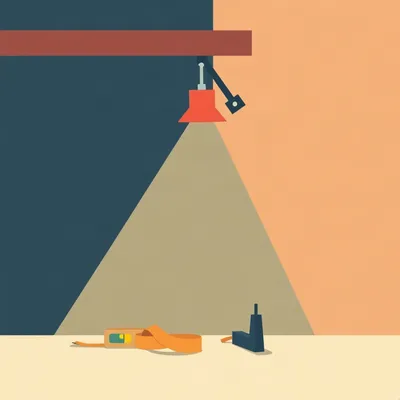
So professional lighting breaks into three archetypes. First, you've got throwers — these are the saber-like beams, extremely narrow, designed to put as much light as possible onto a single distant point. Think of the TM39. Second, flood lights — wide, even illumination for lighting up a crash scene or a base camp, where you need to see everything within fifty meters but don't care about distance. Third, beacons and signal lights — these aren't designed for you to see by, they're designed for you to be seen. Strobe patterns, colored LEDs, three-hundred-sixty-degree visibility. The Nitecore SRT seven is a good example — it's got a dedicated red LED specifically for signaling.
The key insight here — the thing Daniel noticed — is that these aren't just marketing categories. No single light can do all three well.
It's physically impossible. The optics that make a great thrower make a terrible flood light, and vice versa. A thrower needs an enormous reflector relative to the LED size to collimate the light into a tight beam. A flood light wants the opposite — a small reflector or no reflector at all, just a bare LED behind a diffusing lens. If you try to build a zoomable light that does both, you end up with something that's mediocre at everything. The beam pattern gets ringy, you lose efficiency at the lens, and the weather sealing is compromised by the moving parts.
The professional approach isn't "find the one perfect light." It's "carry the right lights for the right jobs and switch between them.
Switching is faster than fiddling with modes on a single light anyway. If you're moving from scanning a distant treeline to treating a patient at your feet, you don't want to cycle through five brightness levels and a zoom mechanism. You just drop your thrower on its lanyard and tilt your headlamp down.
Which brings us to the thrower — the most impressive one from a specs perspective. How do you actually build a light that can reach two kilometers?
Let's start with the fundamental misunderstanding most people have. When you look at flashlight specs, your eye goes straight to lumens. And that's exactly wrong for throw. Lumens measure total light output in all directions. Candela measures intensity in a specific direction. Throw distance is entirely about candela. A five-hundred-lumen light with a tight enough beam can out-throw a two-thousand-lumen light with a wide beam. I've seen this trip up even technically-minded people.
Lumens are the horsepower, candela is the torque.
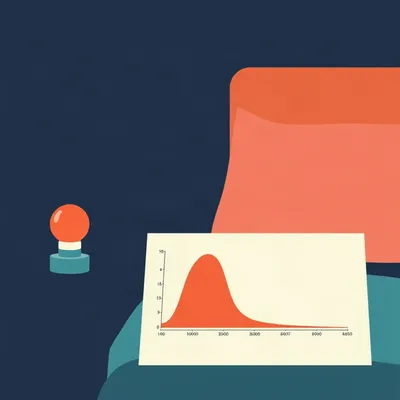
That's actually a really good analogy. Horsepower tells you the engine's total output, but torque tells you how much force is actually reaching the wheels in a useful direction. Candela is what reaches the target. And here's the thing about candela and distance — it's brutal. Inverse-square law. Double the distance, and the light intensity drops to one quarter. So to double your throw distance, you need four times the candela. A one-kilometer throw requires about two hundred fifty thousand candela. A two-kilometer throw requires a million candela. To reach three kilometers, you'd need over two million candela.
Every additional kilometer of throw costs you exponentially more candela. It's not a linear game.
It's punishing. And that's why these professional throwers look the way they do. The TM39 has a seventy-eight-millimeter reflector. That's three inches across. It's wide and deep, shaped like a satellite dish, because the size of the reflector directly determines how much of the LED's light you can capture and focus. A larger reflector collects more photons and collimates them into a tighter beam.
Collimation being the process of making all the light rays parallel.
An LED by itself emits light in a hemisphere — roughly a hundred eighty degrees. Most of that light is going sideways or backwards relative to where you want it. The reflector's job is to catch those off-axis photons and redirect them forward, all traveling in the same direction. The deeper and wider the reflector, and the more precisely it's shaped — usually a parabola — the tighter the beam.
The LED itself matters too. You can't just put any LED behind a big reflector and get a million candela.
No, because the other half of the equation is surface brightness — how much light is coming from each square millimeter of the LED's emitting surface. The TM39 and similar extreme throwers use something like the Luminus SBT-ninety-point-two. It's an LED the size of a small postage stamp that can be driven at twenty-plus watts, producing an enormous amount of light from a very small area. The smaller and brighter the source, the easier it is to focus into a tight beam. If you had a large, diffuse light source — like a big COB LED array — even a perfect reflector couldn't collimate it into a pencil beam. The source has to be nearly a point.
It's a big reflector plus a tiny, insanely bright LED plus precise focal engineering. And the result is a beam that's maybe five to ten degrees wide.
Which is why it's useless for anything close. At ten meters, a five-degree beam is illuminating a circle about the size of a dinner plate. You can't walk a trail with that. You can't set up a tent. You can't treat an injury. It's a searchlight, not a task light.
That's exactly why the professionals carry multiple systems. Let's put some numbers on this. Compare the TM39 to something like the Nitecore P twelve — a solid consumer light.
The P twelve is rated at about ten thousand candela and a two-hundred-meter throw. That's perfectly good for walking your dog or finding something in the attic. The TM39 is one point two million candela and two point two kilometers. That's a hundred-twenty times the candela, eleven times the throw distance. It's not just a better version of the same thing — it's a fundamentally different tool designed for a fundamentally different job.
The TM39 isn't even the top of the line anymore. There's the Acebeam X seventy-five pushing two and a half kilometers.
The ceiling keeps moving. But the physics doesn't. You still need a large reflector, a high-intensity LED, and a lot of power. The TM39 runs on four eighteen-six-fifty cells, which are each about the size of a thumb. That's a lot of energy in your hand, and thermal management becomes a real problem. At twenty-plus watts, that LED is generating serious heat. Professional lights have to manage that with finned heads, thermal step-downs, sometimes even active cooling.
Let's ground this in an actual scenario. Walk me through how a SAR team uses a thrower in a real search.
Picture a team searching for a lost hiker in Rocky Mountain National Park. It's two in the morning, the hiker was last seen near a trail that runs along a series of ridgelines. The terrain is steep, heavily treed in places, with exposed rock faces. The team arrives at a vantage point — maybe a fire road that gives them a view across a valley. One member pulls out a thrower like the TM39 and starts methodically sweeping the opposite ridgeline, about one and a half kilometers away. The beam is tight enough that they can paint individual features — that cluster of pines, that rock outcropping — and look for anything that doesn't belong. A flash of color from a jacket. A glint from a water bottle. Meanwhile, the rest of the team is moving, navigating the trail underfoot using headlamps. They can't use the thrower for that — it's too narrow, and looking into the beam's hotspot would destroy their night vision.
The thrower is the team's long-range eye, and the headlamps are their feet. Two completely separate visual tasks happening simultaneously.
That's what makes it a system, not just a collection of lights. Each light is assigned to a specific sensory or operational need. If you tried to do both jobs with one light, you'd either be blind at distance or stumbling over your own feet. There's no middle ground with optics.
The headlamp in this scenario — something like the Nitecore HC thirty-five?
The HC thirty-five is a good example of a dedicated headlamp for close work. It's designed for flood, not throw. Wide beam, even illumination, hands-free. When you're navigating scree or administering first aid, the last thing you want is a hot spot bouncing around in your field of view. You want smooth, shadow-free light that lets you see depth and texture.
Which is the opposite of the thrower. The thrower creates a hot spot by design.
And that's the complementarity principle in a nutshell. But a thrower alone won't save a life. You need to be seen as well as see. That's where beacons and flood lights come in.
Let's shift to the other side of the equation. How do you design a light that's meant to be seen from kilometers away, or from an aircraft, rather than to see by?
This is where things get interesting, because the engineering problem is completely different. With a thrower, you're putting as many photons as possible into a tight cone and pointing it at something. With a beacon, you need to be visible from a wide range of angles — ideally three hundred sixty degrees — and you need to stand out against visual clutter. Intensity still matters — candela is still the measure — but now you're also contending with atmospheric scattering, competing light sources, and the quirks of human visual perception.
The stakes are different too. A beacon isn't about finding something. It's about being found.
Which is arguably more urgent. The classic scenario: a SAR ground team has located the victim and stabilized them. Now they need extraction. A helicopter is inbound, but the terrain is forested, there are no landmarks visible from the air, and the pilot is looking down at a dark patchwork of trees and rock. The team needs to mark their position in a way that says "here, exactly here" from five hundred to a thousand meters up.
A white flashlight beam isn't going to cut it.
It might not. White light scatters in haze and fog. It blends with other white light sources — headlights, campfires, flashlights from other teams. And a tight beam from a thrower is almost invisible unless you're standing directly in its path. If the pilot is off-axis by twenty degrees, they see nothing.
You need color, and you need spread.
Red is the workhorse for a reason. Red light scatters less in the atmosphere than blue or white — longer wavelength, less Rayleigh scattering. It also preserves night vision for the ground team, which matters if they're going to keep working after the helicopter leaves. And crucially, red stands out against natural backgrounds. There's very little red in a forest at night. A flashing red beacon reads instantly as artificial and intentional.
The Nitecore SRT seven has a dedicated red LED for exactly this.
And it's not just a red filter over a white LED — that would waste most of the output. It's a dedicated red emitter running at its most efficient wavelength. The SRT seven in strobe mode pushes over ten thousand candela from that red LED, with a wide enough beam pattern that it's visible from most angles. In perfect darkness, the human eye can detect a single candela at one kilometer. But perfect darkness doesn't exist in the real world. You've got moonlight, haze, light pollution, the helicopter's own searchlight washing out the ground. So ten thousand candela gives you a safety margin — it cuts through.
The strobe pattern itself is doing work here. It's not just for attention.
There's research on this. A twenty twenty-one paper in the Journal of the Optical Society of America found that strobe patterns can be detected at up to three times the distance of a steady light at the same intensity. The human visual system is wired to notice change. A flashing light triggers motion detection, even in peripheral vision. A steady light can be lost in the noise.
You're engineering for the weaknesses of the human eye as much as for the physics of light transmission.
That's what separates a professional beacon from a consumer flashlight with a strobe mode. The strobe pattern on a professional beacon is tuned — specific frequencies, specific duty cycles — to maximize detectability. The SRT seven's beacon mode isn't just blinking. It's a designed signal pattern. Some beacons even use coded pulses that can convey information — team ID, status — to an aircraft.
That's the kind of detail that explains why these things cost what they cost. It's not just a brighter LED and a bigger battery.
It's not just the light. The housing has to survive being dropped on rock, submerged in water, operated with frozen fingers in the dark. The switch has to be tactile enough to find by feel, positive enough that you know it's engaged even when you can't hear the click over wind and rotor noise. The battery has to work at minus twenty Celsius. Every single component is specified for a failure mode that could kill someone.
Let's talk about the Rocky Mountain rescue. You mentioned twenty twenty-three.
This was a case that got written up in a few SAR after-action reports. Hiker went off-trail in Rocky Mountain National Park, late fall, temperatures dropping fast. The initial search involved ground teams working a series of cliff faces and drainages. One of the team leads had a TM39 and used it to sweep a one-point-five-kilometer cliff face from an opposing ridge. That's how they spotted the hiker's pack — a tiny flash of orange fabric in a crevice. Once they had the location, the ground team moved in, but the extraction was the hard part. The terrain was too steep for a ground carry, so they called in a helicopter. The team marked their position with red beacons — SRT seven-type lights — and the pilot reported picking them up from about eight hundred meters out, through light fog. Without the beacons, they would have had to guide the pilot in by radio, which takes time and introduces error. The combination of the long-range thrower for search and the beacons for extraction — two separate systems, two separate jobs — cut the total operation time by an estimated forty percent compared to what they'd have managed with conventional lighting.
Forty percent is enormous. In a hypothermia case, that's the whole game.
It's the difference between finding someone conscious and finding someone who's been unconscious for an hour. And that's why agencies spend five hundred dollars on a flashlight. It's not gear enthusiasm. It's a tool that pays for itself in time saved on a single operation.
The complementarity goes beyond just thrower plus beacon. What does a typical SAR team member's lighting kit actually look like?
It varies by role, but a common loadout would be: a thrower on a shoulder strap or in a chest rig for long-range search, a headlamp for hands-free close work and navigation, a beacon — often clipped to the back of a pack or helmet — for position marking, and sometimes a dedicated flood light for scene illumination if they're setting up a staging area or treating a patient. Four lights, four distinct jobs.
A fifth if you count the backup.
Always a backup. Usually a compact light that can do a passable impression of any of the above in a pinch. Something like the Nitecore P twelve, actually — a general-purpose light that lives in a pocket and only comes out if a primary fails.
The professional kit isn't about having the brightest possible light. It's about having the right light for each visual task, and redundancy.
Switching between them is muscle memory. You don't think about it. You're scanning with the thrower, you spot something, you drop the thrower — it's on a lanyard — and your headlamp is already on for the approach. The beacon is already clipped to your pack, running, so the incident commander can track your position. It's a workflow.
Which brings me to a question I think a lot of listeners would have. Is any of this relevant to someone who isn't a professional? If you're building a preparedness kit as a civilian, should you be thinking in systems too?
And this is where I think Daniel's original observation was sharp. He noticed the lineup and realized it implied a system, not just a product catalog. For a civilian preparedness kit, you don't need a TM39. But the principle of complementarity still applies. A hundred-dollar headlamp plus a hundred-dollar thrower will cover more scenarios than a single two-hundred-dollar light that tries to do everything.
Because the two-hundred-dollar do-it-all light will be mediocre at both throw and flood.
It'll be fine. It won't be good. And in a situation where you actually need to see something at three hundred meters, "fine" isn't enough. I'd rather have a dedicated thrower that reaches five hundred meters and a dedicated headlamp that gives me perfect close-up light than one light that does a passable job at both.
The takeaway isn't "go buy a five-hundred-dollar flashlight." It's "think about your lighting as a system, not a single purchase.
Pay attention to the specs that actually matter. For throw, look at candela, not lumens. For flood, lumens are more relevant, but also look at beam angle — a thousand lumens in a tight beam is useless for close work. For a beacon, you want candela plus strobe plus, ideally, a colored LED option. And for everything, look at build quality and weather sealing. A light that fails when it gets wet isn't a preparedness tool, it's a liability.
The spec sheet literacy is half the battle. Most people walk into a store, see "two thousand lumens" on the box, and think they're getting a searchlight.
They're getting a very bright flood light that won't reach past a hundred meters. The industry doesn't make this easy. Candela requires explanation. So the packaging leads with lumens, and the candela rating is in four-point font on the back. But once you know to look for it, you can make informed decisions.
There's a broader principle here too. The complementarity idea applies to a lot of preparedness gear. Binoculars and a monocular. Fixed blade and folding knife. You optimize for role-specific tools, not for one tool that does everything passably.
Professionals figured this out a long time ago. Tradespeople don't carry a single adjustable wrench — they carry a set of fixed wrenches. Chefs don't use one knife for everything. The multi-tool is for when you can't carry the real tools. And yet in the consumer gear world, there's this persistent fantasy of the one perfect item that does everything.
The Swiss Army knife fallacy.
And look, Swiss Army knives are great for opening packages and tightening the occasional screw. But if you need to baton firewood, you want a fixed-blade knife. If you need to see a ridgeline at two kilometers, you want a thrower. The right tool for the job isn't a marketing slogan — it's physics.
Let's talk about something that's been in the back of my mind through all of this. The miniaturization trajectory. The TM39 fits in a jacket pocket. Five years ago, a million-candela light was the size of a soda can and needed a shoulder strap. What's the ceiling here?
The ceiling is moving fast. The Acebeam X seventy-five is already at two point five kilometers. There are prototype LEDs coming out of Cree and Luminus that push surface brightness even higher. Battery energy density keeps improving. And the optics — total internal reflection lenses, or TIR optics — are getting more efficient than traditional reflectors. A TIR lens uses internal refraction to collimate light, and it can be more compact than a reflector for the same throw. The next generation of throwers will probably use hybrid TIR-reflector designs that squeeze even more candela out of a smaller package.
We're approaching the point where a pocket-sized light can do a kilometer of throw for under a hundred dollars.
We're close. There are already lights in the hundred-fifty-dollar range pushing eight hundred meters. Give it another few years, and a thousand-meter throw in a pocket form factor at a consumer price point is entirely realistic.
What does that mean for everyday carry? For personal safety?
It changes the calculus. A light that can illuminate a threat at two hundred meters gives you time to react. A light that can signal for help from a kilometer away changes your relationship to being lost or injured. It's not just a convenience — it's a capability that used to be reserved for professionals, and it's trickling down. The same way GPS went from military-only to your phone, extreme throw and beacon technology are going from SAR teams to your pocket.
The beacon side — are we going to see consumer-grade lights with aviation-visible signaling?
We already are, to some extent. The SRT seven is a consumer-accessible light with a professional-grade beacon mode. But the real frontier is integration. Imagine a light that pairs with your phone and transmits your GPS coordinates via coded light pulses — visible to a drone or a helicopter. That's not science fiction. The modulation technology exists. It's just a question of packaging it into a consumer product.
The next time someone sees a five-hundred-dollar flashlight and thinks it's just for enthusiasts with more money than sense —
They should remember: it's a tool designed to be seen from a helicopter, to cut through fog at two kilometers, and to work flawlessly when someone's life depends on it. The price isn't about the lumens. It's about the engineering, the reliability, and the fact that in the moment it's needed, it cannot fail.
The fact that it fits in a backpack is genuinely remarkable. A million candela from something you can hold in one hand. That's a triumph of optical engineering, thermal management, and battery technology all converging.
We're living in a golden age of portable lighting, and most people don't realize it. The flashlight in your glove box is brighter than what a nineteen-eighties search-and-rescue team had access to. The headlamp in your camping kit would have been military-grade hardware thirty years ago.
The professional stuff — the TM39s and SRT sevens — is pushing into territory that used to require vehicle-mounted equipment.
Which loops back to the system design point. As the technology improves, the distinction between roles becomes clearer, not fuzzier. You can build a better thrower, a better flood light, a better beacon — but you still can't build one light that does all three optimally. The physics of optics doesn't budge. So the professionals will keep carrying multiple lights, and the informed consumers will too.
For someone building a preparedness kit — whether they're worried about geopolitical tensions or just want to be ready for a power outage — the advice is: think in systems, look at candela not lumens for throw, don't try to find the one perfect light, and understand that the expensive professional gear is expensive for reasons that have nothing to do with marketing.
If you want a concrete starting point, a good headlamp and a decent thrower — something in the one-hundred-dollar range each — will cover more ground than any single light at twice the price. That's not an endorsement of any particular brand. It's just physics.
Speaking of things that have nothing to do with physics — and now: Hilbert's daily fun fact.
In the seventeen-eighties, astronomers observing from Cape Verde reported that certain transient lunar phenomena — brief flashes or color changes on the moon's surface — appeared to produce faint acoustic signatures when monitored with early resonant detection chambers. The effect was never replicated and remains unexplained.
Acoustic signatures from moon flashes.
Someone in the seventeen-eighties built a resonant chamber to listen to the moon.
Of course they did.
Hilbert, I have so many questions, and I suspect none of them have answers.
That's probably for the best. This has been My Weird Prompts. Thanks to our producer Hilbert Flumingtop. You can find us at myweirdprompts dot com, and if you enjoyed the episode, leave us a review wherever you listen. We'll be back soon.