Daniel sent us this one — and it's personal. He had his gallbladder out seven years ago and has been dealing with digestive problems ever since. He's asking two things. First, about the constant trickle of bile into the small intestine, whether that actually damages the tissue over time, and if anyone's come up with ways to mitigate it beyond changing how the surgery is done. Second, he's pointing out something most people don't think about — that the gallbladder and bile release have signaling functions beyond digestion, specifically mediating the pancreatic response, and he wants to know what that mechanism is and whether there are treatments to restore any of that lost function. This is a meaty one.

It really is. And the prompt gets at something the standard surgical follow-up almost never addresses. You get your gallbladder out, they tell you you'll be fine, you can eat normally, maybe avoid fatty meals for a bit — and then for a significant chunk of patients, nothing is fine. And nobody connects the dots.
The classic "you're cured, now go away" handoff.
So let's start with the first question, because the constant bile drip is the thing that sounds viscerally wrong to anyone who's had the surgery and is still suffering. You can feel something's off. The question is whether that intuition holds up at the tissue level.
So here's what happens normally. Your liver produces bile continuously — about six hundred to a thousand milliliters a day. But the gallbladder stores it, concentrates it by a factor of five to ten, and releases it in a coordinated pulse when you eat, triggered by cholecystokinin. After cholecystectomy, that storage and pulsing system is gone. The bile just drips steadily into the duodenum, twenty-four seven.
You go from a fire hose that only turns on when food arrives to a leaky faucet that never stops.
That's the image. And the small intestine is not designed for constant bile exposure on an empty tract. The terminal ileum normally reabsorbs about ninety-five percent of bile acids, but that system evolved to handle intermittent loads, not a continuous stream. When bile pools in the small intestine between meals, especially overnight, you get what researchers call a "duodenogastric bile reflux" pattern — bile backs up into the stomach, and it sits in the duodenum and jejunum far longer than it should.
That causes actual tissue damage?
Bile acids are detergents — they emulsify fats, which is their job, but they also disrupt cell membranes. At high concentrations, they strip the protective mucus layer off the intestinal epithelium. There's solid research showing that chronic bile acid exposure increases intestinal permeability — the so-called leaky gut phenomenon — by damaging tight junction proteins between epithelial cells. A group at the Mayo Clinic published work on this showing elevated serum endotoxin levels in post-cholecystectomy patients with chronic diarrhea, which is a marker of bacterial translocation across a compromised gut barrier.
So the bile is literally scrubbing away the gut lining, and then bits of bacteria leak through into the bloodstream?
In a subset of patients, yes. And it gets worse. There's evidence that chronic bile acid exposure induces DNA damage in intestinal epithelial cells through oxidative stress pathways. Bile acids at high concentration generate reactive oxygen species, which cause double-strand breaks. This has been studied primarily in the context of Barrett's esophagus and esophageal adenocarcinoma — bile reflux into the esophagus is a known cancer risk — but the same chemistry applies in the small intestine.
The cancer risk isn't just theoretical.
The data on small intestinal cancer specifically is limited because it's a rare cancer to begin with, but there are cohort studies showing a modest but statistically significant increased risk of right-sided colon cancer after cholecystectomy. The proposed mechanism is exactly this — chronic bile acid exposure in the proximal colon, causing mucosal injury and compensatory hyperproliferation, which over decades can lead to adenoma formation.
Of course there are.
Here's the thing most gastroenterologists don't tell patients. The bile acid composition actually changes after cholecystectomy. Without the gallbladder's concentrating and acidifying function, the bile acid pool becomes more hydrophilic — more water-soluble — which sounds good until you realize it means the bile acids are less efficiently reabsorbed in the ileum. So more of them reach the colon, where bacteria convert primary bile acids like cholic acid into secondary bile acids like deoxycholic acid. Deoxycholic acid is particularly cytotoxic and is the one most strongly implicated in colon carcinogenesis.
The surgery doesn't just change the timing of bile release — it changes the bile itself.
It changes the entire enterohepatic circulation. The bile acid pool circulates faster — instead of cycling two to three times per meal, it cycles continuously. The liver tries to compensate by upregulating bile acid synthesis, but the feedback loops are disrupted because the bile acid sensor FXR in the ileum is getting hit with a constant low-level signal instead of a clear postprandial peak.
Farnesoid X receptor. It's the master bile acid sensor. When bile acids bind to FXR in the ileum, it triggers release of fibroblast growth factor nineteen, which travels through the portal vein to the liver and tells it to shut down bile acid synthesis. It's a negative feedback loop. But after cholecystectomy, the signal is muddy — constant low-level activation instead of a clean on-off. The liver gets confused and keeps producing.
You've got more bile, sloshing around constantly, changing composition, stripping the gut lining, and the regulatory system that's supposed to keep it in check is getting static instead of a clear signal. That's a cascade.
It is a cascade. And this brings us to the mitigation question. What can be done beyond changing the surgical approach?
Because you can't put the gallbladder back.
So the first line is bile acid sequestrants — cholestyramine, colesevelam, colestipol. These are resins that bind bile acids in the intestinal lumen and prevent them from causing diarrhea and mucosal damage. They work, but they're unpleasant. Cholestyramine is a gritty powder you mix with water, it tastes terrible, and it causes bloating and constipation. Colesevelam is a tablet and better tolerated, but it's expensive and often not covered by insurance for this off-label use.
These are just binding the bile, not fixing the underlying timing problem.
They're a mechanical solution — a sponge. The more interesting approaches are pharmacological. There's a drug called obeticholic acid, which is a synthetic FXR agonist. It essentially mimics the signal that bile acids normally send through FXR, telling the liver to reduce bile acid production. It's FDA-approved for primary biliary cholangitis, but there have been small studies looking at it for bile acid diarrhea, including post-cholecystectomy cases.
Does it work?
The data is mixed. It reduces bile acid synthesis and improves stool consistency in some patients, but the side effect profile is rough — pruritus, which is severe itching, in a significant percentage of patients. And there are concerns about long-term cardiovascular safety. The LDL cholesterol elevation with obeticholic acid is not trivial.
You trade diarrhea for itching and possibly a heart attack down the road.
Not an ideal trade. There are newer FXR agonists in development — tropifexor, cilofexor — that are more selective and may have better side effect profiles, but none are approved for post-cholecystectomy syndrome yet. They're in phase two and three trials primarily for NASH, non-alcoholic steatohepatitis.
What about dietary approaches? Is there anything that actually helps beyond avoiding fat?
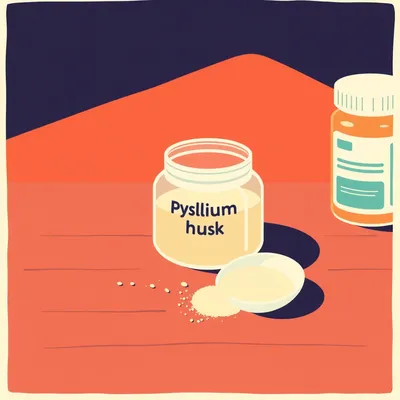
This is where it gets interesting. There's emerging research on soluble fiber — specifically psyllium husk — as a natural bile acid binder. Psyllium forms a gel in the intestine that can trap bile acids and slow their transit. A randomized controlled trial from the University of Michigan in — I think it was published in twenty twenty-three — showed that psyllium reduced diarrhea severity in post-cholecystectomy patients by about forty percent compared to placebo. It's not as potent as cholestyramine, but it's cheap, safe, and well-tolerated.
The sloth-approved solution.
Leaf medicine meets actual evidence. But the timing matters. Taking psyllium before meals, particularly the evening meal, seems to be most effective because it captures the bile that would otherwise pool overnight.
You're creating a temporary gel barrier that mimics what the gallbladder used to do, just in a much cruder way.
A poor man's gallbladder, yes. There's also work on timed eating patterns. One of the few things that actually helps regulate the bile acid cycle post-cholecystectomy is eating smaller, more frequent meals. It gives the continuous bile flow something to work on, rather than letting it accumulate on an empty gut.
Which is the opposite of intermittent fasting, which everyone's been told is metabolically magical.
This is a real tension for post-cholecystectomy patients who are otherwise healthy and drawn to intermittent fasting for metabolic benefits. If you skip breakfast and don't eat until noon, that's twelve to sixteen hours of undiluted bile sitting in your duodenum. For someone with an intact gallbladder, the bile is stored safely in the gallbladder during the fast. After cholecystectomy, there's no safe storage — it's just sitting there, in contact with your intestinal lining.
Intermittent fasting after gallbladder removal is basically marinating your small intestine in detergent for half the day.
not a medically precise description, but it's not wrong either.
I'll take it. Alright, let's move to the second part of the prompt. The signaling function. What does the gallbladder do beyond storing bile?
This is where the gallbladder goes from being a dumb storage bag to a sophisticated endocrine-like organ. The key player is cholecystokinin, or CCK. When fat and protein enter the duodenum, specialized cells in the intestinal lining called I-cells release CCK. CCK does two major things simultaneously. It binds to receptors on the gallbladder, causing it to contract and squirt bile into the duodenum. And it binds to receptors on the pancreas, stimulating the release of digestive enzymes — lipase, amylase, proteases.
It's a coordinated signal. One hormone says "food is here" and both the bile system and the enzyme system respond together.
And the coordination matters because bile and pancreatic enzymes work as a team. Bile emulsifies fats into tiny droplets, which increases the surface area for pancreatic lipase to do its work. Without bile, lipase is dramatically less effective. Without lipase, the emulsified fat just sits there. They're a paired system.
What happens to this signaling after cholecystectomy?
The CCK is still released. The I-cells don't know the gallbladder is gone. CCK levels actually go higher after cholecystectomy because there's no gallbladder to respond to it, so the negative feedback loop is broken. Normally, when the gallbladder contracts and bile enters the duodenum, bile acids themselves suppress further CCK release — another feedback loop. Without that suppression, CCK levels spike higher and stay elevated longer.
The pancreas is getting a louder, longer signal.
The question is what that does over time. There's evidence that chronic CCK elevation leads to pancreatic hypertrophy — the pancreas actually gets larger — and increased enzyme synthesis. Some researchers think this contributes to the phenomenon of post-cholecystectomy pancreatitis, which is a real but underrecognized entity.
Wait, pancreatitis after gallbladder removal? Isn't the whole point of removing the gallbladder to prevent gallstone pancreatitis?
Yes, and it does prevent that — if the pancreatitis was caused by a gallstone blocking the ampulla of Vater. But there's a separate mechanism where the dysregulated CCK signaling and the constant low-grade bile reflux into the pancreatic duct can cause inflammation. The sphincter of Oddi, which controls the flow of bile and pancreatic juice into the duodenum, can become dysfunctional after cholecystectomy. It's called sphincter of Oddi dysfunction, and it's controversial — some gastroenterologists think it's overdiagnosed, others think it's underrecognized.
The sphincter of Oddi. That sounds like a minor character in a Roman political drama.
It's a real anatomical structure, and it's finicky. When it spasms or fails to relax properly, you get back-pressure into both the bile duct and the pancreatic duct. That back-pressure can cause pain and, in severe cases, pancreatitis. The mechanism is thought to be related to the loss of the gallbladder's buffering effect — normally, the gallbladder absorbs pressure waves from the common bile duct. Without it, those pressure waves transmit directly to the sphincter.
The gallbladder was acting as a shock absorber for the whole biliary-pancreatic system.
A hydraulic shock absorber, yes. And when you remove it, the system gets jittery. Pressure spikes that used to be dampened now hit the sphincter directly.
That's the kind of thing nobody tells you in the surgical consult.
To be fair to surgeons, the majority of patients don't develop sphincter of Oddi dysfunction. The incidence is estimated at somewhere between five and fifteen percent. But for those who do, it's debilitating — severe episodic upper abdominal pain, often misdiagnosed as irritable bowel syndrome or functional dyspepsia for years before someone thinks to check.
This is where it gets invasive. The gold standard is ERCP with sphincterotomy — they go in endoscopically, cut the sphincter, and open it permanently. It relieves the pressure, but it also removes the one-way valve that prevents intestinal contents from refluxing back into the bile and pancreatic ducts. So you're trading one problem for a potential other problem.
Like adopting a feral cat.
I'm not sure that analogy...
You solve the mouse problem, now you've got a cat problem.
The point stands. There are also pharmacological approaches — nitrates and calcium channel blockers can relax the sphincter temporarily, but they're not great long-term solutions. Some pain management specialists use tricyclic antidepressants at low doses, not for depression but for their neuromodulatory effects on visceral hypersensitivity.
We've got bile acid sequestrants, FXR agonists, psyllium, sphincterotomy, tricyclics. None of these fix the underlying problem. They're all downstream patches.
That's the honest truth about post-cholecystectomy syndrome. There is no replacement for the gallbladder. It's not a vestigial organ. It's not the appendix. It has multiple integrated functions — storage, concentration, timed release, pressure buffering, and signaling coordination — and when you remove it, you lose all of them simultaneously.
Which brings us to the question of whether there's any way to restore some of that lost function. And it sounds like the answer is: not really, not yet.
Not in a curative sense. But there are some interesting directions. One is neurostimulation. The vagus nerve mediates a lot of the gallbladder's response to food — it's part of the cephalic phase of digestion, where just seeing and smelling food triggers gallbladder contraction. After cholecystectomy, that vagal signaling still happens, but it has no gallbladder to talk to. There's research on vagal nerve stimulation to modulate pancreatic secretion and gut motility in ways that might partially compensate.
Is this like a pacemaker for your digestive system?
In a loose sense. Vagal nerve stimulation is already used for epilepsy and depression — it's an implanted device. Applying it to post-cholecystectomy digestive dysfunction is very experimental. There have been a few small pilot studies, mostly in Europe, but nothing close to clinical adoption.
What about the surgical approach itself? The prompt mentioned "beyond changing the surgical approach" — implying there might be variations that preserve some function.
The standard laparoscopic cholecystectomy removes the entire gallbladder. But there's a procedure called subtotal cholecystectomy, where they leave a portion of the gallbladder in place, usually the part attached to the liver, when the anatomy is too inflamed or scarred to safely remove the whole thing. It's done as a bail-out procedure, not as a planned function-preserving surgery. But some surgeons have argued that leaving a small gallbladder remnant might preserve some CCK responsiveness and bile storage capacity.
The data is sparse. The remnant usually scars down and doesn't function as a proper gallbladder. But there are case reports of patients with gallbladder remnants who have better digestive function than those with complete removal. It's not a standard option, and most surgeons would say the risk of leaving remnant stones or developing stump cholecystitis outweighs the potential benefit.
It's a niche idea, not a real alternative.
The more futuristic approach is tissue engineering. There have been attempts to create bioartificial gallbladders using decellularized gallbladder scaffolds reseeded with the patient's own cells. A group in Japan published a proof-of-concept in a rat model a few years ago. They took a donor gallbladder, stripped it of cells, repopulated it with epithelial and smooth muscle cells from the recipient rat, and implanted it. It contracted in response to CCK and concentrated bile.
A rebuilt gallbladder. That's wild.
It's years away from human trials, if it ever gets there. The regulatory pathway for a tissue-engineered organ that isn't life-saving — because you can live without a gallbladder, even if you live poorly — is almost nonexistent. The FDA doesn't have a clear framework for "this organ replacement would dramatically improve quality of life but isn't medically necessary.
The quality of life problem. That's the whole thing, isn't it? Nobody dies from not having a gallbladder. They just live worse.
The medical system is not well set up to prioritize that. Post-cholecystectomy syndrome is underdiagnosed because the symptoms — bloating, diarrhea, abdominal discomfort, fatty food intolerance — are nonspecific and easy to dismiss. A patient comes in six months after surgery saying "I feel terrible whenever I eat," and the surgeon says "the surgery went fine, your ducts are clear, it's not a surgical problem," and the gastroenterologist says "your colonoscopy is normal, maybe it's IBS." And the patient gets bounced back and forth.
The motility blind spot.
That's exactly the phrase. Functional disorders fall through the cracks between surgical and medical specialties. The surgeon's job was to remove the gallbladder without complications — done. The gastroenterologist's job is to rule out structural disease — done. Nobody owns the functional aftermath.
What should a patient actually do? If you're seven years out, like the prompt describes, and you're still struggling — what's the practical path?
Step one is to find a gastroenterologist who specializes in functional disorders or neurogastroenterology — they exist, but you have to seek them out, usually at academic medical centers. Step two is to get a proper diagnostic workup, which should include a SeHCAT scan if available. SeHCAT is a nuclear medicine test that directly measures bile acid retention. You swallow a capsule with a synthetic bile acid tagged with selenium-75, and they scan you a week later to see how much you retained. If retention is below fifteen percent, you have bile acid malabsorption.
That's available?
In Europe, Canada, and the UK, yes. In the United States, no. The FDA never approved it. American patients have to rely on a therapeutic trial of bile acid sequestrants — if the drug works, you probably have bile acid malabsorption. It's diagnostic through treatment, which is not ideal.
That's absurd. It's a radioactive pill and a scan. We do vastly more complex nuclear medicine every day.
It's a regulatory artifact. SeHCAT was developed in the nineteen eighties, and by the time the FDA's modern approval framework existed, the patent had expired and no company wanted to spend the money on a clinical trial for a generic diagnostic agent. So American patients just don't get it.
Covering the covers.
Step three, after diagnosis, is a systematic trial of interventions. Start with psyllium and dietary modification — smaller, more frequent meals, moderate fat restriction but not zero fat, because you still need some fat to stimulate whatever residual CCK response you have. If that's insufficient, add a bile acid sequestrant. If the sequestrant works but the side effects are intolerable, try a different one — colesevelam is better tolerated than cholestyramine for most people. If diarrhea persists, consider adding loperamide on a scheduled basis rather than as needed.
If all that fails?
Then you're looking at the experimental stuff — FXR agonists off-label, sphincter of Oddi evaluation if the pain pattern fits, and possibly neuromodulators for visceral hypersensitivity. Gabapentin and pregabalin have some evidence in functional gastrointestinal disorders. Low-dose tricyclics, as I mentioned. It becomes a pain and quality-of-life management problem rather than a digestive problem per se.
Through all of this, the patient is essentially building their own treatment protocol through trial and error, because there's no standard pathway.
Welcome to post-cholecystectomy syndrome. It's a do-it-yourself disease.
Let me ask you something. You were a pediatrician. Did you ever see gallbladder problems in kids?
Rarely, but yes. The most common scenario was hemolytic diseases — sickle cell disease, hereditary spherocytosis — where chronic red blood cell breakdown leads to pigment gallstones. Those kids sometimes needed cholecystectomy. And the long-term digestive consequences in a growing child are even more poorly studied than in adults.
A twelve-year-old with sickle cell gets their gallbladder out, and then they're dealing with this for the next seventy years.
Nobody is tracking those outcomes systematically. The surgical literature on pediatric cholecystectomy is almost entirely focused on short-term complications — bile duct injury, wound infection, length of stay. There are vanishingly few studies following these kids into adulthood to see how their digestive function compares to siblings or matched controls.
That seems like a glaring research gap.
And it's not unique to cholecystectomy. Pediatric surgery in general has a follow-up problem. Kids get operated on, they're discharged, they're seen once or twice in follow-up, and then they transition to adult care and the trail goes cold. Nobody is connecting the thirty-year-old with chronic diarrhea to the cholecystectomy they had at age twelve.
The medical system is very good at acute interventions and very bad at longitudinal function.
That's the thesis of this whole conversation, really. The gallbladder is a perfect case study. It's the most commonly performed abdominal surgery in the United States — about six hundred thousand cholecystectomies a year — and we still don't have a clear picture of the long-term functional outcomes beyond "most people are fine.
"most people" is doing a lot of work there.
The oft-cited figure is that ten to fifteen percent of patients develop post-cholecystectomy syndrome. But that's based on studies using fairly narrow definitions — usually just chronic diarrhea or severe pain. If you include milder symptoms — fatty food intolerance, bloating, altered bowel habits, episodic discomfort — the numbers are probably much higher. Some surveys suggest thirty to forty percent of patients have some degree of chronic digestive complaint after cholecystectomy.
Thirty to forty percent. For a surgery done six hundred thousand times a year. That's potentially two hundred thousand people a year walking away with a chronic condition.
Most of them don't know it's connected to the surgery. They just think they developed IBS, or they're getting older, or their diet is bad. The attribution is lost because the symptoms often don't start immediately — they creep in over months or years.
The prompt's experience of seven years of struggle is not unusual. It's just underrecognized.
And that's why I appreciate the framing of the question. It's not "why did this happen to me." It's "here's the physiology, what does the research say, and what can actually be done." That's the right way to approach a chronic post-surgical condition.
Alright, let me try to synthesize the signaling piece, because I want to make sure I have it right. Food enters the duodenum. I-cells release CCK. CCK normally hits the gallbladder and the pancreas simultaneously, coordinating bile release and enzyme release. After cholecystectomy, CCK still gets released — actually more of it — but the gallbladder isn't there to respond. The pancreas still responds, but the coordination is off because the bile that's supposed to be pulsing in alongside the enzymes is just trickling in continuously. The whole duet becomes a solo with background noise.
That's a good summary. And the background noise — the continuous bile trickle — may actually interfere with pancreatic enzyme function rather than helping it. Pancreatic lipase works best at the oil-water interface of emulsified fat droplets. If bile acids are constantly present at suboptimal concentrations, the emulsification is inconsistent, and lipase efficiency drops.
You get fat malabsorption on top of everything else.
Which leads to steatorrhea — fatty stools — in a subset of patients. And fat malabsorption has downstream effects on fat-soluble vitamin absorption — A, D, E, K. There are case reports of post-cholecystectomy patients developing osteomalacia from vitamin D deficiency because they're not absorbing dietary fats properly.
The cascade keeps going. Bile trickle damages the gut lining, which impairs absorption, which causes vitamin deficiencies, which cause bone problems. All from removing what was supposed to be a nonessential organ.
The gallbladder is not nonessential. It's just non-lethal to remove. There's a difference.
That distinction should be on surgical consent forms.
Along with a clearer explanation that "you can live without it" is not the same as "you won't notice it's gone.
To answer the prompt's second question directly — are there treatments to restore the lost signaling function? The honest answer is no, not really. You can manage the symptoms, you can bind the excess bile, you can modulate the pain, but you can't recreate the coordinated CCK-driven pulse of concentrated bile that used to happen every time you ate.
The closest thing to a restorative approach would be something like a bioartificial gallbladder or a neurostimulation device that mimics the vagal signals, and neither is available. What we have is a toolkit for managing the consequences, not for restoring the function.
The toolkit is better than nothing, but it's not great.
It's better than it was twenty years ago, when the standard response was "learn to live with it." At least now we have bile acid sequestrants that work, we have a better understanding of the dietary modifications that help, and we have some awareness in the gastroenterology community that post-cholecystectomy syndrome is a real entity. But we're a long way from having a standard of care.
What's the one thing you'd want a patient to know walking out of a cholecystectomy?
That if you develop chronic diarrhea, bloating, or fatty food intolerance in the months or years after surgery, it's not in your head, it's not a separate new disease, and there are things that can help. Don't let anyone tell you the surgery went fine so you must be fine. The surgery can go perfectly and you can still have functional problems. Those things are not contradictory.
Don't do intermittent fasting.
Or at least, if you do, pay attention to how your gut responds and don't push through symptoms because some podcast told you fasting is metabolically miraculous.
Now: Hilbert's daily fun fact.
Hilbert: Cinnamon gets its name from the Phoenician word "qinnamon," which entered Hebrew as "qinnamon" and Greek as "kinnamomon" — both meaning "sweet cane." But the spice we call cinnamon today is almost never the true Ceylon cinnamon of antiquity. In the nineteen sixties, Mauritius briefly became the world's third-largest exporter of cinnamon bark, though most of it was actually Cinnamomum camphora — the camphor tree — sold as a cheaper substitute that nobody in the importing countries could distinguish from the real thing.
The cinnamon on my toast this morning might have been camphor.
You eat toast?
Here's the forward-looking thought I'm left with. We remove six hundred thousand gallbladders a year in the United States alone. We're getting better at understanding what goes wrong afterward, but we're still terrible at telling patients what to expect and what to do about it. The next frontier isn't a better surgical technique — it's a better post-surgical framework. One that treats the gallbladder as a functional organ whose absence has functional consequences, not as a disposable bag of stones.
That framework needs to be longitudinal. Not a six-week post-op check, but a system that follows patients for years and connects their digestive symptoms back to the surgery. The data infrastructure for that doesn't exist yet, but it should.
Our producer Hilbert Flumingtop keeps this whole operation running, and we are grateful. This has been My Weird Prompts. Find us at myweirdprompts dot com, and if you have a minute, leave a review wherever you listen — it genuinely helps other people find the show.
Until next time.