Daniel's been building out this inventory marking series with us, and we've done the engraving corner, we've done the sticker corner, and now he's asking about the third one. Embossing. The thing he noticed is that every plastic part he picks up seems to have these impossibly tiny raised numbers baked into it from the factory, and he wants to know if there's any way to do that after the fact. He's also asking whether it's actually an additive process the way it looks, whether the material and color mismatch is a real problem, and whether direct thermal printing could handle text that's only a few millimeters long. His suspicion is that this is all robotic production line territory.

And the answer to that suspicion is more interesting than a straight yes or no, because embossing occupies this strange middle ground in the marking taxonomy. It's not engraving, which removes material. It's not printing, which deposits material. The substrate itself becomes the marking.
So let's start with what embossing actually is, mechanically, because the answer changes everything downstream.
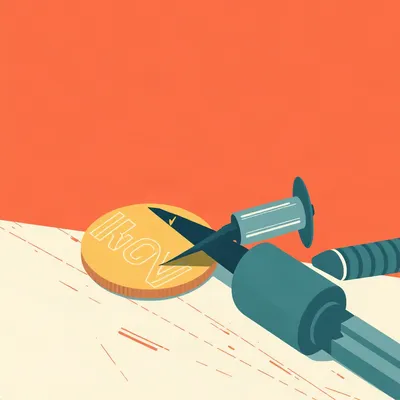
Embossing is a deformation process. You're pressing a die into the surface hard enough that the material yields, and when you pull the die away, the displaced material stays where you pushed it. On thermoplastics, this works because polymer chains have a kind of memory. Heat and pressure rearrange them, and once you've pushed the material past its yield point, the deformation holds. The plastic doesn't spring back the way rubber would.
So the material isn't being added at all. It's being shoved around.
Right. Daniel said embossing looks like the opposite of engraving because engraving removes material and embossing seems to add it. But it doesn't add anything. It displaces. The raised lettering is just material that used to be flat and is now humped upward because the die forced it out of the way.
Which means the color mismatch problem he asked about is real, but not for the reason he thinks.
It's not like you're stamping a different colored material onto the surface. What happens is the deformed region changes how light refracts. When you stretch and compress pigmented plastic, you alter the surface finish locally. The pigment is still the same pigment, but the surface texture is different, so it catches light differently. On some plastics it's barely visible. On others it's quite noticeable.
I've seen that on black plastic enclosures. The raised part number has this faint sheen to it that the surrounding surface doesn't.
That's the deformation. The surface roughness changed. You're seeing the difference between a molded surface and a stretched one.
So the real question Daniel's asking, underneath all of it, is whether this can be done after the fact at the scale factories achieve. And the reason factories achieve that scale is that they're not doing embossing as a marking process at all. They're doing it as a molding feature.
This is the thing that reframes the whole question. When you see a tiny embossed part number on a plastic enclosure, that mark was in the injection mold. It was cut into the tool steel before a single part was ever shot. The mold closes, the plastic fills the cavity, and the mark is there. It costs nothing per unit. The expense was in the mold itself, and that gets amortized across however many thousands or millions of parts they run.
So the mark costs fractions of a cent because it's simultaneous with the molding shot. There's no separate process step.
Correct. And that's why manufacturers choose embossing over engraving in a lot of cases. Engraving after the fact is a separate operation. You have to fixture the part, run the engraver, clean up the debris. It's per-unit cost. Embossing at manufacture is free. The tradeoff is that the mark is raised above the surface, so it's exposed to wear. If you've got parts sliding against each other in a drawer, the embossed number is going to abrade faster than an engraved one would.
Because an engraved mark sits in a recess. It's protected.
Right. Anything that slides across the surface hits the raised embossing first. The engraved mark is below the plane of the surface, so abrasion passes over it. For inventory contexts where items are going to be handled, shuffled, stacked, that's a meaningful durability difference.
But Daniel's not asking whether manufacturers should emboss. He's asking whether he can. And that's where the tool landscape gets interesting.
It does. I found something that's directly relevant to his question about tiny scale. There's a company called disenparts that makes a two millimeter label semi-automatic sheet embosser. It's a metal stamping machine that operates at two millimeter character scale. That's exactly the tiny lettering Daniel's talking about on factory parts.
Two millimeter characters. That's small.
It is. And the key word is semi-automatic. It's not a robotic production line. It's a benchtop machine. Manual feed, mechanical stamping. A small shop could own one. But here's the constraint. It's a sheet embosser. The part has to be flat, sheet-like, and fed through the machine. That rules out most awkward PCB geometries, most assembled components, anything with curvature or protrusions.
So it's an existence proof that sub-three millimeter embossing isn't exclusively robotic, but it's not a solution for Daniel's actual inventory. He's marking tech components. Those aren't flat sheets.
Right. And that's the boundary. The benchtop machine can do the scale, but it can't do the geometry. The factory can do both, because the mark is in the mold and the mold defines the geometry. If the part is curved, the mark is curved with it. No aftermarket process replicates that, because you'd need to heat the part locally to its glass transition temperature while applying precisely controlled pressure to a complex surface. That's what industrial hot stamping machines do, and they cost thousands of dollars.
So the answer to Daniel's question is yes, tools exist at that scale, but they're sheet-fed and semi-automatic, not handheld. The handheld version of this doesn't exist.
Not for embossing. The physics fights you. You need pressure, and you need control, and on a curved or irregular part you need both at once. A handheld embosser would be like trying to stamp a golf ball with a hand press. The geometry defeats you.
And this is where the misconception lives. People see those tiny embossed marks on products and assume they must require impossibly expensive robotic machinery. In reality, they're molded in at the tooling stage and cost nothing per unit. The expense is in the mold, not the marking.
Which is why asking for aftermarket embossing at that scale is asking to replicate injection molding tooling. You're not asking for a marking tool. You're asking for a mold.
With the mechanism clear, the question becomes: can you do this after the fact, at the scale factories achieve?
And the answer we've just worked through is mostly no, with the one exception of the flat sheet benchtop machine. Which brings us to the actual aftermarket option Daniel asked about. Direct thermal.
Embossing turns out to be a manufacturing process masquerading as a marking method. Direct thermal is a real aftermarket technology. You can buy a handheld direct thermal printer for under a hundred dollars. The question is whether it can do text that's a few millimeters long.
And the physics of that is interesting, because the bottleneck is not what most people think it is. Direct thermal printing works by running specially coated paper past a printhead that heats tiny elements. The heat activates a chemical reaction in the coating and it turns dark. The technology is mature. Receipt printers have been doing this for decades.
And the printhead resolution is not the limiting factor.
No. Thermal printheads routinely resolve two hundred three to three hundred dots per inch. At three hundred DPI, each dot is roughly zero point zero eight five millimeters. That's mechanically sufficient for legible two millimeter text. The printhead can absolutely do it.
So if the printhead can do it, why can't the handheld printer?
Because the bottleneck is media handling and registration. The mechanism has to advance the label stock in precise increments while the printhead fires. At very small label sizes, the mechanical tolerance of the feed mechanism becomes a larger fraction of the total label length. If your label is twelve millimeters long and the feed mechanism has a tolerance of half a millimeter, that's a significant error. The text drifts, blurs, or clips.
So the printer knows how to print two millimeter text, but it can't reliably position the label under the printhead well enough to do it.
The printhead is a precision instrument. The feed mechanism is a rubber roller and a stepper motor. At large label sizes, the tolerance is a tiny fraction of the total. At small label sizes, it's not. The practical floor for handheld direct thermal is roughly six millimeter text height on labels at least twelve millimeters wide. Below that, the label stock itself becomes too flimsy to feed reliably.
Six millimeters. That's the real number. Not two.
And that's the number Daniel was skeptical about. He said he's seen handheld tools and doubted they could be useful at that level of precision. His skepticism is well-founded. The marketing will show you tiny text on a sample print, but that sample was printed on a benchtop machine with a precision feed mechanism, not on the handheld unit they're selling.
The demo print is the lie. The feed mechanism is the truth.
It connects to the embossing story in an interesting way. Both technologies have a scale floor and a geometry constraint. The benchtop embosser can do two millimeters but only on flat sheet stock. The handheld thermal printer can do six millimeters on flexible label stock but only where you can stick a label. The intersection of those two axes determines what actually works for Daniel's inventory.
So let's compare the three methods for his actual use case. Marking awkward tech components for inventory. Embossing is out for post-hoc marking of curved or assembled parts. The benchtop machine needs flat sheets. Engraving remains the winner for durability on awkward surfaces because you can put an engraved mark on almost any geometry you can fixture. And direct thermal is viable only when a flat label surface exists and the environment won't exceed the thermal paper's tolerance.
And that last point matters more than people think. Direct thermal paper is not archival. Heat darkens it. Sunlight fades it. If your inventory lives in a hot environment, or near a heat source, or in direct sun, the label will degrade. The mark doesn't just fade. It can darken across the whole label surface, because the coating is heat-sensitive everywhere, not just where the printhead touched it.
A thermal label in a hot car becomes a solid black rectangle.
Eventually, yes. And that's a failure mode engraving doesn't have. An engraved mark is just a recess in the material. It doesn't care about heat. It doesn't care about sunlight. It's there until the material itself is destroyed.
Which is why engraving keeps winning for inventory. But Daniel's question was about embossing, and the answer is more nuanced than just no. The nuance is that embossing at the tiny scale he's seeing on products isn't a marking process at all. It's a molding feature. And once you understand that, the question of aftermarket embossing becomes a question of whether you can replicate injection molding tooling on a benchtop. And the answer is, for flat sheets, partially. For everything else, no.
There's one more piece of this that I think is worth pulling out, because it connects back to something Daniel said about the additive process. He was worried about material and color mismatch because he was thinking of embossing as adding material. But it's displacing. And because it's displacing, there's another constraint he didn't mention. You can only emboss materials that deform plastically.
Meaning the material has to yield and stay yielded.
Right. Some plastics are too brittle. They'll crack instead of deform. Some are too elastic. They'll spring back. The sweet spot is thermoplastics that have been pushed past their yield point. That's why embossing works so well on polyethylene and polypropylene, the soft plastics. It's much harder on polycarbonate or acrylic, which tend to crack under localized pressure.
And that's another reason factory embossing looks effortless. The factories choose materials that emboss well. If you're doing aftermarket marking, you don't get to choose. You're marking whatever the component is made of.
Which might be glass-filled nylon, or a brittle epoxy, or a metal. None of those emboss well. The material constraint is invisible when you're looking at a finished product with a perfect embossed number, because the manufacturer picked a material that would take the mark.
So Daniel's observation that products contain tiny embossings from the factory is true, but it's a selection effect. The products that emboss well are the ones you notice embossing on.
That's a really sharp point. You don't see embossing on materials that don't emboss well, because the manufacturer wouldn't have chosen that process for that material. You're seeing the successes, not the attempts.
Which is true of a lot of manufacturing. The finished product hides all the decisions that made it possible.
And that's the thing I keep finding in this marking series. Every method looks simple until you look at the constraints. Stickers fail on curvature. Engraving creates debris. Embossing requires the right material and the right geometry. Direct thermal fades in heat. There's no universal solution.
The universal solution is knowing which constraint you're willing to live with.
For inventory, Daniel's already figured out that engraving is the default for durability. The embossing question was about whether there's a better option hiding in plain sight. And the answer is that embossing is a manufacturing process, not an aftermarket one. The direct thermal question was about whether the handheld tools are precise enough. And the answer is that the printhead is, but the feed mechanism isn't.
The printhead knows how to do it. The rubber roller doesn't.
That's the whole episode in one sentence.
Let me ask you something about the direct thermal side, because there's a detail I want to make sure we're getting right. The six millimeter floor you mentioned. Is that a hard floor, or is it more of a reliability floor?
It's a reliability floor. You can absolutely get a handheld unit to print something smaller than six millimeters on a good day with a fresh roll and a steady hand. But you can't count on it. And for inventory, you need to count on it. If the label is illegible one time in ten, that's a failure. The six millimeter number is where it becomes reliable enough to trust.
So it's not that the machine can't. It's that the machine won't, consistently.
Right. And that's the distinction Daniel was reaching for when he said he was skeptical. He wasn't doubting that the printer could produce small text at all. He was doubting that it could do it reliably enough to be useful. And that skepticism is correct.
The demo print says yes. The tenth label says no.
And the tenth label is the one that matters, because that's the one you're trying to read six months later when you're looking for a specific component.
So if Daniel wants to mark something with text only a few millimeters long, and the surface is flat enough for a label, and the environment won't cook the thermal paper, what's his actual best option?
Honestly, a benchtop thermal printer. Not handheld. The benchtop units have better feed mechanisms, better registration, and they can handle smaller label stock reliably. You lose portability, but you gain precision. If the marking happens at a workstation anyway, which for inventory intake it usually does, the benchtop is the right tool.
And if the surface isn't flat enough for a label, he's back to engraving.
Which is where he started. The series keeps circling back to engraving for a reason. It's the most flexible method for awkward surfaces. The other methods all have geometry constraints that engraving doesn't.
Though engraving has its own constraints. The debris, the ventilation, the bit wear.
Sure. No method is free. But engraving's constraints are about the process, not the geometry. You can engrave almost anything you can hold still. You can't label a curved surface with a sheet-fed embosser, and you can't stick a flat label on a cylinder without it wrinkling.
The cylinder problem. That's the sticker killer.
And it's the direct thermal killer too, because direct thermal labels are still labels. They have the same adhesion and curvature problems as any sticker. The printing technology is different, but the application technology is identical. You're still sticking a flat thing onto a curved thing.
Which is why Daniel's inventory system, which is mostly tech components, is going to keep leaning on engraving. The components are awkward. The surfaces are unpredictable. The geometries are hostile to labels and sheets.
That's the practical takeaway. Embossing is fascinating, and the factory economics are interesting, but for Daniel's actual use case, it's not an aftermarket option. Direct thermal is an aftermarket option, but the handheld precision ceiling is real, and the label geometry problem is the same as any sticker.
The marking triangle Daniel's been building has engraving as the durable default, stickers as the flexible but fragile option, and embossing as the factory-only process that looks like marking but is actually manufacturing.
Direct thermal as the fourth corner he added, which is really a sticker variant with better printing precision but the same application constraints.
The taxonomy keeps growing.
It does. And there's a second-order insight here that I think is worth naming. The reason factory embossing looks impossibly precise is that it isn't a marking process at all. It's a molding feature. Asking for aftermarket embossing at that scale is asking to replicate injection molding tooling. Which is why the answer to Daniel's question is yes, tools exist at that scale, but they're sheet-fed and semi-automatic, not handheld.
The reason direct thermal looks like it should work at tiny scale is that the printhead can resolve two millimeter text. But the feed mechanism can't reliably position the label well enough to deliver it. The precision is in the wrong part of the machine.
The printhead is a precision instrument bolted to a not-precision instrument.
That's the whole handheld thermal printer industry in one line.
I should be careful. There are good handheld units. But the good ones are good at what they're designed for, which is shipping labels, address labels, file folder labels. Text that's eight, ten, twelve millimeters tall. They're not designed for two millimeter text. The marketing might imply otherwise, but the feed mechanism tells the truth.
The feed mechanism always tells the truth.
It does. And it's a truth you can measure. The spec sheet will tell you the printhead resolution. It won't tell you the feed mechanism tolerance. You have to find that out by using the thing.
Which is why Daniel's skepticism is the right instinct. He looked at the handheld tools and doubted they could be useful at that level of precision. And the reason they can't is not the part he could see. It's the part he couldn't.
The invisible constraint. That's the theme of this whole series. Every marking method has an invisible constraint that determines whether it actually works.
Stickers have invisible adhesion constraints. Engraving has invisible material constraints. Embossing has invisible geometry constraints. Direct thermal has invisible feed mechanism constraints.
The inventory system that works is the one that accounts for the constraints you can't see on the spec sheet.
Which brings us back to something I've been thinking about. The factory embossing is so cheap because the mark is simultaneous with the forming process. The twist tie on a bread bag has a date code embossed into it, and that mark costs nothing because it's pressed in as the plastic strip is extruded. The economics only work when the marking and the forming are the same step.
That's the thing aftermarket marking can never replicate. You're always adding a step. The part is already formed. Whatever marking you do is a separate operation.
Unless you're willing to reform the part. Which is what the benchtop embosser does for flat sheets. It's re-deforming the material.
That's why it works for sheets but not for complex parts. A sheet is just a flat surface. You can press a die into it uniformly. A PCB with components on it isn't a sheet. It's a three dimensional object with a flat surface on one side and protrusions on the other.
The flat side might emboss fine. The protrusions make it impossible to feed through the machine.
Right. The machine doesn't care about the flat side. It cares about the overall geometry. And the overall geometry of most tech components is hostile to sheet-fed processes.
The benchtop embosser is a real tool, and it's a real answer to the question of whether tiny scale embossing exists outside robotic production lines. But it's not a real answer to Daniel's inventory problem.
It's an existence proof, not a solution.
Which is still valuable. Knowing that the boundary exists, and where it is, tells you what you're actually up against. The boundary isn't the scale. It's the geometry.
The material. And the economics. The scale is the easy part. Two millimeter characters are not hard to produce. The hard part is producing them on the right surface, in the right material, at the right cost.
The scale was never the problem. The scale was the distraction.
Hilbert: Bread bag twist ties.
What about them?
Hilbert: You mentioned them, and I want to correct something. The embossing on those wasn't done with heat at all. It was cold embossing. Just pressure. The plastic strip was thin enough that it deformed permanently at room temperature. I worked a summer in a plastics factory that made those things. The embossing wheel was a rotating brass cylinder with raised characters on it, and it pressed into the extruded strip as it came out of the machine. No heating element anywhere near it. The plastic was maybe a tenth of a millimeter thick. It just took the mark and kept moving.
The claim that you need to heat the part to its glass transition temperature is only true for thick or rigid plastics.
Hilbert: That's the correction. Thin flexible stock embosses cold. And that's why that two millimeter sheet embosser you were talking about can work without a heating element. It's not heating the sheet. It's just pressing hard enough, and the sheet is thin enough, that it yields.
That changes the way I think about the tool. I assumed it was hot stamping. But if it's cold embossing, the mechanism is simpler. No heating element, no temperature control. Just pressure and a die.
Hilbert: Simpler and cheaper. The date codes on those twist ties were smaller than two millimeters. We ran them at line speed. Zero per-unit cost, because the marking was simultaneous with the extrusion. Same as the injection molded parts. The economics only work when the forming and the marking are the same step.
Which is the core point we kept landing on. The embossing is free because it's not a separate operation.
Hilbert: The brass cylinder was the expensive part. Once that was paid for, the marks were free. We changed the date code every day. The cylinder had little rotating wheels for the numbers. You'd turn them with a screwdriver. That was the whole maintenance routine.
Rotating date wheels. That's a nice piece of engineering.
Hilbert: It was. The rest of the machine was a mess, but the embossing wheel was solid. Ran for years.
The cold embossing point actually sharpens the aftermarket question. If thin stock embosses cold, then the benchtop machine doesn't need the complex heating and pressure control of industrial hot stamping. It just needs the pressure.
Which is why it can be semi-automatic and benchtop instead of a robotic line. The constraint isn't the heat. It's the geometry. The sheet has to be thin enough to deform cold, and flat enough to feed through the rollers.
Hilbert: Most things you want to mark aren't either of those.
Which is why the answer to Daniel's question stays the same. The tool exists, but it doesn't solve his problem.
Hilbert: I'm not saying it does. I'm just saying the heat part was wrong. The bread bag ties were cold.
That's a real correction. I said you'd need to heat the part to its glass transition temperature, and that's true for the thick rigid plastic enclosures, but it's not true for thin flexible stock. The thin stuff deforms at room temperature.
Hilbert: The thin stuff deforms if you look at it wrong.
The embossing mechanism is actually two different processes wearing the same name. Hot embossing for rigid plastics, cold embossing for thin films.
The benchtop machine Daniel asked about is the cold kind. Which makes it more accessible than I thought, but still geometrically limited.
Hilbert: The bread bag ties were the easiest marking job I ever saw. The plastic came out of the extruder, the wheel pressed the date into it, and it went straight into the bagging machine. Nobody ever looked at it twice. But every bag had a date code, and the code was legible, and it cost nothing.
The invisible marking. Nobody noticed it, but it was there, doing its job.
Hilbert: That's the best kind.
It's the same economics as the injection molded enclosures. The mark is a feature of the forming process, not a separate operation. Once you see that, the whole question of aftermarket embossing becomes clear. You're not asking for a marking tool. You're asking for a forming process.
Which is why the answer to Daniel's question is what it is. Yes, tools exist at that scale, but they're sheet-fed and semi-automatic, not handheld. And the reason they're not handheld is the geometry, not the scale.
Hilbert: The scale was never the hard part. The scale was the easy part.
That's the line of the episode.
It is. And it leaves me with a question I don't have an answer to. As additive manufacturing and small-batch injection molding keep getting cheaper, does the line between factory marking and aftermarket marking start to blur? Could a desktop tool that locally heats and presses a small area become viable? Not a full mold, but a localized embossing head that can stamp a part number onto an existing component?
The physics says it's possible. You'd need to heat a small area to the glass transition temperature while applying controlled pressure, and hold it there long enough for the deformation to set. Industrial hot stamping machines do exactly that. The question is whether the cost comes down enough for a benchtop version.
Whether the geometry problem can be solved. A localized head could handle some curvature, but not all of it.
The real frontier might not be embossing at all. It might be whether the inventory system itself can move past physical marking. If every component has a unique identifier baked in at manufacture, the aftermarket marking problem disappears. But that's a conversation for another episode.
It is. And it's a good place to leave this one. The marking catalog keeps growing, and this episode filled in the embossing and direct thermal corners. Embossing turned out to be a manufacturing process in disguise. Direct thermal turned out to be a precision printhead bolted to an imprecise feed mechanism. And the cold embossing correction from Hilbert sharpened the whole picture.
Thank you to our producer, Hilbert Flumingtop, for keeping the show running and for the bread bag twist tie correction.
This has been My Weird Prompts. The human-AI collaboration podcast.
If you enjoyed this episode, leave us a review wherever you listen, or visit my weird prompts dot com for the full archive.
We'll be back soon.