Your Wi-Fi is slow. You blame your ISP, you restart your router, nothing changes. But the real enemy isn't your internet provider — it's a network called Dove in the apartment next door, squatting on your five gigahertz channel and broadcasting five dBm stronger than your own access point. Daniel sent us this one, and it's personal. He wants the playbook — every unilateral, in-apartment countermeasure to win the airwaves, from the merely aggressive to the gloriously absurd, with zero diplomacy required.

This is the Advanced Counter-Broadcast Playbook. I've been waiting for this. We're going to walk through four tiers of escalation — software and config, directional shielding and antenna geometry, active countermeasures in the legal gray zone, and then the nuclear option. The DIY SCIF. Turning your apartment into a radio tomb.
I should note that Daniel specified we are never, under any circumstances, knocking on a door or having a conversation with anyone in the building. That option does not exist.
And it shouldn't. This is a technical problem. We solve it with physics.
So who is Dove, and why should you care? Let's set the battlefield.
Here's the situation. You're in a dense residential building. The five gigahertz band is a shared commons — everyone's router is picking channels, and the problem is that consumer routers pick their channel at boot time and then just stay there. Dove's router woke up one morning, saw your channel was the least congested at that exact second, and parked itself right on top of you. It doesn't care about your channel plan. It doesn't even know you exist. It's just a dumb algorithm in a plastic box, and now you're getting fifteen megabits per second when you should be getting three hundred.
And the obvious fix — just change your own channel — doesn't work because Dove will follow you next time it reboots, or because every other channel is just as crowded.
Or you're already on the DFS channels, the ones in the five point two to five point seven gigahertz range that require radar detection, and Dove's router doesn't support those, so you thought you'd escaped — but no, Dove's on the one DFS channel your router picked, because some consumer gear does support DFS now, and here we are. The fundamental problem is that you and Dove are competing for the same frequency in the same physical space, and Dove is winning on raw signal strength.
So what's the first move? Before we start building anything?
Tier one. The software and config layer. This is the stuff you can do from your router's admin panel in about ten minutes, and it costs nothing. First, channel width. Most routers default to eighty megahertz channels on five gigahertz because it looks great on the spec sheet — more bandwidth. But an eighty megahertz channel is four times wider than a twenty megahertz channel, which means four times the probability of overlapping with Dove. If Dove is squatting on channel thirty-six at eighty megahertz, and you drop to forty megahertz on channel forty, you might dodge the overlap entirely. Your theoretical max speed drops, but your actual throughput goes up because you're not colliding with Dove's packets.
So you're sacrificing peak speed for consistency.
Right. And in practice, for most people, the difference between a clean forty megahertz channel and a congested eighty megahertz channel is night and day. You go from fifteen megabits to maybe a hundred and fifty. Second move in tier one — transmit power control. Most routers let you adjust this. If Dove is blasting at twenty-three dBm and you're at seventeen, crank yours up to match. Your router's amplifier can probably handle it. The limit in most countries is thirty dBm, or one watt, for five gigahertz. You're not going to hit that with consumer gear, but going from seventeen to twenty-three is a six dB gain, which doubles your effective range.
But doesn't that just make you the Dove for someone else?
We'll get to the tragedy of the RF commons later. For now, we're focused on winning. Third move — DFS channel hunting. The five gigahertz band includes channels fifty-two through one forty-four, which are shared with radar systems. Routers that support DFS have to listen for radar pulses and vacate the channel if they detect one. A lot of consumer gear doesn't bother implementing DFS because it adds cost and complexity, so those channels are often empty in residential buildings. If your router supports DFS, and Dove's doesn't, you can move to a DFS channel and Dove literally cannot follow you. It's like having a private frequency.
And if Dove does support DFS?
Then you're back to square one, and we move to tier two. But tier one solves the problem for a surprising number of people. The limit, though, is that you're still playing by the same rules as Dove. Same power limits, same channel options, same physics. The wall between your apartments attenuates your signal by maybe six to ten dB depending on construction — drywall versus concrete versus brick. You can't change that from the admin panel.
So that brings us to the physical layer. Tier two.
Tier two is where we start reshaping the electromagnetic environment with actual materials. The core insight here is that you don't need to block Dove entirely. You just need to improve your signal-to-interference ratio by three to six dB. That's enough to go from unusable to perfectly fine. And you can do it with aluminum foil.
I love where this is heading.
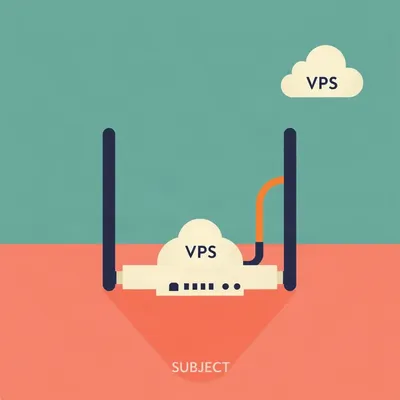
The simplest move is a passive reflector behind your access point. Take a piece of cardboard, cover it with aluminum foil, curve it into a parabolic shape, and place it behind your router with the concave side facing your apartment and the convex side facing Dove's wall. What you've just built is a corner reflector. It does two things — it blocks Dove's signal from reaching your router's antennas from that direction, and it reflects your own router's signal back into your apartment, effectively increasing your gain in the direction you actually care about. The physics is straightforward. A ground plane behind a dipole antenna reshapes the radiation pattern. Instead of radiating equally in all directions, more of your signal goes forward into your living space, and less goes backward toward Dove.
How much improvement are we talking?
Six to ten dB of signal-to-interference ratio improvement with a well-positioned reflector. There's a documented case of someone in a New York City apartment going from fifteen megabits per second to a hundred and ten megabits per second on five gigahertz using a twelve-inch parabolic reflector made from a cooking pot lid and aluminum tape, placed behind their access point against the shared wall.
A cooking pot lid.
A cooking pot lid. The inverse-square law is your friend here. Every time you double the distance from the source, the signal drops by about six dB. So even moving your access point three feet away from the shared wall reduces the signal reaching Dove by about one and a half dB. Combine that with the reflector, and you've gained maybe eight dB of effective SNR improvement. That's the difference between a connection that drops every five minutes and one that's rock solid.
And you haven't spent a dollar.
Maybe two dollars on aluminum foil. But let's get more sophisticated. Commercial panel antennas with a sixty-degree beamwidth cost thirty to fifty dollars. You replace your router's omnidirectional antennas with a directional panel, aim it at your desk or your living room, and now your signal is focused in a sixty-degree cone instead of spraying everywhere. The gain on these is typically nine to fifteen dBi, compared to maybe three to five dBi for the stock omnidirectional antennas. That's a massive improvement in the direction you care about, and the side effect is that very little of your signal goes toward Dove's wall, and Dove's signal hitting the back of your panel antenna is heavily attenuated.
The spite-antenna.
The spite-antenna. You're not trying to interfere with Dove. You're just focusing your signal so tightly on your own devices that Dove becomes irrelevant. It's the RF equivalent of putting up a privacy fence. And the beauty is, this is completely legal. You're not transmitting more power than allowed, you're not jamming anything — you're just being more efficient with the power you have.
What about positioning? You mentioned moving the access point.
RF geometry and placement warfare. This is tier two point five. The five gigahertz band attenuates heavily through building materials — drywall costs you about three dB per wall, concrete can be ten to fifteen dB, and floors are even worse because you're going through joists and subfloor and possibly tile. So elevation matters. If your access point is on a desk at waist height, and Dove's is on a shelf at the same height, your signals are basically firing at each other through the most direct path. Move your access point to a high shelf or ceiling mount, and the signal path to Dove now goes diagonally through more material, or reflects off surfaces in ways that scatter and attenuate it.
So you're tilting the radiation pattern away from the horizontal plane.
And the ultimate placement move is a wired backhaul. Run an Ethernet cable from your router to a second access point on the far side of your apartment, as far from Dove's wall as physically possible. Now your primary signal source is thirty or forty feet from the shared wall instead of three feet. The inverse-square law does the rest. Dove's signal has to travel through your entire apartment to reach your devices, and by the time it gets there, it's attenuated by distance and walls. Meanwhile, your new access point is ten feet from your desk. You've won the SNR battle through geometry alone.
This all sounds remarkably practical. I was promised absurdity.
We're getting there. But let me emphasize — most people should stop at tier two. A thirty-dollar directional antenna or a foil reflector behind the router, combined with smart placement, solves eighty percent of these problems without legal risk or significant cost. Measure your SNR before and after with a tool like Wi-Fi Analyzer on Android or NetSpot on Mac. If you see a six dB improvement, you're done. Go enjoy your internet.
But Daniel didn't ask for practical. Daniel asked for the full escalation ladder.
And I am here to deliver. Tier three. Active countermeasures. The legal gray zone.
Before you say anything else — is any of this legal?
Let me be very precise. Deliberately jamming a Wi-Fi signal is a federal crime. The Communications Act of 1934, as amended, prohibits any device that willfully or maliciously interferes with the radio communications of any station. The FCC fined a Las Vegas hotel seven hundred fifty thousand dollars for jamming guest Wi-Fi — they were using a Wi-Fi blocking system to force guests onto the hotel's paid network. Section 333 of the Communications Act. The fine was in 2023. That's not a hypothetical. Even a Raspberry Pi with a high-power Wi-Fi dongle running a deauth attack is illegal. Deauth packets are forged disassociation frames that kick devices off a network. Transmitting them deliberately is a federal crime.
So jamming is off the table.
Jamming is off the table. But here's where it gets interesting. You're allowed to transmit on Wi-Fi channels. That's what your router does. And if you happen to use a high-gain directional antenna aimed in Dove's general direction, transmitting your own legitimate traffic at legal power levels, and Dove's devices happen to see your signal and get confused about which network to connect to — well, you're just running your own Wi-Fi network.
The client-steal attack.
The client-steal. A fifteen dBi panel antenna aimed at Dove's apartment, broadcasting your SSID at the same power Dove broadcasts theirs. Dove's devices see two networks at similar signal strength. Some of them might roam to yours. They won't be able to connect without your password, but the attempt itself causes disruption — devices drop their connection to Dove while they try to associate with you, then give up and reconnect to Dove, then see your signal again and try again. It's a denial-of-service attack implemented entirely through the normal operation of Wi-Fi protocols.
That sounds legally murky.
It is legally murky. You're not jamming. You're not transmitting deauth packets. You're just running a very directional Wi-Fi network. But the intent is clearly to interfere with Dove, and if someone from the FCC showed up with a spectrum analyzer, they'd see a strong directional signal aimed at your neighbor's apartment, and they'd ask questions. The practical reality is that enforcement is complaint-driven — Dove would need to identify the source, file a complaint, and the FCC would need to investigate. For a residential dispute, that's unlikely. But the risk is real, and the ethical question is whether you want to become the thing you're fighting. Dove is blasting signal into your apartment. Now you're blasting signal into Dove's. You've become Dove.
There's a parable in there somewhere.
The RF arms race. Dove increases power, you increase power, Dove gets a new router, you build a directional array, Dove calls the FCC, you end up with a seven hundred fifty thousand dollar fine. Nobody wins. The only winning move in an arms race is not to play — or to escalate so far beyond the opponent's capabilities that they can't possibly respond.
Which brings us to tier four.
Tier four. The nuclear option. The DIY SCIF.
For listeners who don't speak government acronym — SCIF?
Sensitive Compartmented Information Facility. It's a room designed to block all electromagnetic signals from entering or leaving, so that classified information can be discussed without the risk of electronic eavesdropping. The principle is simple — you surround the space with a continuous conductive surface that forms a Faraday cage. Any external electromagnetic radiation hits the conductive surface, induces a current, and that current flows to ground. The signal never gets inside.
And you're proposing to build one in an apartment.
I'm proposing to explain how one would build one in an apartment, should one be sufficiently motivated. The material is copper mesh with one-eighth-inch openings. At five gigahertz, the wavelength is about six centimeters, so one-eighth-inch openings — about three millimeters — are far smaller than the wavelength. The signal sees a solid conductive wall. Cost is two to three dollars per square foot. For a five hundred square foot apartment, covering all six surfaces — four walls, floor, ceiling — you're looking at about three thousand to six thousand dollars in materials.
Six surfaces. You said six surfaces. Floors and ceilings.
Every surface. RF doesn't care about architectural conventions. If you leave the floor unshielded, Dove's signal comes up through the floor. If you leave the ceiling unshielded, it comes down through the ceiling. The mesh has to be continuous, and all the seams have to be electrically bonded — overlapping by at least two inches and secured with conductive copper tape. Then the entire mesh needs to be grounded to building steel or a dedicated ground rod, because without a ground, the cage can actually re-radiate signals internally.
What about doors and windows?
This is where it gets expensive and complicated. For windows, you need copper mesh screens that cover the entire opening, with conductive gaskets around the edges that press against the wall mesh when the window is closed. For the door, you need a copper mesh curtain on a roller track, or a solid-core door covered in copper sheet with finger-stock gaskets around the frame — those are springy metal strips that maintain electrical contact when the door is closed. Every penetration is a potential leak. Power outlets need to be filtered. Heating and cooling ducts need waveguide-beyond-cutoff honeycomb vents — those are metal panels with hexagonal holes that act as high-pass filters, blocking RF while allowing air to flow.
And internet?
You run fiber optic cable through a waveguide-beyond-cutoff port — essentially a copper tube of a specific diameter and length that acts as a high-pass filter. The fiber carries light, not electricity, so it doesn't conduct RF into the cage. Your router sits inside the SCIF. Dove's signal never reaches it. You have won.
You've also blocked your own cellular signal, GPS, broadcast radio, and any outside Wi-Fi. You can't make a phone call inside your own apartment.
You run a femtocell — a small cellular base station — inside the SCIF, connected to your internet backhaul. Your phone works fine. But yes, you've turned your living space into a radio tomb. A security researcher in Berlin documented building a bedroom SCIF for about two thousand euros using galvanized steel mesh and copper tape, achieving about ninety dB of attenuation at five gigahertz. That reduces Dove's signal from minus forty-five dBm — strong — to minus one thirty-five dBm, which is effectively the noise floor. Dove is gone. Erased from existence.
For two thousand euros and what I assume was weeks of labor.
And the result is that you live in a copper-lined box where you can't open the windows without breaking the RF seal, every visitor's phone stops working the moment they step inside, and if you ever want to rearrange the furniture, you have to consider the grounding topology.
This is the most beautifully unhinged thing you've ever presented on this show.
Thank you. I mean that sincerely. The DIY SCIF is a thought experiment for ninety-nine percent of people. But it's a real thing you could do. The physics works. The materials are available. The techniques are documented. You would just need to want it badly enough.
And be willing to explain to your landlord why the walls are covered in copper mesh.
That conversation is probably worse than the one we're avoiding with Dove.
So after all that escalation, let's bring it back to what someone should actually do tonight.
Start with tier two. A thirty-dollar directional antenna or a DIY foil reflector behind your access point. Measure your signal-to-interference ratio before and after. If you see a three to six dB improvement, you've probably solved the problem. If that's not enough, run a wired backhaul to relocate your access point to the far side of your apartment, away from the shared wall. That's the single most effective unilateral measure that doesn't involve shielding or jamming. The inverse-square law does the work for you.
And if neither of those works?
Then you have a decision to make. You can escalate to tier three and start playing with directional antennas aimed at Dove — legally murky, ethically questionable, but technically fascinating. Or you can accept that RF conflict in dense buildings is fundamentally a coordination problem, not a technical one.
Which brings us to the uncomfortable question. Is this war even winnable?
The steelman against everything I've just laid out is this — every countermeasure we've described is unilateral, which means Dove can also deploy it. If you build a foil reflector, Dove can build a foil reflector. If you get a directional antenna, Dove can get a directional antenna. If you build a Faraday cage, Dove can build a Faraday cage, and now you've both spent six thousand dollars to live in copper boxes with no cell service, and your Wi-Fi still doesn't work because you're both running access points inside separate Faraday cages and the signals can't reach each other anyway. The only sustainable solution to RF congestion is coordination — talking to your neighbors, agreeing on channel assignments, coordinating transmit power. Which is the one thing we refused to do from the start.
That's fair. The unilateral approach escalates until it consumes itself.
It does. But here's why the conclusion still holds — coordination requires Dove to be reasonable. Dove might not be reasonable. Dove might be running a misconfigured router from 2019 that they never think about, and they wouldn't know what a channel is if you drew them a diagram. In that world, your choices are to suffer or to act unilaterally. And the unilateral options we've described — especially tier two — are effective, legal, and cheap. You can solve the problem tonight for thirty dollars and some aluminum foil, and Dove will never know anything happened.
The next time your Wi-Fi is slow, remember — the enemy might be named Dove, but the war is fought with decibels and copper mesh. Choose your escalation wisely.
And if you do build the SCIF, send us photos. We want to see the grounding topology.
Thanks to our producer Hilbert Flumingtop for keeping this show running. This has been My Weird Prompts. Find us at my weird prompts dot com, or email the show at show at my weird prompts dot com. We'll be back soon.
Try not to start any RF wars in the meantime.