Daniel sent us this one — he's been digging into the practical side of importing from Alibaba, and he noticed something that trips up a lot of first-timers. Alibaba defaults to DAP terms, which means you the buyer are responsible for customs clearance and duties. The supplier's first question after you place the order is almost always: do you have your own customs agent? If not, we can handle it. And Daniel's point is that this question is a fork in the road — take the supplier's offer and you're functionally doing DDP, but you might be giving up transparency and control. He wants to know whether a small importer should build their own broker relationship, whether you need a freight forwarder at all or just someone who does the customs paperwork, what the typical costs look like, and whether there's a ladder approach to doing this without getting burned.

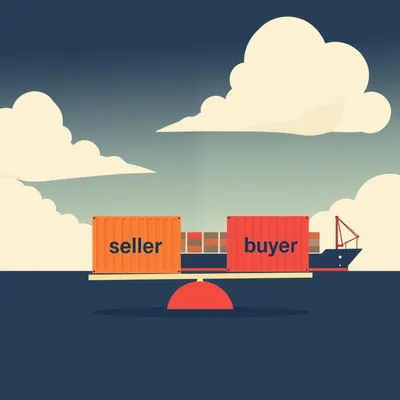
The thing that jumps out at me immediately is that Alibaba defaulting to DAP isn't some random platform quirk — it's actually the standard B2B default globally, and for good reason. Under DAP, the seller's responsibility ends when the goods arrive at the named destination and are ready for unloading. They don't touch customs clearance, they don't pay duties, they don't deal with your country's import regulations. It limits their liability to what they can actually control. If you're a factory in Shenzhen shipping to thirty different countries, you cannot possibly maintain expertise in thirty different customs regimes. So DAP is the honest default — it says, I'll get the goods to your doorstep, but the border crossing is your problem.
Which makes the follow-up question kind of interesting, right? The supplier immediately offers to solve the problem they just defined as yours. It's like a mechanic saying your transmission is shot, but don't worry, I know a guy.
And what they're offering is essentially a DDP conversion — they'll handle clearance through a broker they have a relationship with, pay the duties and taxes on your behalf, and then bundle it all into one invoice. On paper, it sounds great. You don't have to learn anything about customs, you don't have to find a broker, you just pay one number and the goods show up.
That one number is where the trouble starts. When the supplier handles customs, you typically get a single bundled invoice — product cost, shipping, duties, taxes, brokerage fees, all rolled into one line. You have no way to reverse-engineer whether you paid the actual duty rate or whether someone added a convenience margin.
Right, and this isn't just a theoretical concern. Say you're a small importer in Tel Aviv ordering two thousand dollars worth of electronic components from Shenzhen. The supplier says they'll handle customs. Final invoice comes in at twenty-eight hundred dollars. The actual duty rate on electronics into Israel varies — some components are duty-free under certain trade agreements, others might be eight to twelve percent. VAT is seventeen percent. Shipping might be three to four hundred dollars. So you do the rough math and think, okay, maybe that checks out. But you cannot verify it. You don't know if the supplier's broker classified your goods correctly, whether they claimed a preferential duty rate you were entitled to, or whether they just rounded everything up and pocketed the difference.
The difference between a correct classification and a lazy one can be substantial. The difference between one HTS code and the next can be the difference between duty-free and a fifteen percent tariff.
And it's where the supplier's broker has a structural conflict of interest. Their loyalty is to the supplier who gives them repeat business, not to you the one-off importer. They have zero incentive to minimize your duties. In fact, if they're getting a percentage-based fee, they might have an incentive to maximize the declared value. A good broker working for you does the opposite — they'll look at your product and say, actually, this specific component falls under a different subheading that carries a lower rate, or there's a trade preference program you can claim.
The supplier's offer to handle customs — it's a convenience, not a partnership. That's the phrase that keeps coming back to me. And Daniel's question is really about when you outgrow that convenience and need to build something more durable.
Before we get to the how-to, let's talk about why you can't just do it yourself, because I think a lot of small importers have this moment of thinking, how hard can it be? I'll just fill out the forms and save the broker fee. And the answer is, in both the US and Israel, you legally cannot do that unless you're licensed.
Walk me through the US side first.
In the United States, customs brokerage is a licensed profession regulated by Customs and Border Protection. To become a licensed customs broker, you have to pass the CBP broker exam — which has a pass rate that hovers around thirty to forty percent — pass a background check, and post a continuous customs bond. The minimum bond amount is fifty thousand dollars, and for a small importer the annual premium runs roughly five hundred to a thousand dollars. For someone doing two to ten shipments a year, the licensing process alone would take months and cost thousands of dollars before you ever clear a single shipment. It makes zero economic sense.
Israel is similar?
Israel's Customs Authority requires licensing for customs brokers, and they publish the list of licensed brokers on their official importer guidance page. The regulatory framework is comparable — you need to demonstrate competency, pass examinations, and maintain good standing. It's not something you dabble in on the side. Which brings us back to Daniel's core insight — for the vast majority of small importers, using a customs agent is the only pragmatic path. The question is whose agent.
Let's get into the economics of that choice. You mentioned the bond requirement in the US. If I hire my own broker, do I need my own bond?
Not necessarily, and this is one of those details that most people don't learn until they're already committed. Most customs brokers carry what's called a blanket bond that covers multiple clients. They can extend that coverage to your shipment for a per-entry fee, typically fifty to a hundred dollars per shipment in the US. So if you're doing four shipments a year, you might pay two to four hundred dollars in bond fees through your broker, versus five hundred to a thousand for your own continuous bond. For small-volume importers, using the broker's blanket bond is almost always the better deal.
Then the per-entry fee on top of that.
In the US, a straightforward customs entry — single product type, no regulatory complications — runs about a hundred to three hundred dollars in broker fees. In Israel, the range is similar in shekel terms, roughly three hundred to eight hundred shekels per entry. That covers the broker's work: reviewing your commercial invoice and packing list, classifying your goods under the correct HTS code, calculating duties and taxes, submitting the entry to customs, and handling any questions that come back.
If I'm doing the math, using my own broker costs me maybe two to four hundred dollars all-in per shipment, versus the supplier's bundled approach where I have no idea what I'm actually paying for brokerage.
The supplier's bundled approach might be adding ten to twenty percent to your total shipment cost. On a twelve thousand dollar order, that's twelve hundred to twenty-four hundred dollars in potential hidden markup. Even if only part of that is the brokerage component, the transparency alone is worth something. But there's another cost that's harder to quantify, and that's what happens when something goes wrong.
This is the part I think Daniel is really getting at. The control question.
Let me give you a real scenario. A US-based importer of kitchen gadgets uses the supplier's broker for three shipments. Everything goes smoothly. On the fourth shipment, CBP flags the entry because the HTS code doesn't match the product description — maybe the broker classified silicone spatulas under a general kitchenware code instead of the more specific code that carries a different rate. CBP issues a notice of action, meaning the goods are held until the classification is resolved. The importer has no direct contact with the broker. They email the supplier in Shenzhen, who is twelve hours ahead, who then emails the broker, who then responds to the supplier, who then forwards the response to the importer. Every exchange takes twenty-four hours. The goods sit in a bonded warehouse accruing storage fees. The importer misses their retail launch window. Two weeks to resolve something that a direct call to the broker could have fixed in two hours.
That's not even the worst case. If the misclassification results in underpaid duties, the importer is on the hook — not the supplier, not the supplier's broker. CBP doesn't care who filed the paperwork, they care who the importer of record is. And under DAP, you're the importer of record even if someone else is handling the paperwork.
That's a critical point. The importer of record is legally responsible for the accuracy of the customs entry, regardless of who prepared it. If the supplier's broker makes a mistake, you're the one facing penalties, interest on underpaid duties, and potentially increased scrutiny on future shipments. Having your own broker doesn't eliminate that risk, but it means you have someone who is contractually obligated to you, not to the supplier, and who you can hold accountable directly.
We've established why the supplier's offer is more complex than it seems. Let's now look at what it actually costs you — in dollars and in control — to take that path versus building your own broker relationship. And I think the first thing to untangle is this question of freight forwarders versus customs brokers, because Daniel specifically asked about that.
This is where a lot of people get confused. A customs broker handles one thing: the paperwork and compliance for getting your goods through customs. They classify your products, calculate and pay duties and taxes, and submit the entry to the customs authority. They don't touch your goods physically. A freight forwarder handles the physical movement — booking space on a ship or plane, coordinating pickup from the supplier, managing the journey to the destination port, and arranging final delivery. They're fundamentally different functions.
In practice, the lines blur.
They blur because most freight forwarders offer customs brokerage as a bundled service. And for a small importer, this is often the most practical approach. Here's the typical workflow for a DAP shipment from Alibaba: the supplier handles getting the goods from their factory to the port of origin and onto the vessel — that's their DAP obligation. What you need is someone to receive the goods at the destination port, clear them through customs, and deliver them to your door. A freight forwarder with in-house brokerage can do all three. If you hire a standalone customs broker, you still need someone to handle the freight and final delivery, and now you're coordinating two separate service providers.
The real choice for most small importers isn't broker versus forwarder — it's whether to use the supplier's bundled solution or hire your own forwarder who includes brokerage.
And hiring your own forwarder-broker combination typically adds five to ten percent to your freight costs compared to the supplier's bundled rate, but you gain complete transparency and control. You get separate line items for ocean freight, customs brokerage, duties, taxes, and final delivery. You can see exactly what each component costs and make decisions accordingly.
Let's talk about how to actually find one of these people, because I think that's where the paralysis sets in. It's easy to say go find a good customs broker, but if you've never done this before, you don't even know where to look.
In the US, Customs and Border Protection maintains a publicly searchable database of every licensed customs broker in the country. You can filter by port, by name, by license number. It's not the most user-friendly interface, but it exists and it's authoritative. In Israel, the Customs Authority publishes a list of licensed brokers on the Ministry of Finance website. Both countries make this information publicly available because customs brokerage is a regulated profession and the government wants importers to use licensed practitioners.
Step one is find the list. Step two is figure out which of these people will actually take your call when you're doing four shipments a year.
That's the real challenge. Many brokers are set up to serve large-volume importers — companies doing hundreds of entries a year. They're not interested in your two shipments of bicycle parts. But there are plenty of smaller brokers and forwarders who specialize in or at least welcome small-volume clients. The key is to be direct about your volume upfront so you don't waste time.
What do you actually say when you call?
You call three to five brokers and you say something like this: I'm a small importer doing two to ten shipments a year, mostly from China via Alibaba. I'm looking for someone to handle customs clearance on a per-shipment basis. Do you work with importers of my size? What's your per-entry fee? Do you offer a blanket bond option? What's your typical turnaround time from receiving documents to clearing the entry?
The more prepared you sound, the more seriously they take you.
Before you call, have your product's HTS code ready — or at least be able to describe the product in enough detail that they can classify it. Have your estimated shipment value and weight, country of origin, and if possible a sample commercial invoice from your supplier. If you call and say, I don't know, I'm importing some stuff from China, they're going to assume you're not serious. If you call and say, I'm importing bicycle components, HTS heading eighty-seven fourteen, shipments are roughly five thousand dollars and two hundred kilos each, coming from Taiwan, here's a sample invoice — now you sound like someone who's done their homework.
Let me ask you about the ladder approach Daniel mentioned, because I think this is the most practical part of the whole conversation. He's essentially asking: can I start with the supplier's broker and then transition to my own?
That's exactly the right approach for most small importers, and I'd recommend it even to people who are convinced they want their own broker eventually. Here's why. Your first one or two shipments are learning experiences. You're figuring out what documentation your supplier provides, what the actual shipping timeline looks like, how your product gets classified, what the duty rate actually is when it hits customs. If you use the supplier's broker for those initial shipments, you're not committing to anything long-term, but you're gathering intelligence.
You're not risking a delayed shipment while you figure out the broker relationship.
The worst time to vet a new broker is when you have a container sitting at the port accruing demurrage charges. Use the supplier's broker for shipment one and two — but treat those shipments as research. Pay attention to the HTS code they used. Look up whether it's correct. Note the duty rate they applied. Check whether there are trade preference programs you could have claimed. Save every document. By the time you're ready for shipment three, you should know enough to evaluate whether a broker you're interviewing actually knows your product category.
Then you do what I'd call the one-shipment test. Before you fully commit, run one shipment with your new broker while still having the supplier's broker as backup. That way if something goes wrong — if the new broker is slow to respond or misclassifies something — you haven't burned the bridge with the supplier's option.
That's smart. And it lets you do a direct comparison on cost and service. Here's a case study that illustrates the payoff. A US-based importer of bicycle parts starts with the supplier's broker for two shipments. Each shipment is about twelve thousand dollars in product value, and the bundled invoice comes in at around thirty-five hundred dollars for shipping, duties, taxes, and fees. Total landed cost per shipment: fifteen thousand five hundred. They use those two shipments to learn that their products fall under HTS code eight-seven-one-four-point-nine-nine-point-zero-zero — bicycle parts — which is actually duty-free under certain conditions. For shipment three, they hire a local broker who charges a hundred and fifty dollars per entry plus seventy-five dollars for using the broker's blanket bond. They pay the actual duties — which turn out to be minimal or zero under the correct classification — plus transparent freight costs. Their next shipment of the same value comes in at twenty-nine hundred dollars in total fees. That's a six hundred dollar savings with full transparency into every line item.
That savings compounds. If they're doing four shipments a year, they're saving twenty-four hundred dollars annually just by owning the broker relationship. That's real money for a small business.
The savings isn't just in direct costs. A good broker who knows your products will proactively flag things. They'll tell you if a trade preference program is expiring, if the duty rate on your category is changing, if there's new documentation required. The supplier's broker will never do that because you're not their client — the supplier is.
The ladder is: shipments one and two with the supplier's broker, learning everything you can. Shipment three with your own broker, running in parallel if possible. By shipment four, you're fully transitioned and you've built a relationship that pays for itself.
The relationship part matters more than people expect. Customs brokers are like accountants — the good ones become trusted advisors who understand your business. They know that you import certain components every quarter, they know your preferred shipping lanes, they know which ports are less congested for your type of cargo. You can't get that from a broker who sees you as an anonymous line item on the supplier's consolidated shipment.
Let's talk about what you actually need to prepare before you contact a broker, because I think this is where people get intimidated and put it off.
It's honestly not that much. You need your product's HTS code — or a detailed enough description that the broker can classify it for you. Most brokers will do the classification as part of their service, especially for new clients. You need the estimated value and weight of your typical shipment. You need the country of origin — which is not necessarily the country you're buying from. If you're buying from a Chinese supplier but the goods are manufactured in Vietnam, the country of origin is Vietnam, and that affects duty rates. And you need a sample commercial invoice — most suppliers on Alibaba can provide this easily.
The commercial invoice is what the broker uses to prepare the customs entry.
It's the foundational document. The broker takes the commercial invoice, the packing list, and the bill of lading or airway bill, and uses those to prepare the entry summary that goes to customs. If your commercial invoice is vague or inaccurate, the whole entry is built on sand. One thing I'll add: when you're using the supplier's broker for those initial shipments, ask for copies of the actual customs entry documents. Some suppliers will push back on this, but you're entitled to them — you're the importer of record. Having those documents from your first two shipments gives your new broker a head start on understanding your product classification.
That's a good practical tip. So we've covered the economics and the process. Now let's distill this into a concrete action plan you can use for your next Alibaba order. What's the step-by-step?
Step one: for your very first shipment, it's fine to let the supplier's broker handle it. You're learning. But request copies of every customs document — the entry summary, the duty payment receipt, the broker's invoice. Step two: after that first shipment lands, look up the HTS code they used. Check whether it's correct for your product. Look up the duty rate. See if there are alternative classifications that might be more favorable. Step three: by the time you're placing your third order, you should have called three to five brokers from the CBP or Israel Customs Authority lists. You've told them your volume, your product type, and you've asked about per-entry fees, bond options, and turnaround times. Step four: pick one and run a test shipment.
The test shipment is key. Don't cancel your supplier's broker arrangement until you've seen your new broker perform.
The test shipment lets you compare not just cost but communication. Does the broker respond to emails within hours or days? Do they explain things clearly? Do they flag issues before they become problems? These are the intangibles that determine whether a broker relationship works long-term.
I want to circle back to something Daniel mentioned in his prompt — this question of whether you even need a freight forwarder if you're just looking for customs broking. And I think the answer we've landed on is: technically no, but practically yes for most small importers. You can hire a standalone customs broker and handle the freight coordination yourself, but the coordination burden is significant, and the cost savings are usually marginal.
The bundled forwarder-with-brokerage approach is the pragmatic middle ground. You're not paying dramatically more than you would for separate services, and you're saving yourself the headache of being the middleman between two different providers who each blame the other when something goes wrong. For importers doing more than maybe ten shipments a year, it might be worth unbundling and optimizing each component separately. But for the small importer Daniel is describing, the bundled approach is the sweet spot.
The cost difference between the supplier's bundled solution and your own forwarder-broker — we said five to ten percent on freight, but the transparency gain is enormous. You go from one opaque number to a clear breakdown of what you're paying and why.
That transparency is the whole game. When you know your true landed cost per unit — product cost plus shipping plus duties plus brokerage plus delivery — you can price your products accurately. You can evaluate whether a supplier's price increase is reasonable or whether you need to find a new source. You can negotiate with freight providers because you know what the market rate actually is. None of that is possible when everything is bundled into a single number from the supplier.
The supplier's offer to handle customs — it's a convenience, not a partnership. Building your own broker relationship is an investment in your import business. It pays compounding returns in transparency, control, and cost savings over time.
The beauty of the ladder approach is that it's not all or nothing. You don't have to figure everything out before your first order. You can start with the convenience option and systematically build toward independence. By shipment four or five, you've got a broker who knows your products, you understand your HTS codes, and you're saving money on every order.
Now I want to look ahead a bit, because the landscape is changing. Customs automation is improving — the US has the ACE system, the Automated Commercial Environment, which is moving more of the entry process online. Israel has been rolling out a new customs portal. As these systems get more sophisticated, does the role of the customs broker change for small importers? Could we see a future where DIY clearance becomes practical for individuals?
I think the technology will definitely lower the barrier, but the regulatory framework isn't going anywhere. The bond requirement, the legal liability, the complexity of the harmonized tariff schedule — those are structural, not technological. What I think we'll see is brokers using better tools to serve small clients more efficiently, which could bring per-entry fees down. But the idea of a hobbyist importer filing their own customs entries without a license — I don't see that happening in either the US or Israel anytime soon. The compliance risk is just too high.
The broker relationship remains central, even if the tools get better.
The tools make the broker more efficient, which is good for everyone. But the judgment — knowing which HTS code applies to a novel product, knowing how to respond when customs raises a question, knowing which trade programs you qualify for — that still requires expertise. And for the foreseeable future, that expertise is worth paying for.
Alright, so to land this: if you're importing from Alibaba, use the supplier's broker for your first shipment or two, but treat those as research missions. By shipment three, have your own broker lined up. Do a test run, compare the results, and then transition fully. The cost savings are real, but the control and transparency are the bigger prize.
When you call those brokers, be prepared. Know your product, know your volume, have your documents ready. The more professional you sound, the more willing they'll be to work with a small importer.
One last thing — and this is something Daniel didn't ask directly but I think it's implied. The supplier's offer to handle customs isn't a scam. It's a legitimate service that works fine for many people, especially if you're just testing a product or doing a one-off purchase. The problem is when it becomes your default without you realizing what you're giving up. The whole point of this episode is to make that choice deliberate.
Deliberate and informed. Know what you're paying, know who's representing you, and know when it's time to upgrade.
Now: Hilbert's daily fun fact.
Now: Hilbert's daily fun fact.
Hilbert: The only surviving written account of the rules of buzkashi — the Central Asian sport played on horseback with a goat carcass — was recorded in the nineteen thirties by a British colonial officer stationed in Somaliland, who transcribed them from an Afghan trader passing through Berbera.
...right. Because of course that's where you'd find it.
The buzkashi capital of East Africa.
This has been My Weird Prompts. Thanks to our producer Hilbert Flumingtop. If you enjoyed this episode, leave us a review wherever you listen — it genuinely helps other people find the show. You can also reach us at show at my weird prompts dot com. I'm Corn.
I'm Herman Poppleberry. We'll catch you next time.