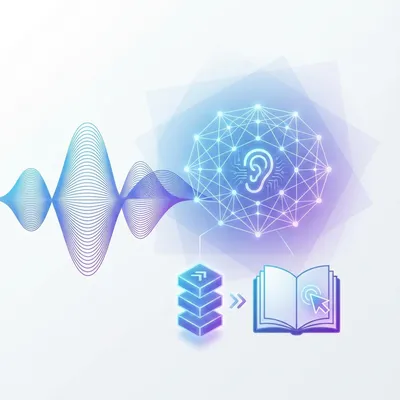
Daniel's been going back over the weight-averaging ground again. That was parameter space. He's now asking about the other direction entirely. If your use case is narrow enough that you can actually find datasets to train on, or you've already built several yourself, you blend the data and train once on the mixture. And the thing he's really circling is the wrangling. Getting inconsistent sources into one format, deduplicating them to some degree. Does anything exist that's built for exactly that, and has anybody actually shipped an ultra-specific fine-tune that pulled from several datasets instead of one.

The distinction he's drawing is the one worth keeping. Merging weights happens in parameter space. You've got two checkpoints that started from the same base, and you combine numbers without touching a single training example. Blending datasets is data space. You concatenate or interleave the corpora into one training set and you run a fine-tune on the mix.
Which means you need the data on hand, rather than just the finished checkpoints.
You need the data and you need a training run. But you get something merging can't give you. You decide the proportions before a single gradient step happens, rather than discovering afterward what the merge did.
And Daniel's premise is that if you can find the data, that's the more direct route.
It's more direct and it's messier, and the mess is the actual subject here. There's a survey on data mixture for large models that frames the whole thing cleanly. You've got k domains, and you're picking a weight vector w over them. It sits on a probability simplex. Non-negative, sums to one. It's just what fraction of the training mix each source gets.
Simple to state.
The finding is that those sampling proportions significantly move model performance. And that the obvious choices, uniform sampling or sampling proportional to how much data each source has, are both likely to be suboptimal. That's the part people don't expect. Proportional feels fair, and fair is not the same as good.
So the first real work is deciding the shape of the mix, and the formatting is just the pile of chores underneath it.
The chores are real, though. Start with the boring one, because it's the one that stops you in the first afternoon. Hugging Face's concatenate function on datasets only works if the datasets share the same column types. Same names, same types. If one source is called transcription and another is called text, it doesn't merge. It just fails.
That's a rename.
It's a rename until it isn't. One dataset has audio as a path, another has it as decoded arrays at a fixed sample rate, a third has it as bytes. Whisper-MCE is the honest illustration. That's the Mixed Cantonese-English work out of HKUST. The dataset was collected by a lot of students, and every student had their own naming rule for files, and their audio came in different formats. So before anything trains, there's a cleaning pass. That's not an edge case. That's what a dataset assembled by humans looks like.
Twenty people with twenty conventions. I've lived in one flat with one donkey for years and we still can't agree on where the bowls go.
Your bowls are in the wrong cupboard and you know it. But yes. The formatting problem isn't abstract. It's the tax you pay for every additional source you bring in, and it scales with the number of people who touched the data.
Is there a point where the tax is high enough that you should just walk away from a source?
There is, and the test is whether the source carries something the others don't. If you've got four hundred hours of read English and you're adding a fifth pile of read English, the marginal value is near zero and the formatting cost is real. But if that fifth pile is the only accented speech you have, you pay the tax. The tax buys coverage, not volume.
Now dedup. Daniel put it in as a parenthetical, "potentially some degree of deduplication." That phrasing makes it sound optional.
It's the opposite of optional, and there are two separate reasons, which is the part most people miss. The first is quality. Duplicated examples get over-weighted by the loss, the model spends capacity on things it already knows. The second reason is privacy, and that one is sharper. There's work from Kandpal and others on memorization scaling superlinearly with a sequence's count in the training data. A sequence that appears ten times isn't regenerated ten times more often than one appearing once. It's on the order of a thousand times more often.
A thousand. For ten.
Superlinear. Memorization doesn't scale with repetition, it accelerates with it. Which means if you blend three public corpora that overlap, and each one has the same transcript in it, you've built a corpus that will emit that transcript verbatim, and you didn't decide to do that. It happened in the concatenation.
And people blend their own private data with public data all the time.
Which is exactly the case where it bites. There's a dedup paper out of the federated learning side that puts numbers on the other end of it. At duplication levels between ten and thirty percent, deduplication bought them up to about twenty percent improvement in perplexity and cut runtime by nearly twenty-eight percent. You're deleting data and both the quality and the clock improve.
Deleting a quarter of the corpus and getting a better model out is a strange thing to hear.
It's the strongest argument in the whole pipeline. And notice what it costs you to do it. Nothing but a pass over the data. No extra training, no extra GPU hours.
Except the pass over the data is where it gets interesting, because the duplicate isn't the same string twice. It's the same audio under two filenames.
That's a real problem and the tools mostly don't see it. Exact string matching catches the transcript. It doesn't catch the same recording normalized to a different loudness, resampled, renamed, sitting in a different corpus with a slightly different orthography in the label. That's why dedup for audio is a separate discipline from dedup for text.
So text dedup is basically solved and audio dedup is the frontier.
Text dedup is solved in the sense that the tools exist and people use them. Audio dedup is where you're writing your own fingerprinting pass, and we'll get to what that actually looks like in a minute.
And this is where the weighting question sits, on top of the cleaned pile.
On top of it, and this is where the survey taxonomy gets useful. It splits the methods into offline and online. Offline means you pick the weights before training and hold them. Within that you've got heuristics, algorithm-based methods that estimate per-domain influence and reweight, and function-fitting methods that fit a curve to small runs and predict the mix that should work at scale. Online means the weights move during training, either by a min-max game where the model and the mixture alternate, or by fitting a mixing law and updating as you go.
And there's a newer one on the supervised fine-tuning side specifically.
It reframes mixing as an optimization problem. Minimize validation loss directly over the weights. The reported result is that the optimized weights land on par with a full grid search, with per-domain loss only about two-thirds of a percent higher on average.
Which sounds like a rounding error until you remember what the grid search costs.
A grid search over four sources at ten percent granularity is thousands of training runs. The optimization gets you there in a fraction of the compute. That's the trade. Same quality, no grid.
And the online methods, the ones that move the weights mid-run. What do they cost you?
Complexity, mostly. You're now maintaining two moving parts instead of one. The model is learning and the mixture is learning, and if the mixture's update rule is badly tuned you can chase your own tail. But the payoff is that you never have to commit to a weight vector up front, which matters when you don't know the right answer and can't afford to search for it.

Are you tired of explaining to friends and family that your fine-tune still cannot handle a bilingual phone call? You are not alone. Introducing Blend-O-Matic Pro, the world's first fully automatic dataset blender. Just pour in all your datasets, any format, any language, any decade, and press the one button. Blend-O-Matic Pro silently harmonizes every column name, removes every duplicate it can find, and promises a model that speaks every language perfectly, including three that do not exist. But wait, there's more. Order in the next eight minutes and we will include the Curriculum Scheduler attachment, which reorders your data by difficulty while you sleep. Side effects may include unexpected fluency, spontaneous code-switching, mild confusion about which of your own datasets were private, and a model that answers questions you never asked. Blend-O-Matic Pro is not responsible for any perplexity that results. Results not typical. Results not verified. Results, frankly, not expected.
So with the pile cleaned, you still have to decide the weights, and that's where the tooling question lands. Daniel asked whether dedicated tools exist, and the honest answer is that there isn't one end-to-end product. There's a pipeline, and you assemble it.
Walk me through the pieces.
Bottom layer is the datasets library itself. concatenate stacks datasets with matching schemas. interleave alternates between sources and takes a probabilities argument, so you can weight each one, and a stopping strategy that decides what happens when one source runs dry. First exhausted stops the lot the moment any source is spent. All exhausted keeps going and reshuffles the finished ones.
That choice matters a lot more than it looks like it does.
It decides what your last five percent of training looks like. If your smallest source exhausts early and you stop, you never see the big one again. There's a worked notebook in Hugging Face's community events repo that builds a Spanish blend out of Common Voice, VoxPopuli, Multilingual LibriSpeech and FLEURS. The stated motivation is exactly the low-resource case. Any one of those alone might not have enough data, so you interleave all four.
So the baseline works and it's four lines of code.
And then you're doing the weighting by hand. Which is why people reach for the layer above. There's datamix, which is a zero-dependency tool that profiles your datasets, generates mix recipes, schedules a curriculum, allocates token budgets and cleans the data. There's Oumi, which gives you a dataset framework pulling from local files, the Hub, or cloud storage, with quality scoring and PII detection built in. LLMTune is similar in shape. And on the synthetic side, NeMo ships scripts that build code-switched data by concatenating monolingual audio.
That last one is quietly the interesting one, because it isn't blending datasets you found. It's manufacturing a source.
It's manufacturing the exact source you were missing. And there's a vendor feature that points the same direction. Amazon Nova's supervised fine-tuning lets you mix your own samples with their proprietary training data as part of the job.
So the pipeline is datasets for assembly, something for dedup, a weighting method on top, and a framework to run it.
And no single product that owns all four stages. The pattern is a stack, and you own the seams between the layers.
Does Daniel still have that Parakeet setup running, the two separate tunes?
Hebrew-English code-switching and the technical vocabulary one, yes. Which maps onto this almost exactly, and there's a small wrinkle. This two-way ASR split he described, one tune for code-switching and one for main vocabulary, that maps onto the weight-merging literature. Task Arithmetic, TIES, DARE. Nobody's published that exact two-way split for ASR that I can find.
The closest analogue?
GLoRA, out of the ICASSP workshop. Korean-English code-switching, and it combines fine-tuned monolingual and multilingual ASR models using gated low-rank adaptation. So it's merging checkpoints, but it's the code-switching version of the idea.
Which is the parameter-space route again, wearing a different hat.
It is. Now let's go to what people have actually built on the data side, because there are real results and one of them is surprising.
Start with the Cantonese-English one, since we've already been in its dataset.
Whisper-MCE. They fine-tuned Whisper on a Mixed Cantonese-English dataset they generated themselves, using a multi-agent framework, and the media and many datasets came in from the HKUST collection we talked about. The headline is fourteen point two eight percent mix error rate. That's thirty-five percent lower than the original Whisper on the same task, and twelve point six one percent character error rate on Common Voice Cantonese.
So a model that was never trained for the mix, plus a purpose-built blend, plus one training run.
And the wrangling was the work. The model architecture is the boring part of that project. The interesting part is the cleaning pass on student-collected audio.
Now the surprising one.
Catalan-Spanish code-switching, out of Interspeech. They fine-tuned Whisper Large version three on a blend of three things. Four hours of real code-switched speech from a Catalan TV station. A hundred and five hours of Common Voice. And seventeen hours of synthetic code-switched data they generated by stitching monolingual clips together.
Three sources, wildly different sizes.
And the winner was the synthetic blend. Fourteen point four eight percent word error rate on the parliamentary test set, which beat an approach that used a hundred hours of concatenated read speech.
Seventeen hours beat a hundred.
Seventeen synthetic beat a hundred real. The paper calls it a remarkable finding in its own words, and it's right to. It inverts the intuition that more real data always wins. What won was the right kind of data, generated to match the exact distribution they cared about, rather than a large pile of read speech that sounds nothing like a bilingual conversation.
That's the part I'd sit with. Daniel's whole framing is "if you can find datasets to train on." And the finding is that sometimes finding isn't the move.
Generating is the move. If you know your target distribution exactly, you can synthesize to it. And the Nemo scripts we mentioned exist because that's now a normal step, not a research stunt.
What else is out there on the multi-dataset ASR side?
There's a Whisper Small fine-tune for Egyptian Arabic code-switching that pulls from a diverse set of sources specifically to capture the switch points. And then the structural result, which is the one I keep coming back to. The survey's Mixture of Data Experts method trains one expert per domain and then blends them.
So it does both. It blends the data and then merges the models.
One expert per domain, then a merge across domains. The two routes aren't competing. They're two ends of the same pipe. You can blend datasets to train better experts, and then merge those experts, and you've used both layers.
Which is the answer to Daniel's original question and the answer to this one, and they turn out to be the same shape.
With one trap worth naming. The survey flags that optimal mix weights may not transfer. Not across model architectures, not across tokenizers, and not from a small proxy model to a larger target model.
So the standard move, tune the blend on something small and cheap, then scale up...
Is flying blind. You tuned on a proxy and the proxy's optimal mix is not the target's. Which is a brutal practical problem, because the whole appeal of tuning on a small model is that the big one costs too much to sweep.
You either pay for the sweep at scale, or you accept that your weights are a guess.
Or you use one of the online methods that adapts weights during the run, which is effectively paying for the tuning inside the training job instead of beside it.
Hm. That's a real fork in the road for anyone doing this at home.

The thing nobody ever says about deduplication is that the duplicates that hurt are never in the same file.
Everyone runs a dedup pass and feels finished. You hash the transcripts, you drop the repeats, you move on. That catches the lazy case. The case that gets you is one recording that lives in four places under four different names.
Same audio, four filenames.
Same audio. I found it because of a folder. Twenty-six thousand files, all of them wav, all of them with names that were just numbers. I'd been told it was three hundred hours. It was not three hundred hours.
How much was it?
About ninety. The rest was the same recordings, resampled, renamed, some of them with a different room tone because somebody had run them through a noise gate in between. Eight thousand six hundred files were one recording of a man reading a phone book. Different names every time.
One man, reading a phone book, eight thousand times.
He was a volunteer. They kept re-uploading his session because it was the cleanest audio they had. Somebody would clip a segment, rename it, put it back in the pot, and the next person would do the same. Nine rounds of that and the algorithm can't see it. The names don't match. The durations don't match, because of the clipping. Only the audio matches, and you only catch that if you fingerprint the waveform itself.
Perceptual hashing rather than string hashing.
You run the fingerprint, you cluster, and you find out your dataset is one guy and eighty-nine other people. So I deduplicated it down to the ninety hours and gave it back, and they asked me why I'd deleted two-thirds of their data.
What did you tell them?
That it had already been in there twice. They didn't like it. It went in anyway. It's in three models now, and it's in a Japanese one, which I did not expect, because nobody asked me about the Japanese one.
So the practical version of the memorization result is that you caught it by hand, with a fingerprint.
You catch it with a fingerprint or you don't catch it. Twenty-six thousand files, ninety hours. The tokenizer on the Japanese one still splits the man's name in three.
Thank you, Hilbert.
The closing thought I keep landing on is the weight-transfer problem. You can tune a mix on a small proxy, and the survey says plainly that the optimum won't carry to the target. So the honest position for anyone doing this seriously is that the sweep at scale isn't optional, or you go online and let the weights move mid-run.
The other shift, which that Catalan result points at. If seventeen hours of synthetic data beat a hundred hours of read speech, then the problem stops being "find more data." It becomes "generate the right data," and the wrangling moves from formatting and dedup to controlling the quality of what you manufactured.
The two layers are complementary, in the end. Blend the data to build better experts, merge the experts, and the interesting work is at the seam between them. That Mixture of Data Experts result does both in one pipeline, and I suspect that's where this lands eventually.
The cutting-room floor item, since it fits: mergekit's out-of-core merging runs on a CPU or as little as eight gigabytes of VRAM. The merging side of this is cheap hardware. The expensive half is the data.
Which is backwards from how people talk about it.
Thanks to Hilbert Flumingtop, our producer, who is still at the desk.
If you want more of this, try episode six, How To Fine Tune Whisper. This has been My Weird Prompts.
If you want to send us a prompt, there's a Telegram bot. Send us your own prompt on Telegram at t dot me slash MWP listener bot. We'll be back soon.