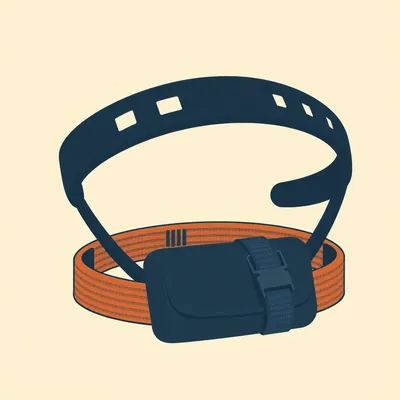
So Daniel sent us this one — he's been living in his EDC belt for weeks now, doing DIY around the apartment, chasing a one-year-old, and he's hitting the ceiling of what his hips can handle all day. Once you've got pouches loaded with a power bank, multitool, screwdriver, pacifiers, and whatever else the day throws at you, you're probably at eight to ten pounds hanging off your waist. That's where the second layer comes in: suspenders. He's asking what decent load-bearing suspenders actually cost, whether you should stay within one brand's ecosystem, and — this is the part I love — can suspenders bridge the gap between a tactical EDC belt and a baby carrier, so you're not swapping systems when you go from changing a diaper to building a shelf.

The belt-and-suspenders idiom is usually about redundancy, but here it's about distributing load across your skeletal structure more intelligently. A fully loaded two-inch tactical belt with pouches for tools, power bank, and parenting essentials hits that eight-to-ten-pound mark fast. That's enough to cause hip shift and lower back fatigue over a full day, especially if you're bending, lifting a toddler, crouching under sinks. The belt does its job beautifully up to a point, and then it doesn't.
And that point is lower than most people think. You've said before — what, six to eight pounds is the comfort ceiling for all-day hip carry?
That's right. The hips are designed for weight-bearing — think hiking packs, where the hip belt takes sixty to seventy percent of the load. But a tactical belt compresses directly on the iliac crest, and that's a pressure point. Unlike a padded backpack hip belt that spreads force across a wide surface, a one-and-a-half or two-inch belt concentrates it. Six to eight pounds for all-day wear is about where most people start shifting their weight unconsciously, favoring one hip, and that's the beginning of lower back trouble.
So the belt is great at containment — keeping everything tight to your body, no flop, no swing — but containment isn't the same as load support. Once the weight climbs past a certain threshold, you need a second load path.
And that's where suspenders enter the picture. They redirect roughly thirty to fifty percent of the vertical load from the iliac crest up to the trapezius and clavicle. Your shoulders can handle sustained loads much better than most people realize, as long as the straps are properly padded and positioned. You're converting a belt-only system into a hip-shoulder hybrid — the same principle behind climbing harnesses and military load-bearing vests.
Before we get into specific gear, let's address the obvious thing. Daniel mentioned it in his prompt — when he thinks suspenders, he thinks metal workers in industrial warehouses or Wall Street tycoons from yesteryear. Neither is the look he's going for. That's the aesthetic elephant in the room for a lot of people.
It is, and it's legitimate. Most suspenders on the market do scream grandpa or industrial safety. But there's a growing niche of low-profile, tactical-adjacent designs that work with modern EDC belts and don't make you look like you're about to clock in at the loading dock. But first I want to address a question that always comes up: why not just get a wider belt or a padded belt liner?
Right. Because that seems like the simpler fix.
A wider belt or padded liner helps with comfort at the pressure point — it spreads the compression across more surface area. But it doesn't change the fundamental problem: all the weight is still hanging off one horizontal axis. A belt liner might let you carry ten pounds instead of eight before you notice the discomfort, but it's not redistributing load. Suspenders introduce vertical tension that counteracts gravity from above. The belt holds things in place; the suspenders carry the weight. Different jobs.
That's a useful distinction. The belt contains, the suspenders support. Once you frame it that way, it's not belt versus suspenders — it's belt plus suspenders as a unified system. Which brings us to the second thing Daniel asked about: what makes suspenders different from a chest rig or a harness?
A chest rig or harness is a standalone upper-body system. It carries its own pouches, its own weight, separate from whatever you've got on your waist. Suspenders, by contrast, are parasitic — in a good way. They attach to your existing belt and redistribute the belt's load upward. You're not adding a second carry system; you're augmenting the one you already have. You keep all your pouches exactly where they are, with the same muscle memory for access, but your shoulders are now doing part of the work your hips were doing alone.
So let's get into the mechanics. What's happening biomechanically when you clip suspenders onto a loaded belt?
Picture the belt as a ring around your pelvis. Without suspenders, gravity pulls everything straight down, and the belt's only resistance is friction against your hips and the compression of the belt itself. When you add suspenders, you create vertical tension vectors that pull upward at the attachment points — typically front and back or four points around the waist. The load that was pressing down on your iliac crest now travels up through the webbing to your shoulders, then down your spine to your pelvis — but distributed across your entire torso, not concentrated at the belt line.
So the weight still ultimately ends up at your hips and feet — you're not defying physics — but it takes a longer, more distributed path to get there.
And that longer path makes all the difference. Your trapezius muscles and clavicles are well-adapted to carrying sustained loads — think about how long you can wear a moderately heavy backpack versus carrying the same weight in a shopping bag hanging off one hand. The iliac crest is a bony prominence with relatively little padding, and sustained pressure there irritates soft tissue and can compress nerves.
Which you'd know something about, given the pediatric background.
The principles are the same. When you overload one point on a growing skeleton, the body compensates in ways that cause problems downstream. Adults aren't that different — we just complain less until something hurts.
So that's the theory. Let's talk about what's actually on the market, because not all suspenders work with tactical belts, and this is where people get burned. Daniel specifically asked about ecosystem compatibility — if you've already got a belt you love, should you stick with the same brand?
The short answer is: it depends on the belt. And the biggest compatibility variable is the attachment mechanism. There are basically three ways suspenders connect to a belt. First, MOLLE-compatible clips that weave directly into the belt's PALS webbing. Second, pass-through loops that sit under the belt and emerge at the sides — these are the most universal. And third, dedicated attachment points built into the belt itself, like what 5.11 does with the Maverick Battle Belt.
Let's start with the Maverick, since that's the one with the most opinionated ecosystem.
The 5.11 Maverick Battle Belt has integrated suspender loops built right into the belt's structure. It was designed from the start to accept suspenders via a proprietary yoke system. The belt runs about a hundred twenty to a hundred fifty dollars, and the Maverick Suspenders are sold separately at around sixty-five dollars. The yoke mates directly with the belt's attachment points — no clips, no slipping. You hear a click and you're locked in.
That sounds great if you're already in the 5.11 ecosystem. But if you've got a Condor belt or an HSGI belt, those Maverick suspenders are going to be useless, right?
Completely useless. The clip geometry is proprietary. If you try to force Maverick suspenders onto a Condor belt, best case they won't attach at all. Worst case, you'll damage the belt's webbing trying.
So rule one: if you own a 5.11 Maverick belt, buy the 5.11 Maverick Suspenders. Don't get creative. What about everyone else?
For everyone else, the Blue Alpha Gear Low-Profile Suspenders are probably the best universal option. They're seventy-five dollars, and they use a pass-through loop design that fits any belt up to two inches wide. The loop goes under the belt, comes up around the sides, and the suspender strap attaches to the loop. No clips to break, no webbing to damage, and it works with literally any belt — tactical, leather, whatever. They're also thin enough to conceal under a jacket or a hoodie, which addresses Daniel's aesthetic concern directly.
That pass-through design sounds elegantly simple. What's the downside?
They can shift slightly during aggressive movement because they're not mechanically locked to a specific attachment point. For most people doing DIY and parenting, that's not a dealbreaker. But if you're running or doing a lot of bending and twisting, you might need to readjust once or twice during the day. The Maverick's yoke system eliminates that entirely.
So there's a trade-off between universal compatibility and rock-solid attachment. What about the budget end?
The Condor H-Harness is the entry point at about forty dollars. It works with any MOLLE belt and uses basic clips. But there are compromises. No padding on the shoulder straps, so you'll feel the weight after a few hours. The plastic clips can wear out within six months of daily use — I've seen reports of the spring mechanism failing. For occasional use, it's fine. For daily wear with a toddler and a tool loadout, you'll probably be replacing it within a year.
And at the high end?
First Spear's A-Lion suspender system runs about a hundred twenty dollars. It's laser-cut laminate instead of nylon webbing, which means it's lighter and doesn't absorb water or sweat the way nylon does. It has integrated MOLLE panels on the suspender straps themselves, so you can attach small pouches directly to your shoulders. And it uses quick-release buckles that are bombproof. This is the system you buy if you're wearing this setup every single day and you want it to last a decade.
That's a significant price jump from the Blue Alpha Gear at seventy-five to the First Spear at a hundred twenty. Is the laminate worth the extra forty-five dollars for someone who's not operating in a maritime environment?
For most people, probably not. The Blue Alpha Gear suspenders are nylon, they're durable, they'll last years with normal use. The laminate's advantages — water resistance, weight savings, a slightly slimmer profile — are real but marginal for Daniel's use case. I'd put the sweet spot at sixty to eighty dollars. That gets you the 5.11 Maverick Suspenders if you're in that ecosystem, or the Blue Alpha Gear Low-Profile if you're not.
Let's talk about the baby carrier integration, because this is where Daniel's question gets genuinely interesting. He's got a one-year-old, he's using a baby carrier, and he wants to know if suspenders can bridge the gap between the EDC belt and the carrier so he's not swapping systems all day.
This is where the whole concept clicks into place. Many structured baby carriers — and I'm thinking specifically of the Tactical Baby Gear carrier — use a waist belt with MOLLE webbing. That waist belt sits around your hips, just like your EDC belt. The carrier's shoulder straps support the child's weight and transfer it to the waist belt. So you've already got a load-bearing system that's anchored at your hips.
And if you're already wearing an EDC belt with pouches, now you're stacking two waist belts on top of each other. That sounds like a recipe for discomfort.
It would be, if you just layered them. But here's the key insight: suspenders can serve as a middle layer. You wear the suspenders attached to your EDC belt first. Then you put on the baby carrier over the suspenders. The carrier's waist belt sits on top of your EDC belt — or, if you're using a MOLLE-compatible carrier like the Tactical Baby Gear, it can actually clip into the same belt. The suspenders prevent the carrier's weight from pulling your EDC belt down, and the carrier's shoulder straps add extra load distribution to your shoulders. What you've created is a unified load path where the belt is the common anchor point for both your EDC pouches and the child carrier.
So the belt becomes the foundation, the suspenders are the load-bearing skeleton, and both the EDC pouches and the baby carrier hang off that same structure.
And let's put some real numbers on this. A typical EDC loadout — power bank, multitool, flashlight, screwdriver, pacifier pouch, phone — weighs about three to four pounds. Add a fifteen-to-twenty-pound toddler in a carrier, and your total hip load jumps to around twenty-plus pounds. Without suspenders, that's unsustainable for more than about thirty minutes. With a good suspender setup, the belt carries the EDC weight while the suspenders handle the carrier's shoulder strap tension. The load distributes across both hips and shoulders, and suddenly you can wear this for hours.
That's the difference between being able to do a quick hardware store run with the kid versus spending a whole afternoon doing DIY while the baby naps in the carrier. And Daniel's in exactly that situation — apartment setup, constant small tasks, toddler needing to be held or carried at random intervals.
And the beauty of it is that when you take the baby out of the carrier, you don't have to take anything off. The suspenders stay on, the EDC belt stays on, you just unclip the carrier and hang it up. Your tools and your pacifier pouch are still right where you left them. No system swap, no downtime.
This is the part where I think a lot of people get stuck on the aesthetics. You're wearing a tactical belt, suspenders, and a baby carrier. That's a lot of webbing. How do you not look like you're about to breach a door?
There are a few strategies. First, color choice matters more than you'd think. Solid black or coyote brown suspenders with no branding read much more low-key than multicam or olive drab with giant logo patches. Second, low-profile designs like the Blue Alpha Gear model are thin enough to wear under a shirt or hoodie. If the suspenders are concealed, the only visible part is the belt, which most people won't even notice if it's a simple black rigger's belt. Third, there are options that use leather or waxed canvas straps instead of nylon webbing — though these are less common in the tactical space and harder to find with the right attachment hardware.
The under-the-shirt approach seems like the cleanest solution. But doesn't that create bulk?
The Blue Alpha Gear suspenders are about an eighth of an inch thick — roughly the same as a standard backpack strap. Under a loose T-shirt or a flannel, they're essentially invisible. Under a tight shirt, yeah, you'll see the outline. But Daniel's doing DIY and parenting, not attending a gala. A slightly relaxed fit solves the problem entirely. And in cooler weather, under a hoodie or jacket, it's a non-issue.
What about the suspenders themselves as a platform? Daniel asked what else can be attached to them. If you've already got this load-bearing structure on your shoulders, can you use it for more than just holding up the belt?
The shoulder straps on suspenders like the First Spear A-Lion or even some mid-range models have MOLLE loops or Velcro panels. You can attach lightweight pouches directly to the suspenders — a radio pouch, a GPS holder, or in Daniel's case, a snack pouch for the kid. The key is to keep anything attached to the suspenders lightweight. You don't want to add more than about a pound per strap, because now you're loading the trapezius directly rather than transferring weight through the suspenders to the belt.
So the belt carries the heavy tools, the suspenders carry comms and snacks, and the baby carrier handles the child. Three layers, no single point bearing more than five or six pounds.
That's the ideal configuration. I'd recommend starting with one pouch on the suspenders — maybe a small snack pouch or phone holder on the left shoulder strap — and wearing it for a full day before adding anything else. Your trapezius needs time to adapt to the new load pattern. It's a muscle group that most people don't use for sustained carry, and jumping straight to a fully loaded setup can cause neck and shoulder fatigue.
That's the pediatrician talking. Start small, let the body adapt.
It's the same principle as breaking in a new backpack or hiking boots. Give it a week of daily wear with just the suspenders and belt before you start hanging pouches off the shoulder straps.
Let's talk about long-term wear and maintenance, because these are things people don't think about until something fails. What should people watch for?
The number one issue with suspenders is chafing on the neck and shoulders. The shoulder straps need to sit on the trapezius muscle, not on the collarbone. If they're riding on bone, you've got the fit wrong. Look for models with padded shoulder sections at least two inches wide. The 5.11 Maverick Suspenders use a Y-back design that keeps the straps centered on your shoulders and prevents them from sliding outward. The Condor H-Harness uses an H-back, which is more stable under heavy loads but can feel restrictive if you're doing a lot of overhead reaching.
And the cross-strap in the back — is that essential?
For anything more than very light loads, yes. Without a cross-strap, the suspenders will gradually slide off your shoulders as you move. It's maddening. The cross-strap locks the geometry in place. Most decent suspenders include one; if you're looking at a pair that doesn't, that's a red flag.
What about durability? Nylon versus laminate — you mentioned the First Spear laminate doesn't absorb water. Is that a longevity issue for nylon?
Nylon webbing will eventually absorb sweat and body oils, which can lead to stiffness and, over a very long time, degradation of the fibers. But we're talking years of daily wear before that becomes a problem. The bigger durability concern is the hardware — the clips and buckles. Plastic clips, like those on the Condor H-Harness, are the weak point. They can crack if stepped on or caught in something, and the springs lose tension over time. Metal hardware is more durable but heavier and can scratch surfaces. For most people, high-quality plastic buckles from a reputable brand like Duraflex or ITW Nexus are the sweet spot — durable enough for years of use, light enough not to add noticeable weight.
So we've covered the biomechanics, the gear options, the baby carrier integration, the aesthetics. Let's pull it all together into something actionable. If Daniel — or anyone in his situation — is listening right now, what should they actually do?
Here's the decision tree. Step one: identify what belt you already own. If you have a 5.11 Maverick Battle Belt, buy the 5.11 Maverick Suspenders for sixty-five dollars. Seamless integration, zero compatibility issues, done. If you have a generic MOLLE belt from Condor, HSGI, or any other brand, buy the Blue Alpha Gear Low-Profile Suspenders for seventy-five dollars. The pass-through loop design works with anything up to two inches wide. If you're on a tight budget, the Condor H-Harness at forty dollars will work, but expect to replace the clips within six to twelve months of daily use.
And if you're starting from scratch — no belt, no suspenders?
Then the total system cost can be surprisingly reasonable. A good ratcheting tactical belt runs thirty to fifty dollars. Add the Blue Alpha Gear suspenders at seventy-five. If you already own a baby carrier with a waist strap, that's zero additional cost. Total system cost: as low as about a hundred twenty-five dollars for belt plus suspenders, or around two hundred if you need a MOLLE-compatible carrier like the Tactical Baby Gear. That's a fully integrated on-body carry system for less than the price of a decent backpack.
That's the number that surprises people. They assume tactical gear is expensive, and it can be, but the functional floor for a system that actually works is lower than most expect.
And the value proposition changes when you're wearing it every day. If suspenders save you from lower back pain and let you carry your kid and your tools without constantly swapping systems, sixty-five to seventy-five dollars is trivial. It's less than a single chiropractor visit.
Let's talk about the baby carrier integration hack specifically, because I think that's the part of Daniel's question that's most novel. Walk me through the exact sequence of putting this on.
Sure. Start with your EDC belt, fully loaded with pouches. Put it on and cinch it to your normal tightness. Next, attach the suspenders to the belt — whether that's clipping into the Maverick yoke or threading the Blue Alpha Gear pass-through loops. Adjust the shoulder straps so they're snug but not tight; you want tension, not compression. Now put on the baby carrier. The carrier's waist belt goes over your EDC belt. If you're using a MOLLE-compatible carrier, you can weave the carrier's waist strap through your belt's webbing for a more secure connection, but it's not strictly necessary. Clip the carrier's shoulder straps and adjust. Finally, put the baby in the carrier. The suspenders are now doing double duty — they're supporting the EDC belt's weight and helping distribute the carrier's load across your shoulders.
And when the baby comes out, the carrier comes off, but the suspenders and belt stay in place.
That's the seamless integration Daniel was asking about. You go from full parent mode to full DIY mode without touching your EDC system. The tools are always there.
One thing we haven't addressed: what about sitting down? If you're wearing suspenders and a belt, and you sit in a chair or on the couch with the baby, does the whole system fight you?
Good question. The suspenders will pull slightly when you sit, because your shoulders rise relative to your hips. It's not uncomfortable for short periods, but if you're sitting for more than about twenty minutes, you'll want to loosen the shoulder straps slightly. Most good suspenders have quick-adjust buckles that let you add or remove tension in seconds. It becomes second nature — tighten when you stand up, loosen when you sit down. Or just unclip the suspenders entirely if you're settling in for a while. The belt stays on and functional either way.
That's a small workflow friction, but it sounds manageable. Certainly better than taking off an entire belt system every time you sit down.
And it's the same adjustment you'd make with a hiking backpack — nobody keeps their pack fully tensioned when they stop for lunch. It's just part of the rhythm of wearing a load-bearing system.
One last practical question: where do you start with pouch placement on the suspenders? You mentioned starting with one pouch. Which side, and what kind of pouch?
I'd start with the left shoulder strap if you're right-handed — it keeps your dominant side free for tool access. A small snack pouch or a phone sleeve is ideal, something that weighs less than half a pound. The Tactical Baby Gear carrier actually has MOLLE on the waist belt already, so Daniel might already have pouches he can relocate to the suspenders. The goal is to keep the shoulder-mounted items light enough that you forget they're there after a few minutes.
So to recap the actionable path: figure out your belt ecosystem, buy the matching or compatible suspenders, start with one lightweight shoulder pouch, wear it for a week to let your trapezius adapt, then integrate the baby carrier on top. Total investment: sixty-five to seventy-five dollars for the suspenders, assuming you already own a belt and a carrier.
And if you're Daniel, who's already been living in his EDC belt for weeks and is about to spend months doing apartment setup with a one-year-old, this is the single highest-leverage upgrade you can make. It's not just about comfort — it's about making the whole system work for your actual life, where parenting and DIY are happening simultaneously, not in separate shifts.
The line between EDC gear and parenting gear is blurring, and I think suspenders might be the first step toward a unified on-body carry system. The Tactical Baby Gear carrier already has MOLLE on the waist belt. The next logical step is MOLLE on the shoulder straps for direct suspender integration — a carrier that's designed from the ground up to work with a load-bearing belt and suspender system.
I'd be surprised if we don't see that within the next year or two. The market is there. Parents who carry tools and kids at the same time are a real demographic, and right now they're cobbling together systems that were designed for separate use cases. Someone's going to connect those dots officially.
If you've tried suspenders with your EDC belt — especially with a baby carrier in the mix — email us your setup. We'll feature the best ones in a future episode. Show at my weird prompts dot com.
And now: Hilbert's daily fun fact.
Hilbert: In the seventeen-twenties, a French botanist traveling through Turkmenistan documented a species of epiphytic fern that grows exclusively on a single species of desert poplar, absorbing all its water from morning fog — a relationship so specific that neither species has ever been found surviving independently.
...right.
Thanks, Hilbert.
This has been My Weird Prompts. We'll be back soon.