
AI Core
Fundamentals of AI models, architecture, and how they work
221 episodes · Page 2 of 10

#2693: When AI Ignores Your Style Guide
Why your AI ignores formatting instructions and how to fix it with pipeline architecture, not model swaps.

#2692: Type Safety: Static vs Dynamic, Soundness & More
Static vs dynamic, strong vs weak, and the truth about TypeScript's unsoundness. A deep dive into type theory.

#2684: When Agent Skills Collide: Context Windows & Plugin Design
How to handle overlapping agent skills and whether context windows will ever make the problem go away.

#2682: Live Retrieval vs. RAG: What an Agent Actually Does
Does every AI conversation create a tiny vector store? We unpack the real tradeoffs between live document fetching and pre-indexed RAG.

#2676: Vector Database Schema Design for AI Memory Layers
Stop dumping vectors blindly. Design metadata schemas and namespaces for retrieval that actually works at scale.

#2674: Why Your Agent's Context Window Is Getting Eaten Before You Start
Stop shipping the whole toolbox to every session. A bridge plugin pattern that fetches skills on demand instead.

#2673: The Embedding Coupling Problem: Editing Vector Stores
Can you edit or delete individual chunks in Pinecone? And can you actually back up a vector index? Yes—but with critical caveats.
#2672: When a Startup Claims to Break the Quadratic Wall
A startup claims linear attention scaling at 12M tokens, beating GPT-5.5 on retrieval benchmarks.

#2664: Can You Trust an LLM's Raw Knowledge?
Why pre-trained knowledge isn't reliable for facts — and what actually makes models useful.

#2651: AI Training Itself: Student, Teacher, and Grader
Can models generate their own training data and judge their own outputs? The promise and pitfalls of fully AI-led pipelines.

#2650: How to Catch an LLM's Bad Writing Habits
A practical guide to analyzing podcast transcripts for repetitive language and dialogue patterns — from Python word counts to embedding clustering.

#2640: Why Instructional Models Beat Conversational for Batch AI
Beyond cheaper tokens—how batch inference changes AI workflows and why instructional models beat conversational ones for automated jobs.

#2639: The Hidden Layer That Makes Search Work
Why your search results miss the mark — and how cross-encoders fix it.
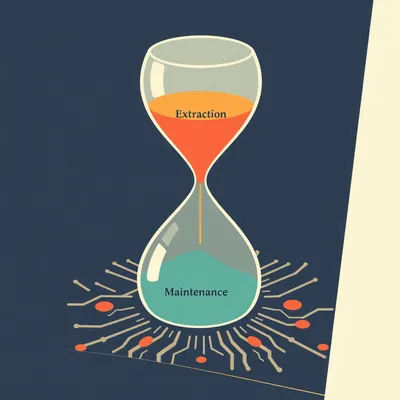
#2634: The Two-Stage Pipeline for Persistent User Memory
How to extract durable personal context from raw prompts and build a self-healing memory layer for AI systems.
#2622: How Transformers Actually Work: Attention, Tokens, and Context
How one architectural change unlocked chatbots, image generation, and protein folding — explained without the jargon.
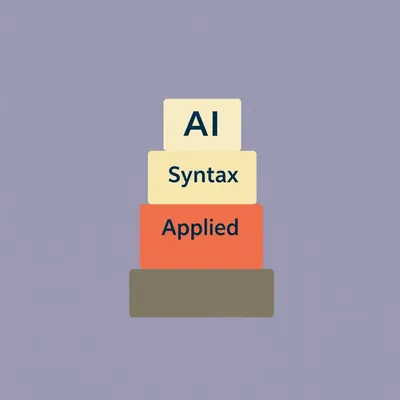
#2559: The Smartest Path to Python for AI
A practical guide to the best courses and platforms for learning Python, specifically for machine learning.

#2551: How Progressive Disclosure Saves MCP from Token Bloat
Why dumping all tool schemas into context breaks accuracy — and three implementations that fix it.

#2540: Does Your AI Framework Change the Output?
Same model, same prompts, different harness. Does the plumbing change the water?

#2517: How Unsloth Makes LLM Fine-Tuning 2x Faster
Unsloth cuts memory usage by 50-70% and speeds up training 2.2x for models like Llama 3 and Mistral.

#2516: Overfitting Is Not a Binary Condition
Overfitting isn't binary. Learn the real triggers, the bias-variance tradeoff, and modern techniques to prevent it.

#2511: Measuring AI API Latency Through the Black Box
How to benchmark token throughput and debug slowdowns in closed CLI tools like Claude Code using OpenTelemetry and mitmproxy.

#2497: Tracing One Python Print Through 6 Abstraction Layers
What actually happens when you print "Hello" in Python? Six layers, 562 system calls, and a hardware-enforced kernel boundary.

#2495: How to Bake Personality Into an LLM in 15 Minutes
Fine-tune a model's personality with ~300 examples and a consumer GPU. SFT + DPO explained.
#2494: Active Prompt Engineering: Daniel's Diff-Based Loop
A deep dive into iterative prompt refinement using inter-iteration prediction change as an uncertainty signal.