Daniel's been thinking about houses that nobody lives in, and the people who get paid to check on them. His question has three parts. What does the job actually entail when it's run as a business, not as a favor between friends? How much do these businesses charge? And who's actually paying for it, especially the owners who hold property purely as an investment and might live in another time zone. The angle underneath all three questions is the thing that caught my attention, which is that this whole industry exists because of absentee ownership. The customer list is a map of who owns property and where they aren't.

And the first thing to get straight is that there are two completely different things people call house-sitting, and Daniel's asking about the second one. The first is the informal economy, someone stays in your house rent-free while you're away, feeds the cat, waters the plants, maybe they're a friend of a friend. The second is a paid, scheduled service where nobody necessarily stays overnight at all. That's the professional version, and it's got a trade association, the National Home Watch Association, which is the closest thing the industry has to a standards body. They accredit operators, they push training, they have a code of ethics. The fact that a trade association exists for checking on empty houses tells you this is a real industry with real structure.
Home watch. That's the term the professionals use, and it's a better name. House-sitting sounds like a teenager with a key and instructions about the garbage bins. Home watch sounds like what it is, which is scheduled inspection visits with a report at the end.
Right. The basic shape is recurring visits to a property while the owner is away, on a schedule, weekly or biweekly or monthly, with a written report back to the owner after each visit. And the tension that runs through the whole business is that the service is cheap per visit, but the trust and liability requirements are enormous, and the customer is never there to supervise. You're paying someone to be your eyes on a property you can't see, and you're taking their word for what they found.
So let's start with what the job actually is, because it's not just watering plants.
A standard home watch visit is a walk-through with a checklist, and the checklist is longer than most people expect. Exterior first. You're looking at doors and windows for signs of forced entry, you're checking that the landscaping hasn't turned into a jungle that advertises nobody's home, you're looking for storm damage, you're making sure the gutters aren't pulling away from the house. Then you go inside and the real work starts.
What's the first thing you check inside?
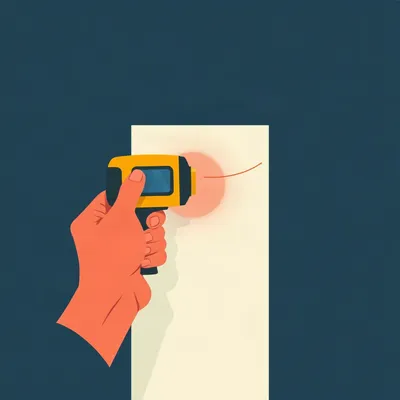
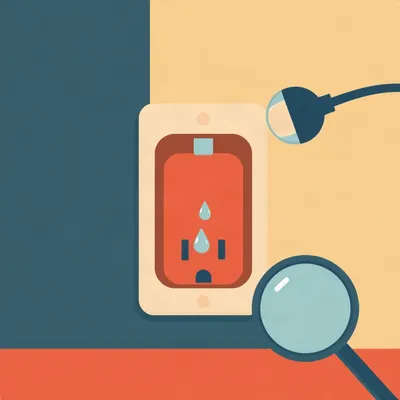
Water. Water is the thing that destroys an empty house faster than anything else. A pipe lets go in a wall and nobody's there for two weeks, you've got mold, you've got structural damage, you've got a five-figure insurance claim. So you're checking under sinks, you're looking at the water heater for leaks, you're checking the refrigerator because the ice maker line is a classic failure point, you're checking the HVAC system to make sure it's still running and the thermostat is where it should be. And then there's the detail most people never think about, which is that you run the faucets and flush the toilets. Not because the toilets are dirty. Because the traps dry out.
The traps. The U-bend under the sink.
Every drain in the house has a water trap that blocks sewer gas from coming back up. If nobody runs water for weeks, the water evaporates, the trap goes dry, and now you've got sewer gas venting into the house. So part of the job is literally flushing toilets and running taps for thirty seconds to keep the water seal intact. It's the least glamorous task in the entire service industry, and it's essential.
It's the kind of thing that only exists as a job because the owner isn't there to do it themselves. Nobody flushes their own toilet as a business.
And then there's the mail and newspaper collection. An empty house that's accumulating mail on the doorstep or newspapers in the driveway is a house that's telling every passerby that nobody's home. So the home watcher collects the mail, brings it inside, maybe forwards it if that's part of the arrangement. The whole point is to make the house look lived in, or at least not obviously abandoned.
So the physical tasks are mostly checking things and running water. What's the actual deliverable?
The report. After every visit, the owner gets a written report, usually with photos. Here's the front door, here's the water heater, here's the thermostat reading, here's the mail that arrived. That documentation is the real product, because it does two things. First, it gives the owner peace of mind, they can see the house is still standing. Second, and this is the part that doesn't get talked about enough, it creates a record. If something does go wrong, if there's a leak or a break-in or storm damage, the owner has a dated, documented history of the property's condition. That's worth something in an insurance dispute. It's worth something if a contractor claims damage predates their work. You're not just buying a check-in, you're buying a witness.
A witness with a camera and a clipboard. That's the job.
And the emergency response layer is where the liability really sits. When the watcher finds a burst pipe or a broken window, they have to act. They coordinate with plumbers or contractors, they secure the property, they contact the owner, and they make decisions on the owner's behalf. That's the part that separates a professional from a neighbor doing a favor. The neighbor calls you and says your basement's flooded. The professional calls you and says your basement flooded, I've shut off the water, the plumber will be there in an hour, here's what it's going to cost.
Which means the professional needs to be insured and probably bonded, because they're making decisions that spend the owner's money.
And that's the licensing and insurance reality. Home watch businesses generally need liability coverage, and depending on the state they may need to be licensed or bonded. The NHWA pushes accreditation as a trust signal precisely because the customer can't easily verify quality from another state. If you're a snowbird in Michigan and your condo is in Florida, you can't interview the home watcher in person, you can't drop by to see how they work. You're hiring someone over the internet to look after a six-figure asset. Accreditation is the substitute for the supervision you can't do.
So the trust problem is structural. The customer is absent by definition, which means they can't monitor the service they're buying.
And the terminology confusion doesn't help. A lot of businesses use house sitting loosely, but the professional version is a scheduled inspection service, not a live-in arrangement. Nobody's staying at your property. They're visiting it. The distinction matters because it changes what you're actually buying. A live-in sitter provides presence, someone's there overnight, the house is occupied. A home watcher provides verification, someone checks and documents and reports. Different products, different risks, different prices.
And the startup cost angle explains why the industry looks the way it does. What does it take to start a home watch business?
Almost nothing in capital terms. The NHWA's start-a-business guidance frames it as a low-capital entry business. You need a vehicle, a phone, insurance, and a client list. No storefront, no inventory, no employees necessarily. A solo operator with a car and a clipboard can service a route of properties. That's why the industry is fragmented and full of small operators. The barrier to entry isn't money, it's trust. Anyone can print business cards, but getting a snowbird in Michigan to hand you the keys to their Florida condo is a different problem entirely.
And that's the tradeoff. Low capital entry means lots of competitors, which means the customer has to sort through a lot of operators with no obvious way to tell good from bad. Which is exactly where accreditation steps in.
Okay, so that's the shape of it. Now let's get into what a visit actually looks like, because the checklist is where the job gets real.
Walk me through a typical visit. You pull up to the house. What's the first thing you do?
You look at the house from the street before you get out of the car. That's the exterior check, and it's more than just walking around. You're looking for anything that's changed since the last visit. Is a window open that should be closed? Is there a car in the driveway that shouldn't be there? Is the front door fully shut? You're comparing the property against your memory of the last visit, and that's why home watchers keep detailed logs. The value is in noticing the delta.
The delta. What changed.
Then you walk the perimeter. You check the doors and windows physically, you make sure the locks are still intact, you look for signs of forced entry, you check the landscaping. Overgrown grass is a problem not because it's ugly, but because it signals vacancy. A house with a jungle for a lawn is a house that's telling burglars nobody's been there in weeks. Some home watchers will coordinate with landscaping services just to keep the place looking maintained.
So part of the job is making the house not look like it needs the job.
Then you go inside, and the interior walk-through is systematic. You're checking for water leaks under every sink, you're looking for mold or pest evidence, you're checking the HVAC and thermostat to make sure the climate control is still working, you're checking the refrigerator and the water heater. And then you do the faucets and toilets, the trap-flushing thing I mentioned. It's a routine that takes maybe thirty to forty-five minutes per property, and the whole time you're documenting. Photos, notes, readings.
And then the report goes to the owner.
Same day, usually. The owner gets an email with photos and a written summary. Everything's normal, here's the proof. Or, here's a problem, here's what I did about it. The report is the product. It's the thing the owner actually receives for their money.
What's the classic value story here? The one the industry tells about itself.
The snowbird in another state whose home watcher finds a slow leak under the sink and prevents a mold problem. It's the perfect anecdote because it's boring and it's exactly the point. The leak wasn't dramatic. Nobody would have noticed it for weeks. But the watcher noticed it on a Tuesday, called a plumber, and the owner never had to deal with a remediation project that would have cost ten times the plumber's bill. The entire value proposition is that someone was there to notice.
And the solo operator running a route of forty properties out of a car is the other side of the story. That's the business model.
Forty properties, weekly visits, that's a full-time job. The density is what makes it work. If you've got forty clients in the same county, you can run a route, you're not driving an hour between visits. The money is in the route, not in any single visit. One visit pays twenty-five dollars. Forty visits a week, that's a thousand dollars a week, and your costs are gas and insurance and your time. It's not a fortune, but it's a business.
And the tradeoff between a cheap basic visit and a premium service?
The basic visit is the checklist. Walk the property, check the systems, run the water, send the report. The premium service adds things like pool checks, mail forwarding, contractor meet-ups, storm checks. Some operators will meet the plumber at the property so the owner doesn't have to coordinate from another state. Some will do a post-storm inspection, walk the property after a big weather event and report on damage. Every add-on is another line on the invoice, and the base rate is just the entry point.
So that's the work. The obvious next question is what people pay for it, and who's paying.
Pricing is per visit, and the rates are lower than most people expect. Entry-level per-visit rates are in the twenty to forty dollar range for a basic check. More established operators, premium markets, they charge more, and they offer tiered packages. But the per-visit rate is only half the story. The frequency is what drives the effective monthly cost. Weekly visits at twenty-five dollars is a hundred dollars a month. Biweekly is fifty. Monthly is twenty-five. The per-visit rate sounds small, but the frequency multiplies it, and the frequency is driven by the owner's risk tolerance and the property's needs.
A snowbird paying for weekly visits through the winter is spending four or five hundred dollars a season, not twenty-five dollars.
Right. And the operator's economics work the same way. A per-visit rate sounds small, but a route of recurring clients is what makes it a business. The money is in density and frequency, not in any single visit. One client paying twenty-five dollars a week is not a business. Forty clients paying twenty-five dollars a week is a thousand dollars a week, and that's a solo operator's salary. The industry is built on aggregation, not on high margins.
Which explains the fragmentation. If the margins were fat, you'd see consolidation. You don't. You see solo operators with routes.
The customer base is the part that connects back to Daniel's investment-property angle. Let me break it down segment by segment. First, seasonal residents, the snowbirds. They live in one place part of the year and another place the rest. They need someone to watch the house they're not in. Second, non-resident owners of second homes. The cabin, the beach house, the place that's empty most of the year. Third, out-of-state or international owners of investment properties. This is the segment Daniel's most interested in, and it's growing. Fourth, owners of short-term rentals between bookings. They need someone to verify the cleaner actually showed up, check for damage after a guest, make sure the property's ready for the next booking. Fifth, estate and probate situations where a property is held vacant while the legal process runs. And sixth, absentee owners during extended travel. The person who's gone for three months and doesn't want the house to sit unmonitored.
The short-term rental one is interesting. That's not a vacant house, that's a house with a rotating cast of strangers, and the owner still can't check on it themselves.
The home watcher's job there is different. They're not looking for burst pipes, they're verifying that the turnover happened. Did the cleaner show up? Is the damage from the last guest documented? Is the property ready for the next booking? It's quality control for a business the owner runs remotely. The home watcher is the owner's eyes on a property that generates revenue, not just a property that sits empty.
The customer list is a map of absentee ownership. Every segment is someone who owns property they're not physically present to manage.
That's the structural insight. For an owner holding a property primarily as an investment, the home watcher is part of the carrying cost of the asset. It's a line item alongside taxes, insurance, and maintenance. The service exists because the owner's return depends on the property not deteriorating while it sits, and the owner can't be there to prevent the deterioration. The home watcher is the substitute for presence, and the fee is the price of absence.
Which means the industry is a direct readout of where ownership is concentrated and non-resident. Where you see clusters of investment properties, you see home watch businesses. Where ownership is local and resident, you don't.
The trust problem is a market feature, not a bug. Because the customer is absent, reputation, accreditation, and referrals do more work than price competition. Nobody picks a home watcher because they're five dollars cheaper. They pick one because a neighbor recommended them, or because they're NHWA accredited, or because they've got a hundred five-star reviews. The service is cheap per visit, but the cost of getting it wrong is enormous, so customers pay for trust, not for price.
That's why the NHWA-style accreditation exists. It's a trust signal for a market where the buyer can't verify quality directly.
The NHWA accredits operators, it has a code of ethics, it provides training and start-a-business guidance. It's trying to professionalize a fragmented industry by giving customers a way to sort the serious operators from the hobbyists. Whether it works is another question, but the fact that it exists tells you the market has a trust gap.
The economics are per-visit rates in the twenty to forty dollar range, frequency drives the monthly cost, and the customer base is six segments of absent owners. What does the industry tell us about how property is actually held?
That a lot of property is held by people who aren't there. The home watch industry is a market response to the gap between who owns a house and who is physically near it. When ownership was local, when you lived in the house you owned, you didn't need a home watcher. You were the home watcher. The industry exists because ownership has detached from presence, and that detachment is growing. Second homes, investment properties, short-term rentals, all of it creates demand for someone to be the eyes on a property the owner can't see.
The uncomfortable part is that the service is a symptom. You're paying someone to do the things you'd do yourself if you lived there. The entire industry is built on the fact that you don't.
Right. And it's growing. The more property becomes an investment vehicle rather than a place to live, the more demand there is for home watch services. The industry is a readout of how property is actually held, not how we imagine it's held. We imagine houses with families in them. The reality is a lot of houses sit empty most of the year, and someone gets paid to flush the toilets.
That's the thing that sticks with me. The trap-flushing. It's the perfect detail. The job exists because a house left alone will literally start to smell like a sewer, and the owner isn't there to notice.
The boring part is the product. The visit that finds nothing is the visit that proves the system works.
Hilbert: You're both missing what the customer's actually buying. It's not peace of mind. Peace of mind is what you tell yourself when you're writing the check. What you're buying is a witness. Someone who can say, I was there on this date, and this is what I saw. That's the whole product. The photos, the report, the log. It's evidence.
Evidence for who?
Hilbert: The insurance company. The contractor who says the damage was pre-existing. The tenant who swears the leak started before their lease. The neighbor who wants to know who's been parking in the driveway. The owner's not buying reassurance. They're buying a record that holds up when someone's arguing about what happened and when.
That's a sharper way to put it. The documentation is the product, not the reassurance.
Hilbert: I ran a route like this once. Mid-nineties. A friend of mine had a condo in another state, asked me to look in on the place while he was gone. I'd go by once a week, check the doors, run the water, write it down in a notebook. Then his neighbor asked if I'd do the same for their place. Then someone at the clubhouse heard about it. Within a year I had about a dozen clients. Cash, under the table, twenty bucks a visit. I was a home watch business and I didn't even know the term.
What happened?
Hilbert: The water heater let go. Walked in one Tuesday and there's water coming through the ceiling of the unit below. I had to decide on the spot whether to call a plumber. I called the plumber. The owner was furious. Not about the flood, about the bill. The plumber charged him four hundred dollars for an emergency call, and the owner acted like I'd spent his money without asking. Which I had. That's the whole business in one story. You're trusted right up until you spend someone's money, and then you're the guy who made an expensive decision.
That's the liability layer. The emergency response is where the trust gets tested, and it's also where the operator takes the real risk.
Hilbert: The boring visits are easy. You walk around, you write things down, you leave. The hard part is the one visit where you have to act, because acting costs money, and it's not your money. You can be right and still get blamed.
Did you keep doing it after that?
Hilbert: Quit a few months later. It wasn't the money, it was the weight of it. Twelve sets of keys, twelve houses, and every one of them was my problem if something went wrong. I still have the notebook, the paper log from that year. Every visit, every date, every all clear. I could still tell you which of those twelve houses had the squeaky back gate.
The log is the witness. That notebook is the product.
Hilbert: That notebook is the only reason anyone believed I'd been there at all. The owner who was angry about the plumber, he went back through the log and saw I'd noted the water heater looked fine three weeks earlier. Didn't make him less angry, but it proved I wasn't making things up. The notebook was the business. The walking around was just how you filled the pages.
The job is mostly boring, and the boring part is what you're selling.
Hilbert: That's what I said. The visit that finds nothing is the visit that proves the system works. Nobody wants a visit that finds a flood. They want a hundred visits that find nothing, and the one visit that finds the flood before it's a disaster. The boring part is the product because the boring part means nothing went wrong.
The customer list is the part that's changed since your route. You had a dozen clients in a condo complex. Now the industry has international investors and short-term rental owners and estate situations. The scale is different, but the job is the same.
Hilbert: The job doesn't change. A house is a house. The water heater doesn't care who owns it. The toilet trap doesn't know if the owner's in Singapore or Sarasota. The work is the work. What's changed is who's paying for it, and how far away they are.
Which brings us back to the bigger question of what this industry says about who owns property and where they are.
The open question is whether the home watch business scales with absentee ownership or stays a fragmented cottage industry of solo operators. The demand is growing, that's clear. Second homes, investment properties, short-term rentals, all of it creates more demand for someone to check on empty houses. But the supply side is still mostly solo operators with a car and a clipboard. The question is whether the industry professionalizes and consolidates, or whether it stays exactly what it's always been, a bunch of people with keys and notebooks.
The uncomfortable implication is that a service industry whose entire existence is a symptom of owners not being present is a strange thing to build a business on. You're monetizing absence. The more absent the owners, the more business you have. It's not a problem you're solving, it's a condition you're profiting from.
But that's true of a lot of industries. Property management, storage units, security systems. All of them exist because people have things they can't watch themselves. Home watch is just the most literal version of it. Someone walks through your empty house and flushes your toilets so the sewer gas doesn't build up. It's the most direct expression of the gap between ownership and presence.
The one thing I'd take from this is that the trap-flushing detail is the whole industry in miniature. The job exists because a house left alone will start to fail in small, boring ways, and the owner isn't there to notice. The home watcher is the substitute for the owner's own eyes, and the report is the proof that the eyes were there. Everything else, the pricing, the segments, the accreditation, it all follows from that basic fact.
The customer list is the map. Snowbirds, second-home owners, investors, short-term rental operators, estates. Every segment is someone who owns property they can't see. The industry grows because that gap grows, and the gap grows because property has become an asset class rather than a place to live.
The question that sticks with me is whether the industry can scale without losing the thing that makes it work. A solo operator with a notebook knows which house has the squeaky gate. A national chain with an app might not. And the whole product is the noticing.
That's the tension. The trust is personal, but the demand is structural. Somebody's going to try to industrialize it, and the question is whether they can keep the witness quality that makes the service worth paying for.
Thanks to Hilbert Flumingtop for producing. This has been My Weird Prompts. If you want to send us your own weird prompt, email us at show at my weird prompts dot com.
We'll be back soon.