Daniel sent us this one — and it's basically two questions folded together. He's wondering about smart curtains versus smart glass for a bedroom, specifically from a circadian health angle. And he wants the full breakdown of what you can actually do to make bedroom lighting fully automated. I'll admit, the gap in the curtain thing — I feel that in my bones.

Before we dive in — quick note, DeepSeek V four Pro is writing our script today. Which means our AI down the road has a different pen this time. Okay, so the curtain gap. That tiny sliver of light that hits your eyelid at exactly the wrong angle at six in the morning. It's a real problem. And Daniel's framing is interesting because he's not just asking "what's cool" — he's asking what actually works for health and what's viable when you don't own the walls.
And he's touching something most smart home coverage misses entirely. Everyone writes about the gadget, nobody writes about the trust problem. You install privacy film and then you walk outside to check. That's not paranoia — that's rational.
It really is. And the trust problem gets worse when you're talking about a bedroom window, not an office. So let's start with the two technologies Daniel's actually asking about, because they're completely different things and most people conflate them. Smart curtains are what they sound like — a physical curtain on a motorized rod, usually Zigbee or Z-Wave, sometimes Matter now. Smart glass is a material science thing — either PDLC, which is polymer dispersed liquid crystal, or electrochromic, or sometimes SPD, suspended particle device. They all do different jobs.
Break those down. PDLC versus electrochromic — what's the actual difference for someone standing in a bedroom?
PDLC is the one you see in hotel bathrooms and fancy office conference rooms. It's a film with liquid crystal droplets suspended in a polymer. When there's no current, the crystals scatter light randomly and it looks frosted — whitish, opaque. You apply voltage, the crystals align, and it goes clear. It's basically a binary thing — on or off, frosted or clear. It does almost nothing for light blocking. You can see shapes through it even when it's frosted, just blurry shapes.
For a bedroom, PDLC is privacy but not darkness.
It's not a curtain replacement. It's a blinds replacement for bathrooms and offices where you want privacy on demand but don't care about light control. The whitish tint Daniel mentioned — that's PDLC in its off state. It's not shading. It's just scattering.
That's the one that actually tints. It's what Boeing uses on the 787 Dreamliner windows. You apply a small voltage and ions move between layers, changing the glass from clear to tinted — and you can stop at intermediate levels. It takes longer, maybe two to five minutes for a full transition on a large window, but you get actual light and heat reduction. Some electrochromic windows can block up to ninety-nine percent of visible light at their darkest state. That's usable for a bedroom.
Electrochromic sounds like the real candidate here. What's the catch?
Electrochromic windows — and I mean whole-window replacements, not stick-on film — run somewhere between fifty and a hundred dollars per square foot installed. A standard bedroom window might be fifteen to twenty square feet. You're looking at a thousand to two thousand dollars per window, easily. View, which is the big name in this space, sells to commercial buildings primarily. They've started doing residential but it's not a DIY thing — it's a full window replacement with wiring run to each unit.
Daniel's renting. So that's out.
But here's where it gets interesting. There are aftermarket electrochromic films you can apply to existing windows. They're not as good as full replacement glass, but they exist. The issue is they still need wiring, and they're still expensive — maybe thirty to fifty dollars a square foot for the film alone, plus installation and a controller. And you need to get power to each window, which in a rental means visible wires or battery packs that you have to recharge.
Battery packs on windows. That feels like one of those things that sounds clever for about a week and then you never recharge them and your windows are stuck at whatever tint they died at.
That's exactly the failure mode. And with electrochromic, the default state when power fails is usually the tinted state for most films — which might actually be fine for a bedroom, honestly. But yeah, the maintenance overhead is real. Now, there's a third option Daniel didn't mention directly but it's relevant to the UV tinting question he asked about. He mentioned PVT fifty, seventy, a hundred — those are visible light transmission percentages for car window tint. PVT is probably a typo or a variant of VLT, visible light transmission. Fifty means fifty percent of visible light gets through.
He's wondering if there's a smart version of that.
There is, and it's SPD — suspended particle device film. SPD is like electrochromic's faster cousin. It switches in seconds rather than minutes, and it can do intermediate states. It's used in some high-end cars — Mercedes, McLaren — for panoramic roof tinting. Research Frontiers is the company behind most SPD tech. You can get SPD film for residential windows, but again, it's not cheap and it needs power. The nice thing about SPD is it blocks both visible light and infrared, so you get heat rejection too.
We've got three smart glass technologies. PDLC for privacy but not darkness, electrochromic for gradual tinting but slow and expensive, SPD for fast tinting but also expensive and power-hungry. None of them are great for a rental bedroom, and none of them are a straightforward curtain replacement.
That's before we get to the trust problem Daniel raised. With a physical curtain, you can see that it's closed. With smart glass, you're relying on a voltage state. What if the controller glitches? What if it's clear when it's supposed to be opaque? You'd have no way to know from inside the room unless you walked up and pressed your face against it. For a bedroom, that's a real psychological barrier.
Which brings us to smart curtains. The boring, mechanical, glorified curtain rod that actually does the job. What's the state of that world?
It's matured a lot. The big players are Aqara, SwitchBot, Zemismart, and then there's IKEA with their FYRTUR and TREDANSEN blinds — though those are blinds, not curtains. For actual curtain rods, SwitchBot has their Curtain series. The SwitchBot Curtain 3 came out in late twenty twenty-four. It's a little robot that clamps onto your existing curtain rod and drags the curtain along. It works with U-rails, I-rails, and telescoping rods. Battery powered, charges via USB-C, and they claim eight months on a charge.
That's the kind of battery life where you might actually keep it running.
And it's Zigbee or Matter-compatible depending on the hub. The Matter support is new as of the Curtain 3, and that matters because it means it works locally with Apple Home, Google Home, Amazon Alexa without a proprietary bridge. They also have a solar panel accessory — a little panel you stick on the window side of the curtain that trickle-charges the battery. It's genuinely clever.
For a renter, this is viable. Clamp it on, take it with you when you leave. What about the actual automation Daniel's describing — the gradual opening before sunrise?
That's where software matters more than hardware. Most smart home platforms can do time-based automations, but "gradually open starting thirty minutes before sunrise" requires either a platform that knows sunrise times dynamically or a fixed schedule you adjust seasonally. HomeKit can do sunrise-relative automations natively. Home Assistant definitely can. Alexa routines can do it. The SwitchBot app itself has a sunrise-sunset mode. So the capability exists.
Here's the thing — a curtain that creaks open slowly is not the same as a gradual light increase. Curtains are binary-ish. They open, light comes in. You can slow the motor down but you're still just revealing a window. It's not a dimmer switch for sunlight.
A curtain opening over twenty minutes isn't a smooth ramp — it's a slow reveal of a fixed light source. If the sun is already fully up, you go from dark to bright pretty quickly once the curtain clears the window edge. If you want a true gradual sunrise simulation, you'd need either an east-facing window where the curtain starts opening before actual sunrise, or you pair it with artificial lighting — a sunrise alarm clock or smart bulbs that ramp up warm to cool light.
That's where Daniel's question about layers gets interesting. What are all the layers you can do for bedroom lighting? Curtains are one layer. What else stacks?
Let's build the stack. Layer one is natural light control — curtains or blinds. Layer two is blackout — separate from your automated curtain, you might want a blackout roller shade that drops for sleep and retracts before the curtain automation starts. IKEA's TREDANSEN blackout blinds are good for this and they're Matter-compatible now. Layer three is artificial light — smart bulbs or smart fixtures. Layer four is the circadian orchestration layer — the software that coordinates all of this based on time, sunrise, and your personal schedule.
There are people who go deeper. Under-bed lighting that comes on dimly when you step out. Red-spectrum night lights so you don't blast your melatonin if you get up at 3 AM. I've seen setups where the entire bedroom lighting shifts color temperature through the day — cool white in the morning, warm in the evening.
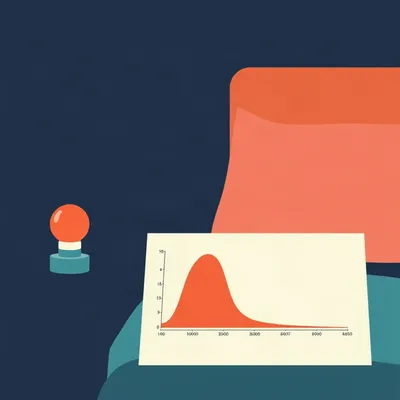
The color temperature thing has actual science behind it. Our circadian system responds most strongly to blue light around four hundred eighty nanometers. Morning blue light suppresses melatonin and shifts your circadian phase earlier — it helps you wake up and sets you up to fall asleep earlier the next night. Evening blue light does the opposite, delays your phase, makes it harder to fall asleep. So the ideal smart bedroom would do cool, blue-rich light in the morning and warm, amber light in the evening. Philips Hue has a "Natural Light" scene that does this automatically. Home Assistant has an adaptive lighting integration that does it more granularly.
— and I know you're going to push back on this — how much of this is actually clinically significant versus nice-to-have?
The effect is real but the magnitude depends on dose, timing, and individual sensitivity. A twenty twenty-two meta-analysis in PLOS Biology looked at the relationship between light exposure and circadian disruption. The key finding was that light exposure in the two hours before your natural wake time has the strongest phase-shifting effect. So that pre-sunrise curtain opening Daniel's describing? That's hitting the most sensitive window. If you're doing it right, it could help entrain your circadian rhythm.
That's the word where you sync your internal clock to the external light-dark cycle.
And here's what most people get wrong — it's not just about morning light. Evening light exposure matters just as much. You need both sides. A curtain that closes at sunset and blocks streetlights and a curtain that opens before sunrise. The contrast between day and night is what drives the system.
If you're going to do this, you don't just automate the morning. You automate the evening close too. And that's where the smart curtain is actually better than smart glass — because a physical blackout curtain blocks more light than any current smart glass technology.
That's the key point. The best electrochromic windows top out at about ninety-nine percent visible light blocking. A good blackout curtain with a wrap-around rod or a curtain track that returns to the wall can block effectively one hundred percent. And it costs a fraction as much. Smart glass is solving a different problem — it's for spaces where you want the window itself to change, where physical window coverings are impractical, or where the aesthetic of unobstructed glass matters.
Daniel mentioned circadian health as the driver. If that's the goal, the smart curtain with a blackout layer is the answer. The smart glass is a cooler technology but it's solving for aesthetics and space, not for sleep.
There's one more thing about smart glass that doesn't get talked about enough. Even at its darkest, electrochromic glass doesn't create total darkness. There's always a slight glow, especially around the edges where the tint doesn't fully extend. For a bedroom, that edge glow can be annoying. It's like the curtain gap problem Daniel's trying to solve, just in a different form.
A curtain gap you paid two thousand dollars for.
So let me lay out what I think the actual stack looks like for a renter who wants smart bedroom lighting optimized for circadian health. Layer one: a good blackout curtain on a manual rod or a basic roller shade — this is your sleep darkness. Layer two: a smart curtain system like the SwitchBot Curtain 3 on a separate rod — this is your automated morning light. You set the blackout to retract at, say, five thirty AM, and the curtain starts opening at five forty-five, with sunrise at six.
That's the kind of detail nobody tells you. You need a double curtain rod — one for the blackout layer, one for the automated sheer or light-filtering layer.
Or you do a blackout roller shade behind a smart curtain. That's actually cleaner. IKEA's FYRTUR or TREDANSEN for the blackout shade, SwitchBot for the curtain in front. Both are Matter-compatible, both are renter-friendly. Total cost maybe three to four hundred dollars for a standard window, and you take it all with you when you move.
Layer three is artificial light. At minimum, one smart bulb in a bedside lamp that does warm dimming and color temperature shifting. Philips Hue, LIFX, or even a WiZ bulb if you want budget. The key spec is that it can go very warm — below twenty-two hundred Kelvin — and very dim, below one percent. Most cheap smart bulbs bottom out at five or ten percent brightness which is still too bright for middle-of-the-night. You want something that can do a barely-visible glow.
I've noticed that with the bulbs in my room. The "one percent" on some brands is more like ten percent on others. There's no standard.
No, and it drives me crazy. It's one of those specs that reviewers never measure. A good test is whether you can look directly at the bulb at its minimum setting in a dark room and not squint. If you squint, it's not low enough for nighttime use.
Layer four is the orchestration software. What's actually good at this?
Home Assistant is the most powerful but it's a tinkering platform. If Daniel's already into Home Assistant — and I know he is — he can use the adaptive lighting integration, which automatically adjusts brightness and color temperature based on sun position. It's ridiculously configurable. You set the min and max color temperature, the transition time, and it handles the rest. For the curtain, you'd set an automation that triggers relative to sunrise — open over thirty minutes starting twenty minutes before sunrise, something like that.
If you're not a Home Assistant person?
Apple Home has adaptive lighting built in, but it only works with compatible bulbs — mainly Philips Hue and a few others. It shifts color temperature through the day automatically. For curtain automations, you'd use a HomeKit scene tied to sunrise. Google Home has something similar but it's less polished. Alexa has hunches and routines but no native adaptive lighting — you'd have to build it yourself with multiple routines.
The thing Daniel's really asking about — and I think this is what's underneath the technology question — is whether any of this actually makes a difference to sleep quality. He mentioned being sleep deprived with parenting. The promise of all this gear is that it helps.
The evidence is mixed but directionally positive. A twenty twenty-three study in the Journal of Clinical Sleep Medicine looked at automated bedroom lighting systems and found that participants who used dawn simulation — gradual light increase before wake time — reported better subjective sleep quality and easier morning awakening. The effect size wasn't huge — it's not a cure for insomnia — but it was statistically significant. And the effect was stronger in winter months when natural dawn light is limited.
It's a marginal gain, not a revolution.
And for someone who's sleep-deprived from parenting, the biggest factor is still going to be sleep opportunity — how many hours you actually get. No curtain automation fixes a baby waking up at two AM. But if the automation helps you fall asleep faster or wake up less groggy, that's real value. Even a five or ten percent improvement in sleep quality compounds.
There's also the psychological side. Knowing your environment is optimized for sleep can reduce bedtime anxiety. I've noticed this with my own setup — just the ritual of the lights dimming and the curtains closing signals to my brain that it's time to wind down.
That's the conditioning effect. It's the same reason sleep hygiene advice always says to have a bedtime routine. Automating it makes it consistent, and consistency is what entrains the circadian system. The automation isn't doing anything you couldn't do manually — but you probably wouldn't do it manually every single night at the exact same time.
That's the real pitch for smart home sleep tech. Not that it does something impossible, but that it does something consistently that humans are inconsistent about.
Let me circle back to something Daniel asked about that we haven't covered — the UV tinting question. He asked if there's a smart version of UV tinting, like the VLT ratings on car window film. The short answer is yes, but it's not what most people think. UV tinting specifically blocks ultraviolet light, which is what fades furniture and damages skin. Most smart glass technologies don't focus on UV because regular glass already blocks most UVB. What they focus on is infrared — heat rejection. SPD and electrochromic both have good infrared blocking, which reduces cooling load. But if you want UV blocking specifically, you're better off with a passive film. There are clear UV-blocking films that block ninety-nine percent of UV without darkening the window at all. You apply them once and forget about them. No smarts needed.
The smart part is solving visible light and heat, not UV.
And for a bedroom, UV is probably not the priority. Visible light control and privacy are what matter. Now, there's one more technology I want to mention because it's emerging and it bridges the gap between smart glass and smart curtains. It's called smart film with segmented control. Instead of the whole window switching at once, you can address different zones — like a pixelated privacy effect. Imagine your window divided into strips or a grid, and you can make the bottom half opaque while the top stays clear, or create patterns. It's still mostly commercial and crazy expensive, but it's the kind of thing that might trickle down in five to ten years.
For a bedroom, being able to frost just the lower half of a window while leaving the top clear for light would actually be useful. But we're talking about a technology that probably costs more than a month's rent per window.
So let's be practical. If Daniel wants to build the dream bedroom lighting stack in a rental, here's what I'd actually recommend. Start with a double curtain rod. Inner rod gets a manual blackout curtain — you close it at night, open it in the morning, no automation needed if you're disciplined. Or automate it with an IKEA TREDANSEN roller shade. Outer rod gets the SwitchBot Curtain 3 with a light-filtering curtain — this is the one that automates. Add one or two Philips Hue bulbs in bedside lamps with the natural light scene. Total cost around four to five hundred dollars, fully removable, and it covers ninety percent of the circadian benefit.
If you own the place and have budget?
Then you can get fancier. Replace the manual blackout with automated blackout shades from Lutron or Somfy — these are the gold standard, but they're wired and expensive, easily a thousand dollars per window. Add in-wall smart dimmers instead of smart bulbs if you prefer. Install an east-facing skylight with an automated shade for natural dawn light. Put in under-bed motion-activated lighting strips. The sky's the limit. But honestly, the marginal gains beyond that basic stack are small.
The Lutron stuff is interesting because it's the one brand that interior designers actually specify. It's not DIY. You have a dealer install it. But the reliability is supposed to be bulletproof.
Lutron's RF protocol — Clear Connect — is rock solid. It's not Zigbee or Z-Wave or Matter, it's proprietary, but it works. The shades are near-silent. Their Palladiom line is designed to be visually minimal — the shade disappears into a ceiling pocket. It's the kind of thing you install if you're doing a gut renovation and you want the smart home to be invisible.
Invisible smart home. That's the dream, right? All the function, none of the visible technology.
That's actually where smart glass makes more sense than smart curtains. If you're designing a high-end modern home with floor-to-ceiling windows and no window coverings at all, electrochromic glass is the only way to get privacy and light control without ruining the aesthetic. You pay a massive premium for it, but you get unobstructed glass that tints on demand. For a certain architectural style, that's worth it.
For a bedroom, even in that high-end home, I'd still want a physical blackout option. Smart glass at its darkest isn't pitch black. And for sleep, pitch black matters.
The sleep science backs you up. Even five lux of light during sleep — that's about the brightness of a nightlight — has been associated with shallower sleep and more awakenings in some studies. A twenty twenty-four study in Sleep Health found that ambient light during sleep was associated with increased insulin resistance the next morning, independent of sleep duration. The mechanism seems to be that even closed eyelids detect light, and that signal reaches the suprachiasmatic nucleus — the brain's master clock.
The curtain gap isn't just annoying. It might be metabolically relevant.
At the population level, yes. For any individual, the effect is probably small. But across years of sleep, it adds up. This is why blackout curtains are one of the few sleep interventions that have near-universal endorsement from sleep researchers. Not smart curtains — just blackout curtains. The smart part is for the morning. The blackout part is for the night.
Which brings us back to Daniel's specific situation. He's got a curtain gap that's bugging him. The immediate fix isn't smart home tech — it's a wrap-around curtain rod or a curtain with a magnetic seal edge. But the smart curtain automation is a separate thing that adds value on top.
Fix the gap first. One thing that's worth mentioning — there are now curtain tracks designed specifically for blackout. They curve at the ends to return to the wall, and they have an overlap in the middle so there's no gap where the two curtain panels meet. Silent Gliss is the big name in curtain tracks, and they have motorized options that work with smart home systems. But again, that's a more permanent installation.
Let's talk about one more thing Daniel raised — the idea that everyone has a version of "looking up things they can't afford." His is electronics and smart home gear. His wife looks at architectural designs. His mother looks at flights. This is actually relevant to the smart home industry because so much of the coverage is aspirational. The CNET articles, the YouTube tours of million-dollar smart homes. Most people can't do any of it.
That creates a weird dynamic where people think a smart home requires a new build or a gut renovation. It really doesn't. The renter-friendly smart home market has exploded in the last few years. Matter has made it easier. Battery-powered devices with long life have made it practical. You can do an enormous amount with stick-on sensors, plug-in modules, and clamp-on curtain robots.
The SwitchBot Curtain is basically the poster child for this. It's a little robot that grabs your existing curtain. It's almost absurdly simple. And it works.
And there are similar products for blinds — the Soma Smart Shades and the Aqara Roller Shade Driver. These are little motors that attach to the beaded chain of existing blinds. They're not as polished as built-in motors, but they're a hundred dollars instead of a thousand, and they move with you.
If Daniel's dreaming about the perfect smart bedroom, the stack we've landed on is: blackout layer for sleep darkness, automated curtain or blind for circadian morning light, smart bulbs for artificial light that shifts color temperature, and a good software layer to orchestrate it. All doable in a rental for under five hundred dollars. Smart glass is cooler but worse at the actual job and ten times the price.
If you really want smart glass, wait until you own. Or until the technology matures to the point where aftermarket films are affordable and battery life isn't a constant headache. We're probably three to five years away from that.
The one wildcard I'd add — and this is for the "dream smart home" part of Daniel's question — is skylights. If you're building or renovating, an automated skylight with an integrated shade is the ultimate circadian lighting feature. Velux has solar-powered skylights with HomeKit-compatible shades. You get actual sunlight from above, which is how our circadian system evolved to receive it. It's a completely different experience from side-window light.
Skylight light is more intense and more evenly distributed. And a skylight with an automated blackout shade solves the darkness problem perfectly — no gaps, because the shade sits inside the frame. It's the one window treatment where you can get one hundred percent darkness and automated light in the same unit.
It's completely impossible in a rental.
But that's what the aspirational browsing is for.
Alright, before we wrap — Hilbert's daily fun fact.
Now: Hilbert's daily fun fact.
Hilbert: The average cumulus cloud weighs about one point one million pounds. It stays aloft because the weight is spread across millions of tiny water droplets, each so small that air resistance keeps them suspended.
A million-pound cloud. So the next time someone says I'm light as a cloud, I'll know they're calling me half a million pounds.
That's going to stick with me. This has been My Weird Prompts. We're produced by Hilbert Flumingtop. If you enjoyed this, the best way to support the show is to leave a review wherever you listen — it helps other people find us. We'll be back soon.
I'm going to go close my curtains.