
#audio-processing
52 episodes

#5918: Splitting One Camera's Audio for a Baby Monitor
One IP camera, two jobs: an open audio line for the nursery and Frigate's cry detection. Here's how go2rtc and Icecast fit together.
#5847: Why One EQ Curve Can't Fix Two Voices
One static EQ curve can't serve two different voices — here's why, and what actually works instead.

#5840: Why Voice Clones Lisp: Sibilants, Codecs, and the Sounds We Lose
Sibilants and plosives are the most fragile sounds in speech — and every stage of the audio chain is quietly built to destroy them.

#5814: Who Remembers Where You Left Off?
mpv remembers. MPRIS, GstPlay, and Media3 don't. There's no standard for playback history.
#5681: Why Your Volume Knob Can't Find the Right Spot
Your phone has 15 volume steps. More steps won't fix the real problem — and the math explains why.
#5678: Why Voices Are Harder to Design For Than Music
Every word arrives clearly on a phone speaker — so why is it exhausting? The science of listening effort, and how to design audio that isn't.
#5573: Audio Post-Processing for AI Podcast Pipelines
Silence trimming, loudness normalization, EQ, and tempo fixes — the CLI tools that turn raw TTS output into a finished episode.

#5551: Why Learning Makes Us Happier at Any Age
The credential isn't what makes learning feel good — choosing it is. What the research says about self-directed learning, aging, and hard times.

#5386: Morse Code Between Two Phones: Does It Actually Work?
Two phones, no data, one room. Morse over sound and flashlight — what the research says about echoes, timing, and whether anyone will hear you.
#4919: Parakeet vs Whisper: On-Device Dictation Showdown
NVIDIA Parakeet beats Whisper on phone dictation despite having more parameters. Here's why architecture matters more than model size.
#4840: Is Audio Learning Actually Effective?
We examine the science of audio learning, its real trade-offs, and how to use it strategically.
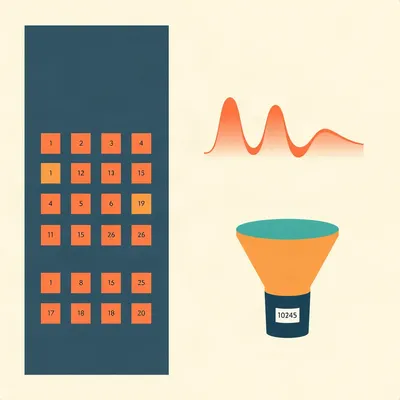
#4774: When a Token Isn't a Word Anymore
Images, audio, and code all use "tokens" — but they're completely different things. Here's how tokenization actually works across modalities.
#4666: Why 30 Seconds of Audio Beats 3 Minutes for Voice Cloning
Why adding more audio made Daniel's voice clones worse — and what it reveals about how voice embeddings actually work.

#3605: Can You Retain Audio While Doing Dishes?
Does folding laundry while listening to a podcast help or hurt retention? The science is surprisingly clear.
#3097: Measuring Car Horns: Phone Apps vs. Court Evidence
Can a phone spectrogram app prove which car honked? Usually not — here's what you actually need.
#2914: Can AI Read the Room? TTS Prosody Explained
Can TTS models truly infer emotion from text, or just mimic patterns? We break down the science of prosody.
#2886: How Acoustic Cameras Catch Honking Drivers
Can an acoustic camera pinpoint one honk in a traffic jam? The tech is real, and fines are being issued.
#2754: Why Your Dictation Setup Might Be Wrong
Modern ASR is shockingly robust. The biggest predictor of accuracy? How well your audio matches its training data.

#2726: Radio Listening vs Podcast Guilt
Why does podcast listening feel different from radio? A deep dive into attention, multitasking, and the psychology of audio.

#2643: How Stenographers Type 300 Words Per Minute
Court reporters don’t type letters—they chord syllables at 300 words per minute. Here’s how it works and why AI can’t replace them yet.
#2618: Text Normalization's Hidden Complexity
How to handle acronyms in text-to-speech pipelines using BERT models, lexicons, and layered preprocessing.
#2591: Decoupling Script from Voice
How dynamic voice replacement could let listeners choose who narrates each host's lines.
#2590: The Uncanny Valley of Clean Speech
How transformer models distinguish "um" from meaningful speech — and why removing too much makes you sound like a robot.
#2582: What Your Browser Does to Mic Audio Before It Reaches Your Server
getUserMedia returns audio, but not raw audio. Here's what browsers actually do to your mic feed before it hits your server.