We just got back from Connecticut, and here's what I can't shake — the air felt like a wet blanket for two straight weeks, the mosquitoes treated me like a buffet, and I kept thinking, some people live like this every single day of their lives. Daniel wrote in with a whole thing about this. He says, if the worst possible climate is a year-round swamp — unrelenting humidity, heat, bugs — where on Earth actually delivers that? And he's got three specific questions buried in there. One, how long does the body actually take to adapt to hot, humid conditions? Two, what's the coldest place in the world, and how does the body handle that? And three, what actual climates come closest to being a permanent Connecticut swamp?

And the third question is the one that really gets interesting, because Connecticut is seasonal. That's the whole point. You suffer through July and August, and then September rolls around and suddenly you remember why people live there. What Daniel's asking about is a place where September never comes.
Right. Where the baseline is the swamp. So today we're hunting the climate that never lets up, and the biology that tries to survive it.
Let's start by defining what we actually mean by a year-round swamp, because it's not just about the temperature. Plenty of places are hot year-round. A swamp climate specifically means humidity that never breaks. The metric that matters here is dew point, not relative humidity — relative humidity changes through the day as temperature changes, but dew point tells you the absolute moisture content in the air. And the threshold where things get miserable is a dew point above twenty-four degrees Celsius. At that point, your sweat stops evaporating efficiently. Your body's primary cooling mechanism just... Stalls.
So it's not that you're sweating and it's working. You're sweating and nothing's happening.
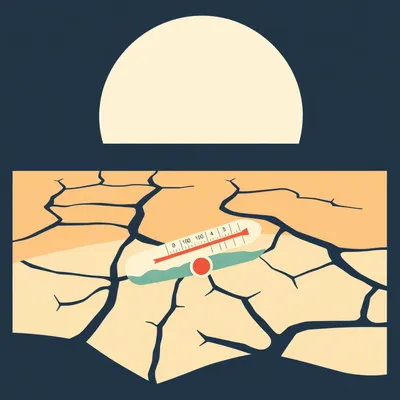
And that's the distinction between a hot-dry place and a hot-humid place. Death Valley at forty-nine degrees is survivable with water and shade because sweat evaporates almost instantly. The air is so dry it pulls moisture right off your skin. But a place at thirty-two degrees with a dew point of twenty-six — you can be sitting perfectly still in the shade and your core temperature will still climb. That's what makes a swamp climate dangerous in a way that dry heat simply isn't.
And Connecticut in August hits that threshold. I felt it. You grew up there.
I did. Storrs in July and August, the dew point routinely sits at twenty-two, twenty-three degrees. Some days it crosses twenty-four. And the thing is, it's not just uncomfortable — your body is actually working harder. Your heart rate increases. Your cardiovascular system is under real strain. But it's temporary. Two months, maybe three, and then it breaks. What we're looking for is a place where that number never drops below twenty-four. Every day. All year.
So that's the spec. Dew point above twenty-four degrees Celsius every single day, mean temperature above about twenty-seven, and then the biological layer on top — the insects, the mold, the fungi that thrive in exactly those conditions. That's the climate we're hunting.
And to understand why some places are so miserable, we need to understand how the body tries, and often fails, to cope. So let's start with Daniel's first question — the adaptation timeline.
How long before I stop feeling like I'm dying?
The initial changes start surprisingly fast. Within seven to fourteen days of consistent heat exposure, your body begins increasing plasma volume — that's the liquid component of your blood. You're literally making more blood, or at least a thinner, higher-volume version of it. That helps with cardiovascular efficiency. Your sweat rate also increases, and you start sweating sooner — your body learns to trigger sweating at a lower core temperature, which means you're cooling yourself preemptively rather than reactively.
So after two weeks, I'm sweating more and earlier, and my blood is soupier. That's the adaptation?
That's the beginning of it. Full acclimatization takes four to six weeks. And that includes electrolyte conservation — your sweat glands become more efficient at reabsorbing sodium, so you're not just dumping salt. Your heart rate at a given workload drops. Your perceived exertion decreases. You feel better. But here's the catch, and this is where the humidity comes in. All of those adaptations depend on sweat evaporating. If the dew point is above twenty-four degrees, evaporation slows dramatically. Above twenty-six degrees, it's nearly impossible. The sweat just drips off you, taking almost no heat with it.
So you can be fully acclimatized and it still doesn't matter.
That's the hard ceiling. And this is why the heat index exists. The US National Weather Service developed it in 1979, and it's been refined since. It combines temperature and relative humidity to produce an apparent temperature — what it actually feels like. At forty-two degrees Celsius with forty percent humidity, the heat index is about fifty-five degrees. That's the danger zone. But the mechanism underneath it is purely about evaporative cooling. When the air is saturated, your body has no way to dump heat except radiation and convection, and those are vastly less effective than evaporation.
So there's a point where no amount of adaptation saves you.
Yes. And that point has a name: the wet-bulb temperature threshold. Wet-bulb temperature is measured by wrapping a thermometer in a wet cloth and blowing air across it — it's the coldest temperature you can achieve through evaporation alone. The theoretical survivability limit for a healthy human is a wet-bulb temperature of thirty-five degrees Celsius. At that point, even a perfectly healthy person sitting in the shade with unlimited water will overheat and die within hours. The body simply cannot shed heat fast enough.
Thirty-five degrees wet-bulb. That's the number.
That's the number. And here's what's alarming — until recently, that threshold was purely theoretical. No place on Earth had ever recorded a wet-bulb temperature that high. But in the last decade, parts of the Persian Gulf, the Indus Valley, and the coastal Middle East have started brushing up against it. Not sustained, but for an hour or two at a time. And with climate change, the frequency of these events is doubling.
That's the ceiling. Now flip it — what's the floor? Daniel asked about the coldest place on Earth. How does the body handle that?
The coldest place on Earth is the East Antarctic Plateau. Satellite measurements in 2010 recorded surface temperatures of minus ninety-eight degrees Celsius. That's minus one hundred forty-four Fahrenheit. Vostok Station, the Russian research base, recorded minus eighty-nine point two degrees Celsius in 1983 — that's the coldest air temperature ever measured at ground level. And the body's response to cold is completely different from heat adaptation, both in mechanism and in timeline.
How so?
Cold adaptation is faster, for one thing. Within days of cold exposure, your body ramps up non-shivering thermogenesis — that's metabolic heat production, primarily from brown fat. You also get vasoconstriction in the extremities, which reduces heat loss. Shivering kicks in as a backup. But the critical difference is that cold has no hard physiological ceiling the way heat does. With heat, you hit thirty-five degrees wet-bulb and you're done. With cold, you can always add another layer. The real limit is behavioral — clothing, shelter, fire. The researchers at Vostok aren't acclimatized to minus eighty-nine degrees. Nobody is. They just never experience it. They move between heated buildings, they wear extreme cold-weather gear, and they limit outdoor exposure to minutes at a time.
So the adaptation is mostly psychological. You learn to live with the idea of the cold, not the cold itself.
There's some evidence that people who live in cold climates long-term develop higher resting metabolic rates and more brown fat activity, but the effect is modest. The Inughuit in Greenland, for example, have some metabolic adaptations to cold, but they also wear caribou skin clothing that's so effective they can sleep outside at minus forty. The clothing is the adaptation, not the body.
Which brings us back to heat. You can't take off your skin. When humidity shuts down evaporative cooling, there's no behavioral workaround. You can't put on an anti-humidity jacket.
Right. And that's why the 2003 European heat wave was so deadly. Seventy thousand excess deaths across Europe, many of them from humidity-impaired cooling. Most of the victims were elderly people in apartments without air conditioning, in cities where the nighttime temperature never dropped enough to let their bodies recover. The heat index in Paris hit levels that were dangerous, and the buildings — designed for cold winters — trapped the heat. That was a preview of what a year-round swamp does to a population that isn't equipped for it.
So the body can adapt to heat, but only up to a point. Now let's find the places that push past that point, every single day. Daniel's third question — the actual candidates.
So there are three main contenders for the year-round swamp title, and they're all in the equatorial band. The Amazon Basin, the Congo Basin, and the Indonesian archipelago. Let's start with the one people usually think of first: the Amazon.
Iquitos, Peru.
That's the one. Iquitos is the largest city in the world that you cannot reach by road. It's only accessible by boat or plane. And the climate is... relentless. Mean temperature of twenty-seven degrees Celsius year-round. Humidity above eighty-five percent every month. There is no dry season — rainfall is significant in all twelve months. The dew point rarely drops below twenty-four degrees. Mold grows on concrete. Leather items rot in your closet if you don't use them constantly. And the biological load is extraordinary. Mosquitoes, sandflies, and the botfly, which is a whole separate category of nightmare.
The botfly. Explain the botfly.
The botfly lays its eggs on a mosquito. When the mosquito lands on you to feed, the eggs hatch and the larvae burrow into your skin. They then develop there, breathing through a small hole, for about six weeks before emerging. You can feel them moving.
So that's the baseline pest situation in Iquitos. An insect that uses another insect as a delivery mechanism to deposit its young inside your body.
And that's just one species. But from a purely climatic standpoint, Iquitos is almost the perfect match for the spec. Unrelenting humidity, heat, no seasonal break. The only reason it might not take the top spot is that the temperature itself isn't extreme — it rarely goes above thirty-two degrees. It's the persistence that wears you down, not the peaks.
What about the surprise contender that doesn't quite make it?
Manaus, Brazil. Also in the Amazon, but it has a brief dry season from June to October where humidity drops to around seventy-five percent. That's still humid by most standards, but it's a break. The dew point actually dips below twenty-four for a couple of months. It fails the year-round test. It's miserable, but it's not unrelenting.
So Manaus is disqualified on a technicality.
It is. Jakarta, on the other hand, might actually be worse than Iquitos, but for different reasons. Jakarta is in the Indonesian archipelago, equatorial, naturally hot and humid. Mean temperature around twenty-eight degrees, humidity consistently above eighty percent, dew point frequently exceeding twenty-six degrees. But what makes Jakarta uniquely awful is the urbanization. The heat island effect adds two to four degrees Celsius to ambient temperatures. You've got thirteen million people, concrete everywhere, almost no green space in the city center, and standing water that breeds mosquitoes in vast quantities. Dengue is endemic. Leptospirosis from rat urine in floodwater is a regular occurrence. And the air pollution combines with the humidity to create this... soup. It's not just that you're hot. You're hot and breathing particulate matter and your sweat isn't evaporating and there's a non-trivial chance the mosquito that just bit you was carrying dengue.
So Jakarta is Iquitos plus industrial smog and a higher population density.
Worse flooding. Jakarta is sinking — literally, parts of the city are subsiding by up to twenty-five centimeters a year — so flooding during the rainy season is catastrophic. Standing water everywhere. That's a mosquito breeding paradise. But here's the thing. Jakarta does have a slightly drier period. It's not much, but it exists. So if we're being strict about the year-round criterion, it doesn't quite qualify either.
Which brings us to the winner.
Kisangani, in the Democratic Republic of the Congo. This is the one. Kisangani sits right on the equator, in the heart of the Congo Basin rainforest. Average annual rainfall of seventeen hundred millimeters. Mean temperature between twenty-five and twenty-seven degrees Celsius every single month. There is no month that is cooler, no month that is drier. The dew point stays above twenty-four degrees year-round. And the biological layer on top of this is harrowing. The Tsetse fly is endemic — that's the vector for sleeping sickness, which is fatal if untreated. Malaria is hyperendemic. The humidity is so constant that everything organic rots. Food spoilage is a constant battle. And the infrastructure to deal with any of this is minimal.
It's the climate spec, plus a parasite that puts you to sleep and kills you.
The Tsetse fly is particularly insidious because it's attracted to movement and to the color blue. You can't avoid it by staying still, and you can't camouflage yourself effectively. It's a large fly — you feel the bite. And the disease it carries, African trypanosomiasis, crosses the blood-brain barrier and causes the characteristic sleep disturbance, then coma, then death. Treatment exists but it's toxic and difficult to administer.
Kisangani is the answer. That's the closest thing to a year-round Connecticut swamp. Except Connecticut has Lyme disease, not sleeping sickness, and Connecticut has winter.
Connecticut has winter. That's the saving grace. And that's what makes these equatorial locations fundamentally different — there is no off-season for the biology. The mosquitoes don't die back. The fungi don't go dormant. The mold never stops growing. You're living inside an ecosystem that is actively trying to consume you, twenty-four hours a day, three hundred sixty-five days a year.
Climate change is making this worse. You mentioned the wet-bulb events doubling in frequency.
Yes. The Persian Gulf is the canary here. Places like Bandar Mahshahr in Iran have recorded wet-bulb temperatures approaching thirty-five degrees for short periods. These are coastal cities with shallow, warm water that drives humidity through the roof. The combination of extreme heat and extreme humidity that used to be purely theoretical is now showing up in real weather station data. And the band of territory where these conditions are possible is expanding. The year-round swamp is getting bigger.
The worst climate is not the hottest. It's the most persistently humid. And the real enemy might not even be the thermometer — it's the ecosystem that comes with it.
That's the thing. When Daniel described a year-round swamp, he mentioned the bugs in the same breath as the heat and humidity. And I think that's correct. The misery isn't just thermoregulatory — it's the total sensory and biological experience. The itching. The knowledge that standing water means mosquitoes. The mold smell that never leaves your clothes. The fungal infections that never quite heal because the humidity never drops low enough to let your skin dry out.
The body can adapt to heat. It cannot adapt to an ecosystem.
Right. Your sweat glands can become more efficient. Your plasma volume can expand. Your cardiovascular system can get better at shunting blood to the skin. But your skin cannot evolve a resistance to fungal growth in a single lifetime. Your immune system cannot become impervious to the parasites that thrive in exactly these conditions. The biological load is the part that doesn't have an acclimatization curve.
If you dropped me in Kisangani, how long before I'm functional?
Physiologically, four to six weeks and you'd be reasonably heat-acclimatized. You'd still be uncomfortable, but your body would be handling the thermal load. The bugs, the mold, the constant wetness — that never stops. People who live there adapt behaviorally. They know which insects to avoid, how to store food, how to dress, when to stay inside. But that's learned, not physiological. And the disease burden is just... it's a fact of life. You take precautions, you get treated when you get sick, and you accept a certain baseline level of parasitic and infectious disease that most people in temperate climates would find completely unacceptable.
I want to circle back to something you said about cold adaptation. The coldest place on Earth is minus ninety-eight degrees on the East Antarctic Plateau. And the adaptation is behavioral — clothing, shelter, limiting exposure. But there's something almost comforting about that. The cold is honest. It tells you exactly what it's going to do to you, and you can prepare for it. Heat and humidity are sneaky. You think you're fine, you're just sitting there, and then your core temperature is thirty-nine degrees and you're confused and nauseous and you don't know why.
Heat illness has that insidious quality. Confusion is actually one of the early symptoms of heat stroke — the brain is one of the most temperature-sensitive organs — so you lose the ability to recognize that you're in trouble. And if the humidity is high enough, even drinking water doesn't save you, because the problem isn't dehydration, it's that you can't shed the heat you're producing just by being alive.
Your own metabolism becomes the threat.
Yes. At a wet-bulb temperature of thirty-five degrees, a healthy human at rest generates more heat than the environment can absorb. You overheat just by existing. That's what makes it a hard limit.

Twenty-two months.
What?
I was there for twenty-two months, not eighteen. Barro Colorado Island, Panama. The Smithsonian station. I was counting field seasons — two wet seasons, two dry seasons, plus the setup and breakdown on either end. Twenty-two months.
I didn't know you'd worked at Barro Colorado.
Field entomology for the Army. They wanted to understand insect-borne disease risk for personnel operating in tropical forest environments. I spent most of 1997 and 1998 there. And you're all talking about humidity and heat, but you're forgetting the real enemy.
Which is?
The chiggers. Panama has chiggers that make Connecticut look like a sterile operating room. I had bites on my ankles that turned into cellulitis. Twice. The second time I needed IV antibiotics. And the fungus — I had a fungal infection in my ear canal that lasted the entire second wet season. Six months of my ear itching and oozing and there's nothing you can do because the humidity never drops low enough for the antifungal to actually work. You put the cream in, it gets washed out by sweat and ambient moisture in about twenty minutes.
The ear is a warm, dark, humid cavity. It's a perfect incubator.
It was a petri dish. And everyone at the station had something. One of the botanists had a fungal infection under his wedding ring that he just... lived with. For two years. He'd take the ring off and the skin was white and macerated. He just shrugged. Said it was part of the deal.
The body never adapts to the biological assault.
You learn to live with the itching. That's different. Your brain eventually stops registering it as an emergency. But the bugs don't stop biting, and the fungus doesn't stop growing. You just get used to being uncomfortable in a way that people who haven't lived in it can't really understand. The first month, you think you're going to lose your mind. By month six, you're still itchy, but you've stopped complaining about it. By month twelve, you've forgotten that not itching is even an option.
That's a kind of psychological adaptation, though. It's not physiological, but it's real.
It's real. And it's the thing that doesn't show up in climate data. The dew point, the wet-bulb temperature — that tells you whether you'll survive. It doesn't tell you whether you'll be miserable. And the misery is the bugs. It's the mold on your boots in the morning. It's the fact that paper gets wavy and soft after about three days out of a sealed container. It's the smell. Everything smells faintly of decay all the time.
That's the ecosystem you were talking about. The thing that doesn't have an acclimatization curve.
I still have a pair of boots from Panama. They're in a box in my closet. I haven't opened the box in probably fifteen years, but I know exactly what they smell like. That smell doesn't go away. It's in the leather permanently.
The thing that strikes me about what you're describing is that the climate data we've been discussing — the dew point thresholds, the wet-bulb limits — those are about acute survival. Can a human body maintain homeostasis for the next six hours. But what you lived through was chronic exposure. Not will you die today, but what happens to a body that never gets a break for two years.
Your skin breaks down. That's what happens. Small cuts don't heal properly because the wound bed never dries. You get these persistent low-grade infections. Your feet are constantly pruned. And the insects — the biting insects — they find the places where your skin is already compromised and they go there. It's not one big thing. It's a thousand small things that never stop.
If I'm understanding you correctly, you're saying we've been asking the wrong question. It's not which climate is the worst. It's which ecosystem is the most hostile to human habitation, and the climate is just the delivery mechanism.
I'm saying the climate is the thing that lets the ecosystem do what it does. The heat and humidity are the enablers. The bugs and the mold and the fungus — that's the actual experience. You can acclimatize to thirty degrees and ninety percent humidity. You cannot acclimatize to being eaten alive.
That's... a bleaker answer than I think Daniel was expecting.
But it's the honest one. And it connects back to something we touched on earlier — the difference between heat and cold. In extreme cold, the environment is trying to kill you directly, through heat loss. In extreme humidity, the environment is trying to kill you indirectly, through the organisms that thrive in it. The cold is a physics problem. The swamp is a biology problem.
The swamp is a biology problem. That's exactly right.
Where does this leave us? Daniel asked for the worst year-round swamp climate, and we've landed on Kisangani as the closest match — equatorial, no dry season, dew point permanently above twenty-four, Tsetse flies, malaria, the works. But Hilbert's point is that the climate data only tells you half the story. The other half is what grows in it.
That's the open question, really. As climate change pushes wet-bulb temperatures higher and expands the range of these ecosystems, the biological load follows the climate. The mosquitoes move poleward. The fungi expand their range. The year-round swamp isn't just a fixed set of locations — it's a growing one. And the misery that comes with it is harder to measure than a dew point, but it's just as real.
Connecticut was a preview. Two weeks of it, and then we came home to dry air and functioning air conditioning. But for a lot of people, that's not a vacation. That's just... life. And the body handles it until it doesn't.
The misconception I keep coming back to is that the hottest place is the worst place. Death Valley gets all the headlines because the number is big and round and dramatic. But Death Valley is survivable. People live there. The real worst place is the one where your body's cooling system simply stops working, and that's not about the thermometer — it's about how much water is already in the air. Humidity is the limiting factor, and Kisangani has it every day of the year.
The second misconception — that the body can fully adapt to any climate. It can't. There's a hard ceiling at thirty-five degrees wet-bulb, and no amount of acclimatization changes that number. You can make yourself more efficient below the ceiling, but you can't move the ceiling. Heat adaptation has a wall. Cold adaptation doesn't.
Which is why, in a warming world, the places that are already humid are the ones to watch. They're closer to the limit than anyone wants to admit.
This has been My Weird Prompts. Thanks to our producer, Hilbert Flumingtop, for keeping us honest — and for the boots, which I now cannot stop thinking about.
If you want more episodes like this one, find us at my weird prompts dot com, or email the show at show at my weird prompts dot com. We'll be back soon.