
#environmental-health
35 episodes
#5336: Cholera and the 3.4 Billion Without Safe Sanitation
Cholera is fast, cheap to treat, and entirely preventable — yet 3.4 billion people lack safe sanitation. Here's why the numbers don't add up.
#5280: What Chemicals Do to Workers in 2026
2.9 million work-related deaths a year — and 2.58 million of them are disease, not injuries. What workers still don't know about the air they breathe.
#5279: Heavy Metals: Real Syndromes vs. Online Noise
Lead, arsenic, mercury, cadmium — each metal has its own syndrome, route, and treatment. The vague online version misses all of it.
#4877: Hunting the Year-Round Swamp Climate
Where on Earth is it always hot, humid, and buggy? And what does the body do when sweat stops working?
#4816: Can Your Body Learn to Tolerate a Swamp?
Why 32°C in Tel Aviv feels worse than 35°C in Jerusalem — and how fast your body can adapt.

#4771: The Nine Dials That Tell Us If Earth Is Still Working
Six of nine planetary boundaries are already crossed. Here's what the dashboard says about our safe operating space.
#4767: What Future Generations Will Blame Us For
We examine today's miracle materials and practices that history may judge as our biggest mistakes.
#4766: Lead Paint: Why 34 Million Homes Still Have It
Why lead was in paint, how it actually becomes dangerous, and why we'll never remove it all.
#4742: Asbestos vs Radon: What's Actually in Your Basement?
Visual guide to spotting asbestos in old basements, and how short-term exposure compares to radon.

#4510: What All Plastics Actually Have in Common
Plastics aren't a single material. Their chemistry determines if they fragment, leach, or truly break down.
#4509: Wood in 2026: Forests, Species, and Sustainability
Global forests are still shrinking, but the story is more complex than deforestation headlines suggest.
#4082: How Heat, Noise, and Smog Make Us Angrier
Three environmental stressors that measurably increase human aggression — and what happens when they hit at once.
#3642: Why Archaeologists Matter Beyond the Dig
Archaeology isn't just about ancient pottery. It shapes infrastructure, convicts war criminals, and informs climate adaptation today.
#3148: What Vaping Does to Your Lungs Beyond Nicotine
Formaldehyde, heavy metals, and popcorn lung — the real chemistry of vaping vs. smoking.

#3147: Third-Hand Smoke: What Lingers in Your Walls
How to detect hidden cigarette residue in rentals and why third-hand smoke persists for years.
#3089: How Climate Consensus Actually Formed
The surprising journey from skepticism to scientific certainty — and what the data says about summer 2026.
#3069: Why UV Index and Temperature Don't Match
Why Israel hit a UV index of 11 while the thermometer barely reached 28°C.
#3045: How Many People Actually Lack Clean Water?
The 2.2 billion figure is more complicated than it looks. Here's what the data actually says.
#2998: The Rat-Free Island: South Georgia's Wild Comeback
From industrial whaling to the largest rat eradication ever attempted — the incredible story of South Georgia's transformation.
#2882: How Deweathering Reveals Shabbat's True Air Quality Signal
How controlling for weather actually sharpens the signal of human activity on air quality in Jerusalem.
#2877: How China Cut Air Pollution 65% in a Decade
China's air quality has improved dramatically since 2013, but gains are uneven across cities and seasons.
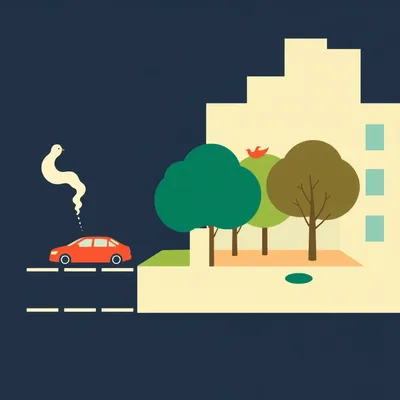
#2793: The 100-Meter Gradient: How Your Street Changes Your Health
Air quality and noise can shift 5-8x within a single city block. Here's how to find your enclave.

#2757: Can Cities Engineer Calm?
How much green space per person do cities actually need? The WHO says 9 sq meters minimum. Most cities don't meet it.
#2628: Your Snake Plant Isn't Saving You
Why your houseplants aren't cleaning your air — and what they're actually doing for you.