
Model Architecture
Transformers, LLMs, neural networks, attention mechanisms
86 episodes

#3170: Pharmacokinetics vs Neural Nets: Two Meanings of "Model
Two things called "models" that work completely differently — and why the confusion matters for patient safety.

#3067: How Glow-in-the-Dark Actually Works
The atomic-level physics behind phosphorescence and why oil-based glow markers don't exist.

#3038: Animating Toy Story: Math, Patience, and No Undo Button
Before Pixar could make Woody blink, animators typed coordinates by hand and waited hours to see if it worked.

#2855: How Medieval Hebrew Became Israel's Handwriting
The surprising 800-year history of how Ashkenazi cursive became the handwriting taught in Israeli schools today.

#2741: What Theoretical Physicists Actually Do All Day
Chalkboards, arXiv firehoses, and 2 hours of real work. What the daily life of a theoretical physicist actually looks like.

#2692: Type Safety: Static vs Dynamic, Soundness & More
Static vs dynamic, strong vs weak, and the truth about TypeScript's unsoundness. A deep dive into type theory.
#2672: When a Startup Claims to Break the Quadratic Wall
A startup claims linear attention scaling at 12M tokens, beating GPT-5.5 on retrieval benchmarks.
#2622: How Transformers Actually Work: Attention, Tokens, and Context
How one architectural change unlocked chatbots, image generation, and protein folding — explained without the jargon.
#2487: Why AI Calls Everything a "Prediction" (Even Images)
Machine learning calls everything a "prediction" — even generated images. Here's why the terminology matters more than you think.

#2478: MCP File Handling: Why Your Base64 Upload Breaks at 4MB
MCP has no standard file input. Base64 breaks at 4MB, presigned URLs need whitelisting, and MinIO workarounds aren't standardized.

#2426: Why DeepSeek V4's Prose Feels More Vivid Than Claude or GPT
A million-token context window at 2% the KV-cache cost — and prose that actually breathes. Here's what makes V4 different.

#2388: From Tool Picker to Problem Solver
Discover how OpenRouter intelligently routes your prompts to the most optimized AI model, reshaping how we interact with AI tools.

#2374: How Granular Can MoE Experts Get?
Exploring the limits of expert granularity in Mixture of Experts models—how narrow can segmentation go before efficiency or accuracy suffers?

#2366: Why LLMs Forget the Middle of Long Conversations
Why do large language models struggle with the middle of long conversations? Explore the science behind attention dilution and practical fixes.

#2357: Microsoft's Phi: When Data Quality Beats Model Size
Explore Microsoft AI's Phi family of small language models, designed for edge deployment and high efficiency.

#2355: Why Open-Weight Models Are Winning
Discover how Cogito v2.1 leverages process supervision and MoE architecture to redefine reasoning efficiency in open-weight AI models.

#2353: Evaluating Enterprise AI: Palmyra X5
Explore Palmyra X5, Writer’s flagship AI model designed for enterprise workloads, featuring a million-token context window and agentic capabilities.
#2351: AI Model Spotlight: ** Aion-2.0
Why is a biopharma AI lab releasing a storytelling-optimized model? We explore Aion-2.0’s architecture, pricing, and niche adoption.

#2350: NVIDIA's Strategic Pivot: From Chipmaker to Model Builder
Dive into NVIDIA’s Nemotron 3 Super, a hybrid MoE model combining Mamba, Transformers, and multi-token prediction for cutting-edge efficiency.

#2349: The 30-Person Lab Outpacing AI Giants
Discover how Arcee AI’s Trinity Large Thinking delivers cutting-edge reasoning at a fraction of the cost, all from a team of just 30.

#2348: Diffusion Models Take on Text Generation
Explore Inception Labs’ Mercury 2, a groundbreaking diffusion-based language model that rethinks text generation and reasoning.

#2336: How ADRs Solve AI's Institutional Memory Problem
Architectural Decision Records (ADRs) aren’t just documentation—they’re a way to give AI coding assistants the context they lack.

#2314: One Model or Three? Inside Claude's Architecture
What makes Claude’s Haiku, Sonnet, and Opus different? Discover how architecture shapes their unique strengths and weaknesses.

#2312: When Bigger Context Windows Aren't Better
Exploring the real-world impact of massive context windows in AI models, from academic research to codebase analysis.

#2233: Who Actually Wants AI to Slow Down?
Daniel argues AI development should slow down for expertise and stability. But who in the industry actually shares this philosophy beyond the obvio...

#2224: Why AI Can't Crack the Voynich Manuscript
A fifteenth-century text has defeated cryptanalysts, linguists, and AI models alike. What does its resistance tell us about language, encoding, and...

#2204: Memory Without RAG: The Real Architecture
mem0, Letta, Zep, and LangMem solve agent memory differently than RAG. Here's what's actually happening under the hood.

#2195: Nash's Real Genius (And Why the Movie Got It Wrong)
The bar scene in A Beautiful Mind is mathematically wrong—and it obscures Nash's actual breakthrough. We trace the real ideas from his 1950 papers ...

#2188: Is Emergence Real or Just Bad Metrics?
The debate over whether AI models exhibit genuine emergent abilities or just appear to because of how we measure them—and why it matters for safety...
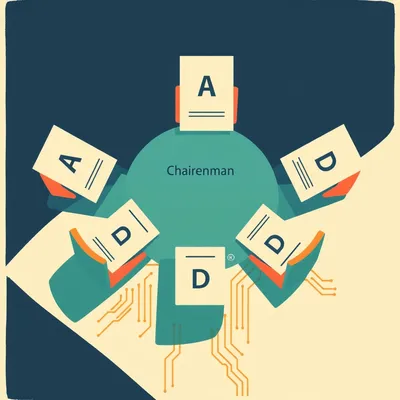
#2172: Council of Models: How Karpathy Built AI Peer Review
Andrej Karpathy's llm-council uses anonymized peer review to make language models evaluate each other fairly—but can it really suppress model bias?

#2164: Why Bigger Context Windows Don't Fix Attention
Frontier models have million-token context windows, but attention degrades well before you hit the limit. New research reveals why bigger isn't bet...

#2146: The AI Wargame's Flat Hierarchy Problem
AI wargames treat NGOs and nuclear powers as equals. That's a dangerous flaw for real-world policy planning.

#2144: AI Wargaming: One Model or Many?
Should geopolitical AI simulations use one model or many? We debate the pros and cons of a single-model approach.

#2133: Engineering Geopolitical Personas: Beyond Caricatures
How to build LLMs that simulate state actors with strategic fidelity, not just surface mimicry.

#2125: Why Agentic Chunking Beats One-Shot Generation
A single prompt can't write a 30-minute script. Here’s the agentic chunking method that fixes coherence.
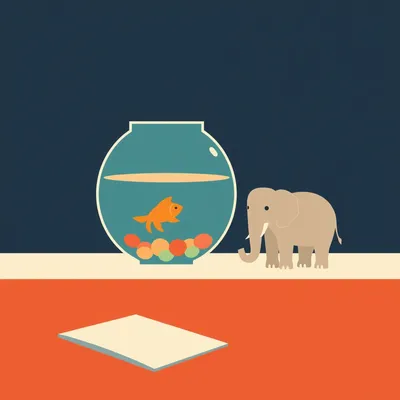
#2113: Goldfish vs Elephant: The Stateful Agent Dilemma
Stateless agents are cheap and fast, but stateful ones remember your window seat. Which architecture wins?
#2109: AI Is Forcing You to Use React
AI tools are reshaping developer stacks, favoring React and Postgres over niche frameworks.

#2092: Why AI Thinks You're American (Even When You're Not)
Even when we tell Gemini we're in Jerusalem, it defaults to US-centric assumptions. We explore the root causes of this persistent AI bias.

#2088: Quantum's First Real Benchmarks Are Here
From drug discovery to logistics, quantum computing is finally delivering measurable speedups over classical systems.

#2076: Is Pure NLP Dead? The Hidden Scaffolding of AI
Modern AI didn't appear from nowhere. Discover how decades of linguistic rules and statistical models built the foundation for today's LLMs.

#2070: SemVer, Changelogs, and the Social Contract of Code
Stop breaking the internet. Learn the exact system developers use to release software without causing chaos.

#2067: MoE vs. Dense: The VRAM Nightmare
MoE models promise giant brains on a budget, but why are engineers fleeing back to dense transformers? The answer is memory.
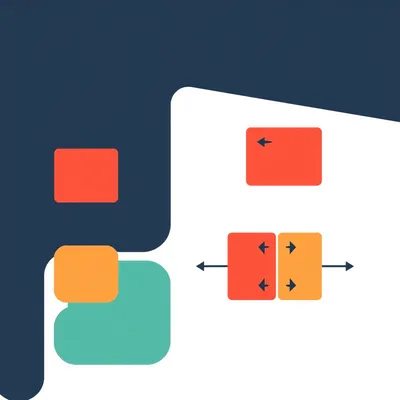
#2066: The Transformer Trinity: Why Three Architectures Rule AI
Why did decoder-only models like GPT dominate AI, while encoders and encoder-decoders still hold critical niches?

#2064: Why GPT-5 Is Stuck: The Data Wall Explained
The "bigger is better" era of AI is over. Here's why the industry hit a data wall and shifted to a new scaling law.

#2062: How Transformers Learn Word Order: From Sine Waves to RoPE
Transformers can’t see word order by default. Here’s how positional encoding fixes that—from sine waves to RoPE and massive context windows.
#2061: The Memory Bottleneck That Drives Attention Design
Attention is the engine of modern AI, but it’s also a memory hog. Here’s how MQA, GQA, and MLA evolved to fix it.

#2060: The Tokenizer's Hidden Tax on Non-English Text
Why does a simple greeting in Mandarin cost more to process than in English? It's the tokenizer's hidden inefficiency.
#2057: How Agents Break Through the LLM Output Ceiling
The output window is the new bottleneck: why massive context doesn't solve long-form generation.

#2056: Music as Language: The Architecture Behind AI Song Generation
A look at how AI music models use audio tokens, transformers, and diffusion to turn text into songs.

#2046: The Cinema of Constructed Reality
We asked an AI to curate films about AI and reality, exploring the psychedelic overlap between machine hallucinations and human perception.

#2037: The Hidden Hierarchy of Claude Code Extensions
Stop manually typing slash commands. Here’s the definitive hierarchy of Claude Code extensions—from legacy shortcuts to autonomous agents.

#2024: Your AI Council: Digital Committee or Groupthink?
A digital boardroom of AI models promises better decisions, but risks amplifying the same old biases.

#2016: Andrej Karpathy: The Bob Ross of Deep Learning
Why the most influential AI mind prefers a blank text file to proprietary black boxes.

#1994: Why Can't AI Admit When It's Guessing?
Enterprise AI now auto-filters low-confidence claims, but do these self-reported scores actually mean anything?

#1991: Why 20 Clean Qubits Beat 1000 Noisy Ones
Israel just unveiled its first 20-qubit superconducting quantum computer, and it's not about size—it's about precision and control.
#1979: When Marketing Swallows the Tech
Is AI the same as Machine Learning? We break down the nested hierarchy of artificial intelligence, from symbolic logic to neural networks.

#1962: Moravec's Paradox: Why Robots Can Write Poetry but Can't Fold a Fitted Sheet
We explore the tech letting robots "reason" about physical tasks using vision-language-action models.

#1957: Why AI Agents Think in Circles, Not Lines
Linear AI pipelines are brittle. Learn why loops, reflection, and state management are the new standard for reliable, autonomous agents.

#1946: Why LangChain Built a Three-Layer Agent Stack
We unpack LangGraph, LangChain, and Deep Agents to reveal the deliberate hierarchy behind the ecosystem.

#1940: Why Google's 31B Model Fits in Your GPU
Google just dropped Gemma four, and its 31-billion-parameter size is a masterclass in hardware-aware AI design.
#1938: JSON-to-SQL Type Mapping: A Practical Guide
Mapping JSON to SQL isn't as simple as it looks. Discover the hidden traps in data types that can cause performance hits and data corruption.

#1929: From Vibe Checks to Model Metrics
We stopped "vibe-checking" our AI scripts and built a science fair for models. Here's how we grade them.
#1913: AI Context Windows Are Junk Drawers
Stop paying for old messages. Here's how to keep your AI sessions clean and on-topic.

#1906: Is Your AI Model Agentic-Ready or Just Wearing a Suit?
Native tool calling is the difference between a working product and a debugging nightmare.

#1856: Two AIs Chatting Forever: Why They Go Crazy
What happens when two ChatGPT instances talk forever? They hit a politeness loop, forget their purpose, and spiral into gibberish.

#1831: The 79% AI Coder: Reasoning vs. Memorization
AI models now score 79% on coding benchmarks, but a 40-point drop on harder tests reveals the truth.

#1819: Claude's 55-Day Personality Transplant
Anthropic leaked 55 days of system prompt updates. See exactly how they rewired Claude's personality, safety rules, and self-awareness.

#1818: Inside Claude's Constitution: A System Prompt Deep Dive
We analyzed Claude Opus 4.6's full public system prompt to uncover its hidden rules for safety, product behavior, and refusal logic.

#1817: The Hidden Taxonomy of AI: Why Specialized Models Outperform Giants
Explore the vast ecosystem of niche AI models for computer vision and document understanding, far beyond large language models.

#1799: The Original AI Blueprints: BERT & CLIP
Before GPT, two models changed everything. Discover how BERT and CLIP taught machines to read and see the world.

#1753: AI Makes Coding Harder, Not Easier
Claude Code writes the syntax, but you need more technical knowledge than ever to guide it.

#1739: AI Just Designed a New Life Form
Meet Evo: the 40B parameter AI that writes DNA, designs novel CRISPR systems, and is reshaping synthetic biology.

#1737: Nous Research: The Decentralized AI Lab Beating Giants
Meet Nous Research, the decentralized collective outperforming billion-dollar labs with open-source AI and the self-improving Hermes-Agent framework.

#1734: You vs. Your Digital Twin: Who Wins?
Your AI clone is getting scarily good. We explore the tech behind high-fidelity digital twins and the uncanny valley of your own voice.

#1733: When AI Agents Build Their Own Societies
AI agents are forming neighborhoods, economies, and hospitals in server-side simulations that mirror real human behavior.

#1732: Why AI Agents Need an Operating System
AIOS aims to be the Linux for AI agents, managing memory, scheduling, and tools in one open-source kernel.

#1731: Why Deep Research Agents Are Being Forgotten
Specialized research agents outperform general orchestrators by 40-60% on verification tasks, yet developer hype is fading. Here's why.

#1730: Are Multi-Agent Coding Frameworks Obsolete?
MetaGPT, SWE-agent, and OpenHands promised a team of AI devs. But in 2026, are they still useful, or has raw model power made them obsolete?

#1729: Why Is AI Code So Hard to Read?
AI writes code faster than ever, but the output is often a cryptic mess. We explore why and how to fix it.
#1728: The AI Carpool: Emergent Collaboration Through Role-Playing
CAMEL AI lets two agents role-play to solve tasks autonomously. No complex code—just emergent teamwork.

#1727: The Great Architectural Heist: LSP as AI's Universal Plumbing
Explore how the Language Server Protocol is being repurposed to integrate AI directly into code editors, unifying development workflows.

#1723: Why Agentic AI Needs a Hive Mind, Not a Single Brain
The single monolithic AI model is dying. Meet the new native multi-agent architectures that think like a team, not a solo genius.

#1717: The AI Framework Name Game
Why are there thousands of "AI frameworks" on GitHub? We unpack the naming mess and the cost of semantic inflation.

#1710: Two Hundred Years of Calling Sloths "Miserable Mistakes"
Why did early naturalists mistake sloths for bears, monkeys, and giant rats?

#1708: Why Your AI Agent Forgets Everything (And How to Fix It)
Learn how Letta's memory-first architecture solves the AI context bottleneck for long-term agents.

#1698: Can AI Models Represent Nations in Diplomacy?
Real projects are building AI agents trained on national laws and diplomatic archives to simulate negotiations.